Europe’s electrification ambition would require a rapid shift away from fossil fuels towards electricity in transport, heating and industry. But the plan is already colliding with a reality of strained power grids, slow infrastructure upgrades and fears that greater electrification could replace one set of dependencies with another.
A parliamentary debate on its upcoming Electrification Action Plan showed that the road away from fossil fuels will run straight through familiar disputes over nuclear power, industrial competitiveness and Chinese supply chains. Above all, lawmakers warned that Europe’s strained electricity grids are not yet ready for the transition.
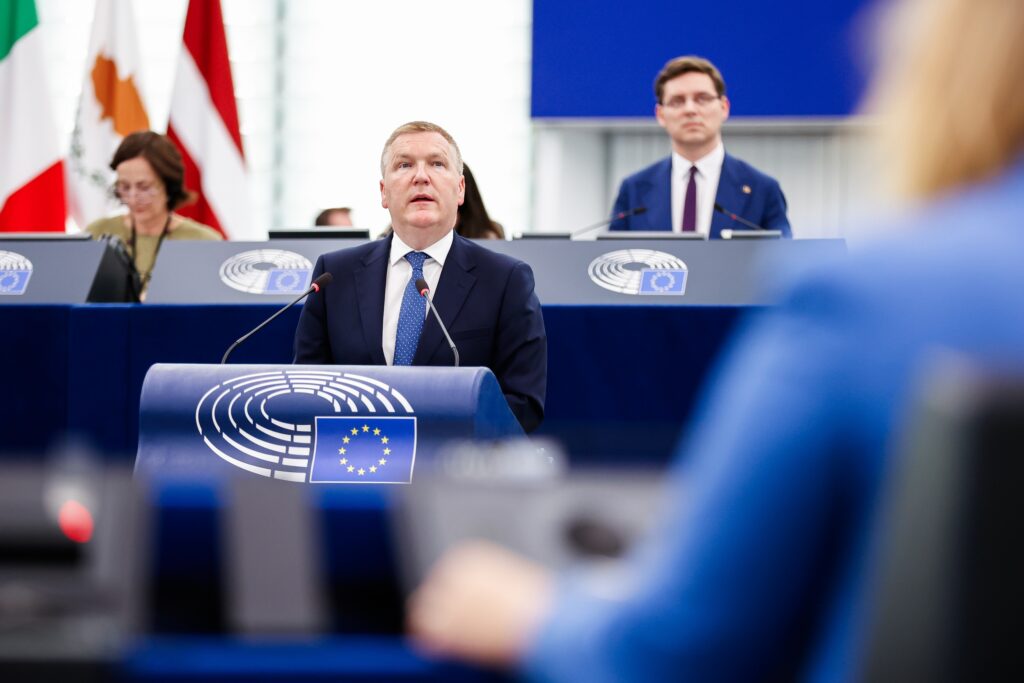
“We need to transform Europe into the world’s first electro-continent,” Michael McGrath, Commissioner for Democracy, Justice, the Rule of Law and Consumer Protection, said when opening the debate. With this initiative, the European Commission hopes to accelerate the shift away from fossil fuels and strengthen Europe’s energy independence.
Not just a climate anymore
For supporters of the plan, electrification has evolved beyond a climate policy tool. They now viewed it as a matter of economic security. “If we want energy security, if we want to lower our dependencies on foreign autocrats and if we want to keep industry in Europe, then the only one serious way forward is electrification,” said Mohammed Chahim (S&D/NLD).
Mr Chahim argued that Europe continues to spend hundreds of billions of euros on imported fossil fuels while technologies such as solar power, batteries and heat pumps become increasingly affordable. “Electrification must lower emissions, strengthen Europe’s independence and work for everyone: households, tenants, small businesses, workers and industry,” Mr Chahim said.
A similar argument came from Renew Europe. Christophe Grudler (Renew/FRA) described electrification as “the key to our energy sovereignty”. He argued that Europe is producing increasing amounts of low-carbon electricity but lacks sufficient demand, storage capacity and flexibility to make full use of it. Mr Grudler called for a binding electrification target and measures to stimulate electricity consumption in transport, buildings and industry.
Green lawmakers pushed the security argument even further. Michael Bloss (Greens/EFA) likened Europe’s relationship with fossil fuels to a “toxic relationship”, pointing to the bloc’s continued dependence on imported oil and gas. “Let’s break up with fossil fuels,” he said. “Every heat pump we install takes Putin’s power over Europe away.”
Calls for nuclear
Yet even among supporters, concerns about implementation dominated the debate: several MEPs stressed that Europe’s electricity grids are not ready for a large-scale electrification push. Tsvetelina Penkova (S&D/Bulgaria) warned that clean electricity is too often trapped behind infrastructure bottlenecks, particularly in south-eastern Europe. Others highlighted the need for storage technologies, interconnectors and demand-response systems.
If we want energy security, if we want to lower our dependencies on foreign autocrats and if we want to keep industry in Europe, then the only one serious way forward is electrification. — MEP Mohammed Chahim (S&D/NL)
Members of the European People’s Party broadly backed electrification but insisted that competitiveness and affordability must come first. Raúl de la Hoz Quintano (EPP/ESP) argued that the plan should rest on three pillars: cheaper electricity, faster permitting procedures and technological neutrality. He also insisted that nuclear energy must form part of Europe’s future energy mix.
That call for nuclear power emerged repeatedly throughout the debate. EPP, ECR and several right-wing lawmakers argued that electrification would be impossible without stable baseload generation. For them, Europe’s challenge is not simply producing more electricity but ensuring that supply remains reliable when wind and solar output fluctuate.
Detached from reality
The sharpest criticism came from the Parliament’s right-wing groups. Paolo Borchia (PfE/Italy) questioned whether electrification would expand naturally if it were genuinely cost-effective, arguing that consumers and businesses would adopt it without government intervention. Elena Donazzan (ECR/Italy) described current targets as detached from reality and asked who would finance the massive grid investments required.
Several MEPs also warned that replacing fossil-fuel dependence could merely create new dependencies on Chinese supply chains for batteries, solar panels and critical raw materials. Others attacked the Green Deal and the EU Emissions Trading System, claiming that European climate policies are driving up energy prices and undermining industrial competitiveness.
Despite those disagreements, one theme united almost every political group: Europe’s electricity infrastructure needs major investment. Whether arguing for faster electrification or warning against it, MEPs repeatedly pointed to overloaded grids, lengthy permitting procedures and insufficient storage capacity as major obstacles.
Responding to the debate, Commissioner McGrath acknowledged those concerns. Affordability, he said, would be the “litmus test” for the Electrification Action Plan. He confirmed that the Commission intends to include an electrification target, measures to reduce the electricity-to-gas price gap, and proposals on taxation and network charges when the plan is presented before the summer recess.