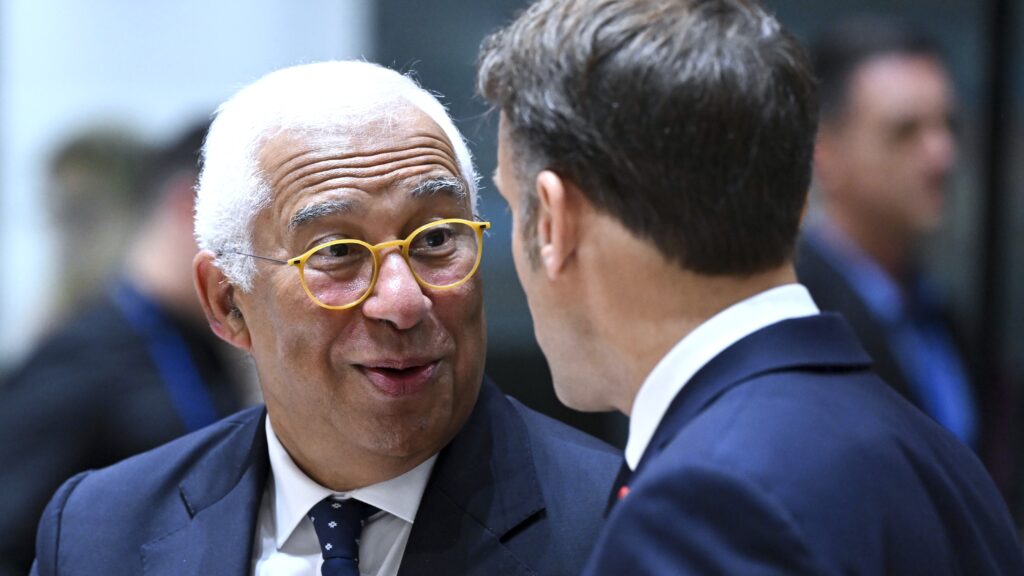
Should the European Union open a direct line of communication with Moscow, or would that risk undermining pressure on Russia? European Council President António Costa has ignited a fierce debate among EU leaders after defending contacts between his team and the Kremlin.
The EU must be able to communicate with Russia directly rather than relying on other players to relay messages on its behalf. That was the argument put forward by António Costa as he defended diplomatic contacts between his office and the Kremlin — contacts that have triggered an unusually heated discussion in Brussels about the role the EU should play in any future negotiations aimed at ending the war in Ukraine.
“We cannot depend only on others to interpret Russian messages, and we must be able to convey directly to Russia our own messages,” Mr Costa said after a European Council summit in Brussels. According to him, however, there were no “credible signs” from Moscow that it wanted to engage in “serious negotiations for the time being”.
At the same time, Mr Costa stressed that the bloc has no intention of acting as a mediator between Kyiv and Moscow and remains firmly on Ukraine’s side.
Opening channels, raising questions
The controversy erupted after reports revealed that Pedro Lourtie, Mr Costa’s chief of staff, had been in contact with Kremlin representatives several times in recent weeks. According to Reuters, the purpose was to establish channels of communication that could prove useful in the future, rather than to discuss any specific political issues.
Yet the question of whether — and how — Europe should engage with Moscow has exposed growing divisions among EU member states. Some leaders fear that opening diplomatic channels while Russia’s war against Ukraine continues sends the wrong signal at the wrong time.
According to media reports, some of the strongest criticism came from German Chancellor Friedrich Merz and French President Emmanuel Macron.
Supporters of Mr Costa’s approach, including Austrian Chancellor Christian Stocker, however argue that the EU has its own security and political interests that it will eventually need to defend. In their view, maintaining functioning lines of communication is a matter of strategic necessity, regardless of the current state of relations with Moscow.
European Commission President Ursula von der Leyen shares that view. In her words, “sooner or later Russia will need to come to the negotiating table” and, when that happens, Europe must have “a united message” for President Vladimir Putin.
Reuters also notes that there is little consensus within the bloc over who, if anyone, should represent Europe in any future peace talks.
Europe’s place at the table
The debate comes as efforts to end the war in Ukraine remain stalled, with no major diplomatic breakthrough in sight. At the same time, European governments are increasingly determined to ensure they are not sidelined if serious negotiations eventually resume.
Speaking after the summit, Mr Macron insisted that Europe must have a seat at the table, arguing that any eventual settlement will have direct consequences for European security.
Mr Costa, meanwhile, maintains that keeping communication channels open does not represent a softening of the EU’s position towards Russia. Rather, he argues, it is a practical tool that allows the bloc to communicate its own views directly instead of relying on interpretations filtered through third parties.
Whether direct contact with Moscow is an act of diplomatic prudence or a dangerous concession is rapidly becoming one of the defining fault lines in Europe’s evolving approach to Russia.