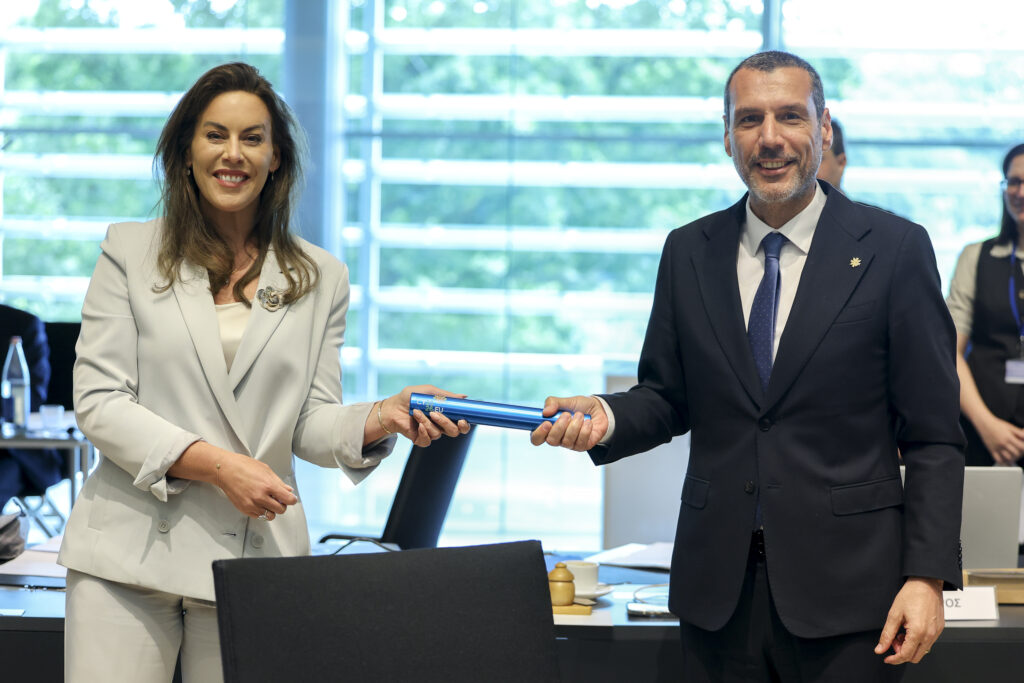
Europe’s share of global clinical trials has been cut in half in just a decade, while China has surged ahead. As Ireland takes over the EU presidency on Wednesday, Dublin is betting that faster drug approvals, biotech reforms and health investment can restore Europe’s competitiveness — and determine how quickly patients get access to new medicines.
Ireland takes over the rotating presidency of the Council of the European Union on 1 July from Cyprus. For the next six months it sets the agenda. Its health pitch is simple: invest in health to enable competitiveness.
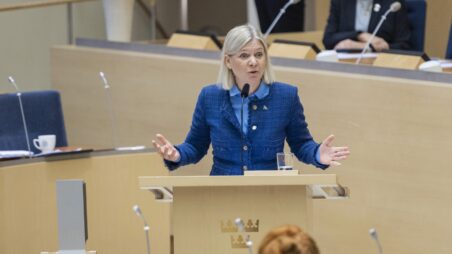
Health Minister Jennifer Carroll MacNeill has led the department since January 2025. She will chair the EU health ministers through the autumn. At June’s EPSCO Health Council in Luxembourg, she named the presidency’s first move. “The Irish presidency will initially focus on the amendments to the clinical trials regulations in July before opening other chapters,” Ms Carroll MacNeill said.
According to her, the main theme of the Irish health presidency will be investing in health to enable competitiveness. The programme builds the health agenda around three main areas: medicines and innovation, prevention and health equity, and digital health.
The Irish presidency will initially focus on the amendments to the clinical trials regulations in July before opening other chapters. — Jennifer Carroll MacNeill, Health Minister of Ireland
The competitiveness worry is real. European Commissioner for Health Olivér Várhelyi put numbers on it. China’s share of global clinical trials rose from under 10 per cent to almost 30 per cent in a decade, he said, while Europe’s share halved from 18 per cent to 9 per cent. Biotechnology, he added, is one of Europe’s most strategic sectors, and most of its output is health biotech.
Medicines: one deal done, a harder one to come
The medicines work is already moving. The Council agreed its position on the Biotech Act Directive on 16 June, under the Cypriot presidency. That part of the package covers organ processing and genetically modified microorganisms.
“Ireland fully supports it,” Ms Carroll MacNeill told the meeting. She said Ireland would stand ready to take the file forward into the trilogue negotiations later this year, once the European Parliament settles its position.
The harder file is the Biotech Act regulation. It carries the clinical trials rules and a contested patent measure. Article 27 would extend Supplementary Protection Certificates (SPCs), patent-style rights that delay cheaper copies, by 12 months for some frontier products. In June the European Parliament’s Environment Committee (ENVI) proposed deleting Article 27 altogether. The minister has called the Act a strategic priority for EU competitiveness and sovereignty.
She wants speed. “I have instructed the Irish presidency team, the incoming team, to work in an expeditious and streamlined manner with a view to negotiating the Act as quickly as possible,” Ms Carroll MacNeill told ministers.
We have set the ambitious target of reaching a Council general approach on the Medical Devices Regulation and the In Vitro Diagnostics Regulation. — Jennifer Carroll MacNeill, Health Minister of Ireland
“We have a duty together to listen to each other and to refine and develop our perspectives for the benefit of the overall package. We also (…) need to move speedily on this particular Act and ahead of the upcoming presidency,” she said, urging her colleagues to act quickly and brief their negotiating teams accordingly.
Two more medicines files land on her desk. Negotiators struck a provisional deal on the Critical Medicines Act with the Parliament in mid-May, and a plenary vote is expected by 2 October. The Pharmaceutical Package, agreed in principle in December 2025, should reach formal Council adoption after the summer, on Ireland’s watch.
Medical devices: an “ambitious target”
Ireland will also push the long-delayed overhaul of the Medical Devices Regulation (MDR) and the In Vitro Diagnostics Regulation (IVDR), the rules behind everything from hip implants to blood tests. The programme frames the work as simplification.
“We have set the ambitious target of reaching a Council general approach,” Ms Carroll MacNeill said. “Patients are counting on us in this regard.”
Prevention, data and women’s health
The second strand is prevention. Ireland will work to accelerate the EU Safe Hearts Plan, the bloc’s first cardiovascular health strategy, which aims to cut cardiovascular deaths by a quarter by 2035. Cardiovascular disease remains Europe’s biggest killer. Such non-communicable diseases cause 80 per cent of the EU’s disease burden, and Ireland will host a ministerial conference on preventing them in November.
The Parliament is moving too. On 24 June its Public Health Committee adopted its response to the plan. Its author, MEP Romana Jerković (S&D/HRV), said she had wanted more on tobacco and alcohol. A full Parliament vote will follow.
The third strand is digital. Ireland will push implementation of the European Health Data Space (EHDS), which is meant to move patient records and research data safely across borders. A two-day conference on EHDS implementation runs in Dublin on 13 and 14 October. The presidency will also give greater attention to women’s health, including endometriosis, with a presidency conference on the condition in Dublin on 3 December.
The diary
The calendar is dense. The College of Commissioners meets in Cork on 2 and 3 July. Ms Carroll MacNeill will chair an informal EPSCO Health Council in Dublin on 30 September and 1 October, with commissioner Várhelyi, the WHO Europe regional director and the head of the European Medicines Agency (EMA) attending. The formal EPSCO Health Council meets in Brussels on 8 December. In between, the presidency runs a Conference on Clinical Trials and Medicines Access in Dublin on 7 and 8 October.
Why it matters
For patients, the stakes are concrete. Faster trials could mean earlier access to new medicines. Simpler device rules could keep tests and implants on the shelf. The patent fight will help set how long Europeans wait for cheaper drugs.
For Ireland, the test is delivery. A presidency cannot pass laws on its own. It brokers deals and pushes files toward a vote. Six months is short, and the Biotech Act, the device rules and the Pharmaceutical Package will not all cross the line by December.
The bet sits under the slogan. Ireland is wagering that what helps industry also helps patients. The autumn trilogues will test whether those two goals point the same way.