A cancer treatment can clear Europe-wide approval, yet patient access still varies enormously from one country to the next. The difference is as much as three years, Isabel Rubio, the president of the European Cancer Organisation tells EU Perspectives.
Cancer care in Europe tells two stories. The continent holds some of the world’s best research, clinical expertise and, increasingly, ambitious national cancer plans. Yet whether a patient benefits still depends heavily on where they live.
That tension runs through the recent WHO Global status report on cancer 2026: the future we choose together. It is the latest global assessment of the disease from the World Health Organization (WHO) and its cancer research agency, the International Agency for Research on Cancer (IARC). Its central argument is blunt: the primary gap in cancer control is “no longer a gap in knowledge, but a gap between what we know and what we do, between what we plan and what we implement.”
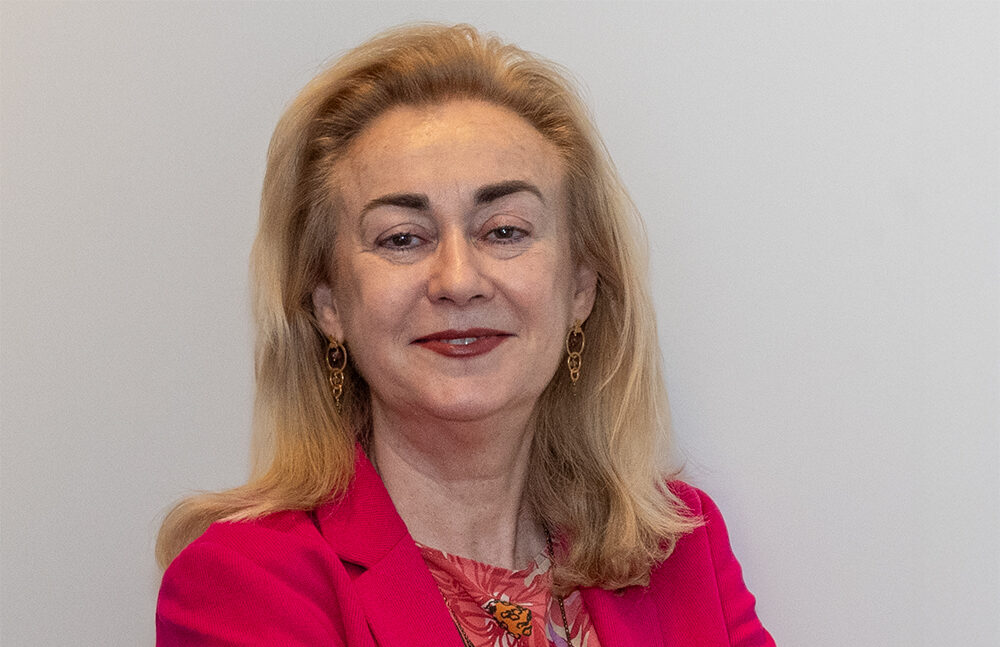
Dr Isabel Rubio, a breast cancer surgeon and president of the European Cancer Organisation, reviewed the report on the organisation’s behalf. Her prescription for closing Europe’s gap is concrete: she wants European health ministers to back a coordinated cancer workforce action plan, funded and translated into national plans. In an interview with EU Perspectives, Ms Rubio set out why the people who deliver cancer care have become the weak point, and what the implementation gap means for screening, medicines and survival across Europe.
You reviewed the WHO report for the European Cancer Organisation. What did you push hardest to see reflected?
The one I felt most strongly about is ensuring that inequalities are recognised as a central challenge in cancer control. Scientific advances in prevention, diagnosis and treatment can only improve outcomes if everyone is able to benefit from them, regardless of where they live or their economic circumstances.
As a clinician, I also wanted the report to consider the entire cancer experience. This extends beyond prevention and treatment to include timely diagnosis, survivorship, quality of life, psychosocial support, and palliative care.
It is why I strongly support the report’s people-centred approach and its recognition that people affected by cancer must help shape the policies and services intended for them. We need to assess progress not solely by what science makes possible, but by whether patients can access, benefit from, and experience those advances in their everyday care.
The report says the real problem is no longer knowledge but delivery. Is that Europe’s problem too?
Yes. Europe has extensive scientific knowledge, clinical expertise, and increasingly ambitious cancer policies. The difficulty is translating those assets into consistent outcomes for every patient.
Most European countries have national cancer plans, but access to screening, medicines, specialist professionals, and supportive care still varies considerably. Screening participation remains below 50 per cent in many countries. Access to newer cancer medicines can differ dramatically, and oncology workforce shortages are affecting waiting times, professional well-being, and the continuity of care.
Europe’s challenge is not just innovation, it is implementation. — Isabel Rubio, president of European Cancer Organisation
Europe’s challenge is not just innovation, it is implementation. We need to measure success not only by the policies adopted, programmes announced or treatments authorised, but by whether they are properly funded, implemented and reaching people.
Does that gap show up in whether people survive?
The gap within Europe is not as extreme as the difference between high- and low-income countries globally, but it is still significant. We should also avoid oversimplifying the picture into a simple Western versus Eastern Europe narrative.
According to CONCORD-3 data, countries including Belgium, Germany, Iceland, Norway, Portugal, and Sweden consistently had five-year survival estimates in the top quintile for most of the cancers examined. Bulgaria, Croatia, Czechia, Lithuania, Poland, Romania, and Slovakia had estimates in the lowest quintile for at least five of the eleven cancer types examined.
For breast cancer, estimated five-year net survival among people diagnosed between 2010 and 2014 was 86.4 per cent in Belgium, compared with 73.5 per cent in Lithuania. While these are not current figures, they show the marked differences in cancer outcomes that have existed across European countries.
We also reveal the need for better and more timely comparable data. Without them, inequalities can remain hidden until they appear in mortality statistics. The European Cancer Inequalities Registry is a welcome step in this direction, and its value will grow as member states continue to feed data into it.
Where is Europe still catching cancer too late?
Europe still has important weaknesses in early detection, but comparable stage-at-diagnosis data are not consistently available across all countries.
According to the European Cancer Screening Policy Index, participation in mammography among eligible women ranges from 83 per cent in Denmark to 9 per cent in Romania, with participation below 50 per cent in ten European countries.
Notably, poor performance is not explained solely by the absence of a screening programme. Most lower-performing countries, including Greece, Cyprus and Poland, have established national population-based breast cancer screening programmes, yet participation remains far below that achieved in higher-performing countries such as Denmark and Sweden. This suggests that the crucial differences lie in how programmes are implemented, how consistently eligible populations are reached and invited, and whether they are able to complete the screening pathway.
So, when the report says progress is insufficient, it is pointing to a persistent gap between screening policy and effective early detection.
How different is access to cancer medicines from one European country to the next?
The figure in the WHO report is global. Across 118 countries with available data, the median national essential medicines list included 28 of the 50 antineoplastic medicines on the WHO Model List of Essential Medicines.
Within Europe, access also varies considerably. European authorisation of a medicine does not automatically give patients equal access to it. Pricing, health technology assessment, reimbursement decisions, restrictions on eligibility, hospital budgets and local capacity all influence whether an authorised medicine reaches a patient.
In an OECD comparison of thirteen high-benefit indications for newer breast and lung cancer medicines, Germany covered all the indications studied, and the Netherlands covered 92 per cent. Malta covered none, while Cyprus and Latvia covered 31 per cent. The time between European authorisation and a national coverage decision ranged from less than 100 days in Germany and Sweden to more than three years in Cyprus, Latvia, and Lithuania.
Even reimbursement does not guarantee access in practice. Restrictions, institutional budgets, and unequal specialist capacity can still prevent eligible patients from receiving a medicine. We therefore need to assess real patient access, not simply whether a treatment appears on a national list.
And the workforce delivering all this, how much strain is it under?
The two-to-five-times figure in the WHO report describes workforce gaps between high-income and lower-income countries globally. Europe’s circumstances are different, but our own evidence shows that the workforce crisis here is not hypothetical.
The European Cancer Organisation surveyed more than 700 cancer professionals across 30 countries. Among respondents, 19 per cent experienced high levels of burnout, 52 per cent described their workload as endless, 55 per cent said administrative procedures made their work too difficult and 77 per cent were often required to work overtime. In addition, eight per cent said they wanted to leave cancer care within the next five years.
The findings also reveal significant regional inequalities. In Eastern Europe, burnout was 17 per cent higher and workplace satisfaction 20 per cent lower than in the West. I would not describe every European cancer system as being at a breaking point, because conditions vary. But the warning signs are unmistakable, and parts of the system are already operating under unsustainable pressure.
This is not solely a question of workforce well-being. Insufficient staffing, excessive workloads, and burnout affect waiting times, patient safety, communication and the quality and continuity of care. Europe needs coordinated workforce planning, minimum staffing standards, stronger retention policies, better workload management, and meaningful action to reduce unnecessary administrative burden.
If European health ministers could act on one of the report’s recommendations before the next one, which should it be?
I would choose the second recommendation: strengthen health system capacities for comprehensive, integrated cancer service delivery. The future of cancer care will not be determined only by scientific breakthroughs, but by our ability to build health systems that can deliver them effectively and equitably. This requires resilient cancer services with the infrastructure, data, coordination, resources and, critically, a skilled and sustainable workforce capable of providing high-quality care across the entire cancer pathway.
I would therefore ask European health ministers to support a coordinated Cancer Workforce Action Plan and translate it into properly funded national plans.
Europe has many examples of excellence, but we must ensure that excellence is not limited to a few centres or regions. — Isabel Rubio
Europe has many examples of excellence, but we must ensure that excellence is not limited to a few centres or regions. The priority must be to build comprehensive, people-centred cancer systems that have the capacity, workforce and organisation to deliver the right cancer care, at the right time, for every patient.