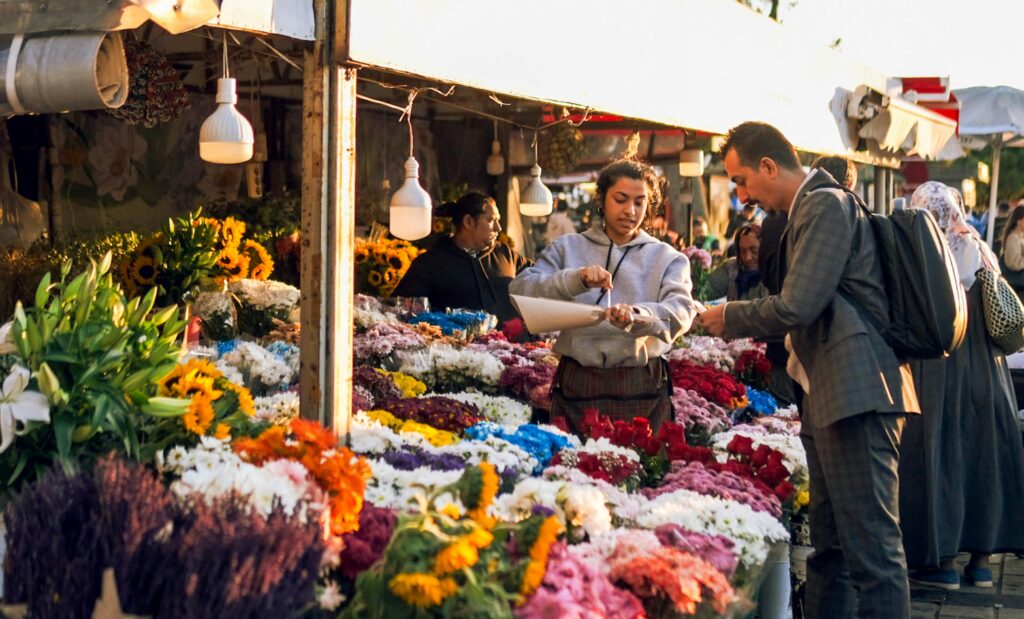
Three days before Armenians go to the polls, Russia is trying to tip the vote with economic punishment. Moscow has banned Armenian flowers, wine, and food exports, and the EU is hitting back with over €50 million in emergency support. Europe knows this playbook, and this time it is not watching from the sidelines.
Armenia votes on 7 June in what analysts describe as the most consequential election since independence. Prime Minister Nikol Pashinyan has staked his political future on a western course: a peace deal with Azerbaijan, distance from Moscow, and a pivot toward the EU. Russia wants to stop him.
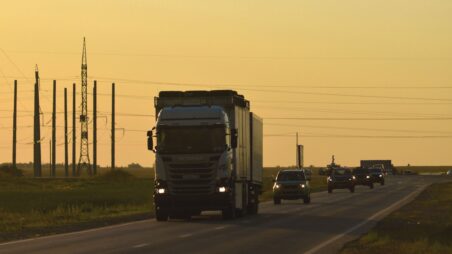
Over recent weeks, Moscow has imposed bans on Armenian flower, wine, and brandy imports and threatened to expel Armenia from the Eurasian Economic Union. At a summit in Astana, Russia, Belarus, Kazakhstan, and Kyrgyzstan jointly demanded Armenia hold a referendum on staying in the bloc or pursuing EU membership. Pashinyan refused.
The economic weapon
The pressure has a hard economic logic behind it. Remittances from Armenians working in Russia amount to roughly 13 per cent of the country’s GDP, nearly two thirds of all transfers the country receives. The Russian market absorbs a large share of Armenian exports. Cheap Russian gas underpins energy security.
By tightening those screws before polling day, Moscow is betting it can swing enough voters toward pro-Russian opposition parties to either unseat Pashinyan or weaken his mandate. Putin has made the stakes explicit, warning of a “Ukrainian scenario” if Yerevan continues its EU rapprochement. Current polls suggest Pashinyan is likely to hold on, but a large share of undecided voters leaves the outcome open.
Flowers to Riga
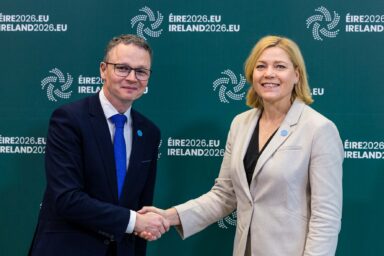
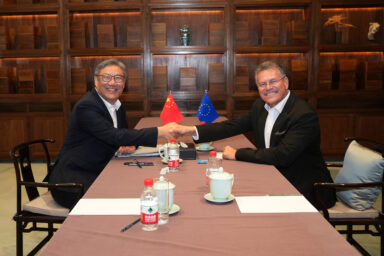
The EU’s response is immediate and deliberate. Commission President Ursula von der Leyen spoke with Pashinyan on 4 June and announced a support package targeting the sectors hit hardest by Russian restrictions. Over €50 million in direct budget support will flow to Armenian institutions through the EU’s Resilience and Growth Plan for Armenia, which has already helped 7,000 businesses and supported the creation of more than 20,000 jobs since 2024. More is on the way.
Brussels is also working on measures to ease trade for Armenian agri-food products and providing practical support to affected sectors. A shipment of 10,000 Armenian flowers denied access to the Russian market will arrive in Latvia on 5 June. Others will follow. What Russia closes, Europe opens.
By extending export restrictions on Armenian products, Moscow is weaponising economic relations for political pressure. We know this playbook all too well.
— Ursula von der Leyen, President, European Commission
Von der Leyen described Russia’s actions in stark terms. “By extending export restrictions on Armenian products, Moscow is weaponising economic relations for political pressure. We know this playbook all too well,” she said. The EU and Armenia have also agreed to set up a joint task force to coordinate all measures and any further steps.
More than an election
Russia’s interference goes beyond trade restrictions. It has deployed a disinformation campaign using AI-generated content and Doppelgänger media formats to portray Pashinyan as a traitor. The Kremlin also recalled its ambassador to Armenia for consultations, a sharp diplomatic signal, over Yerevan’s moves toward the EU.
The stakes extend far beyond one vote. Armenia has the potential, Brussels argues, to become a strategic hub connecting Europe, the South Caucasus, and Central Asia. The recent reopening of trade routes with Türkiye, including a railway connection through Georgia, points in that direction. A Connectivity Platform Ministerial is scheduled for 23 June, where both sides plan to advance those ambitions further.
If Pashinyan wins with a strong mandate, Armenia’s western trajectory is likely to deepen. If the vote produces a fragmented result or an opposition advance, the peace process with Azerbaijan could stall and Armenia’s EU path could reverse. The election is, in that sense, not just a test of one politician’s survival. It is a test of whether economic coercion works. Europe’s bet is that it does not.