For the first time since the Taliban returned to power five years ago, Brussels has hosted a meeting that would have seemed unthinkable until recently: representatives of Afghanistan’s ruling movement sitting down at the same table as European Union officials.
A delegation from the Taliban arrived in Brussels on Tuesday. Officially, the talks took place at a “technical level” between officials rather than politicians. In reality, however, they touch on a politically sensitive question that has long divided governments and public opinion across Europe: how can the EU engage with Afghanistan without recognising the Taliban regime?
According to the European Commission, representatives of EU institutions and 15 member states attended the meeting. It followed a similar round of talks held in Kabul in January and focused on practical matters: the return of Afghan nationals with no legal right to remain in the EU and the working-level contacts needed to facilitate those returns. The EU stressed that decisions on deportations remain entirely in the hands of individual member states.
This does not mean recognition. This by any means does not mean recognition. — Markus Lammert, European Commission spokesperson
Pressure from a number of member countries also helped bring EU institutions to the table. Last October, 20 countries — 19 EU states and Norway — asked the Commission to coordinate technical contacts regarding migrant return policy. Their priority is people deemed a security risk or those convicted of serious crimes.
More than migration
The Afghan side, however, broadened the agenda. Following the talks, Taliban Foreign Ministry spokesman Abdul Qahar Balkhi said discussions had covered the possible restoration of consular services for Afghans living in the EU, as well as arrangements to ensure the “dignified return” of migrants to Afghanistan. He described the meeting as a “historic visit” and said he believed it could help improve the protection of Afghans’ rights abroad.
European officials, meanwhile, were keen to underline that the meeting did not amount to political recognition of the Taliban. “This does not mean recognition. This by any means does not mean recognition,” European Commission spokesman Markus Lammert reiterated ahead of the talks.
Neither the EU nor its member states recognise the legitimacy of the regime since the militant Islamist group returned to power five years ago after two decades of war against the US- and NATO-backed Afghan government.
Since then, the Taliban has steadily rolled back women’s rights, barred girls from education beyond primary school and imposed strict rules that further restrict freedom of movement, freedom of expression and access to work. The movement has also harshly persecuted other perceived opponents, including journalists, human rights activists and LGBT+ people.
Yet Mr Lammert argued that communication with Afghanistan’s “de facto authorities” remains necessary if the EU is to address migration issues. He also rejected suggestions that Brussels had offered the Taliban any form of quid pro quo in exchange for cooperation on the return of Afghan nationals.
A question of legitimacy
Afghans remain one of the largest groups of asylum seekers in the EU. At the same time, pressure is growing across Europe to speed up the return of those whose asylum claims have been rejected or who have committed criminal offences. In 2025, more than 18,000 Afghans were ordered to leave the EU.
Every invitation, every visa and every official meeting sends a political signal. The Taliban are not seeking technical discussions, they are seeking legitimacy. — MEP Hannah Neumann (Green-EFA/DEU)
That lies at the heart of the controversy. While some European governments see such cooperation as a practical necessity, critics — including human rights organisations and several MEPs — warn that sending migrants back to a country ruled by an oppressive regime could put their lives at risk. In their view, such policies undermine the EU’s fundamental values.
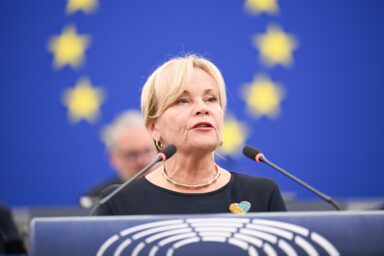
Critics also argue that contacts at this level lend the Taliban an air of international legitimacy, whether intentionally or not. “Every invitation, every visa and every official meeting sends a political signal. The Taliban are not seeking technical discussions, they are seeking legitimacy,” said MEP Hannah Neumann (Green-EFA/DEU).
That is precisely why what appears to be a merely “technical” meeting in Brussels is, in reality, far more politically sensitive than its official label suggests.