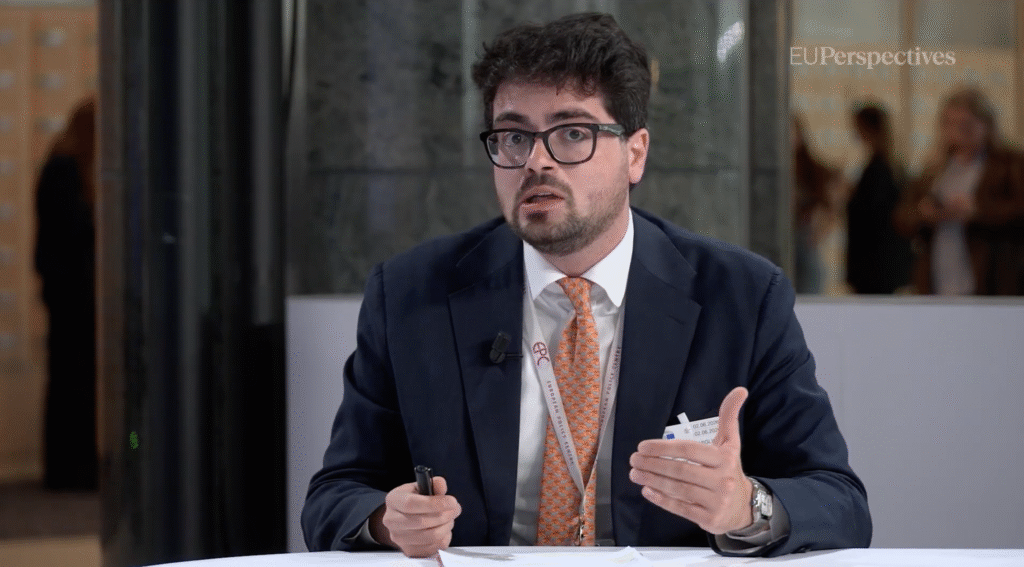
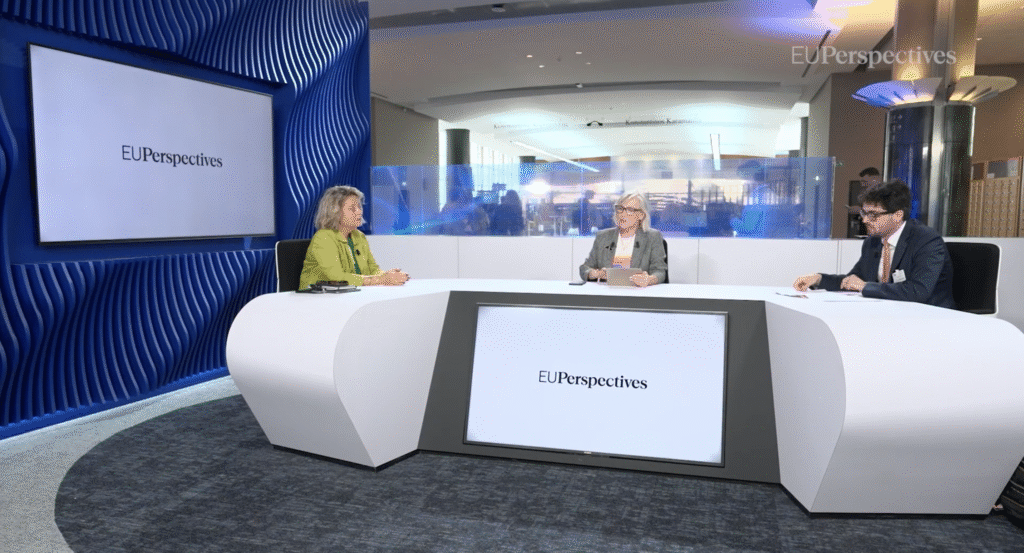
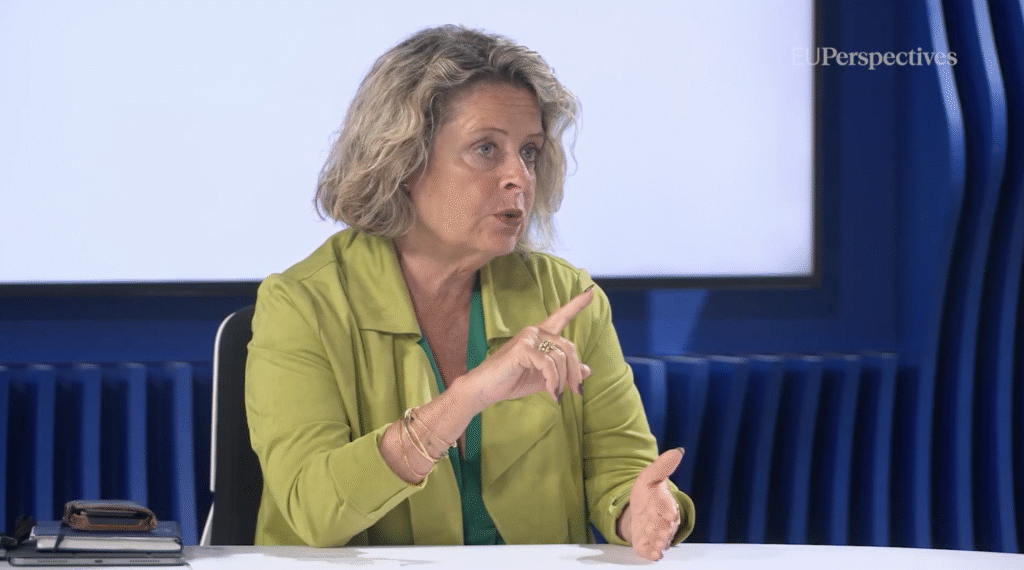
The European Union’s healthcare has moved beyond basic crisis management with mixed results. Michele Migliori, a policy analyst at the European Policy Centre assessed the state of the European Health Union in a EU Perspectives podcast.
The legal framework of European healthcare has seen much improvement since covid-19, Mr Migliori told EU Perspectives’ host Jennifer Baker in an 8 June podcast. Before the pandemic, the European Union relied on Decision 1082 to manage threats. Now, the new health package includes several regulations for cross-border health threats. Mr Migliori notes the progress; he highlights the Union Preparedness Plan and the Joint Procurement Initiative as key successes.
The creation of the Health Emergencies Preparedness and Response Authority, or HERA, changed the landscape. It shifted preparedness from a vague concept to a defined policy category. Mr Migliori states, “I think that the creation of HERA was something very, very important also because if you don’t spend enough money in the preparedness phase—covid made that clear—then you find yourself spending a lot more during or after the emergency.”
A new focus on strategy
HERA aims to manage crises before they escalate. Yet, the authority faces coordination hurdles. The European Union did not change its treaties to accommodate these new powers. This leaves some overlap between HERA and the European Medicines Agency, or EMA. Mr Migliori admits that fragmentation persists within the system.
Despite these overlaps, the focus on pre-emergency planning is vital. Mr Migliori explains that the initiative was necessary to address prior gaps. He says, “I think that the creation of HERA was very important because what also the President von der Leyen said when she announced it, when she announced this initiative, was that we were missing the focus on what comes before the emergency.”
The bloc must balance safety with speed. The current legal framework addresses many medical countermeasures. However, the system remains a work in progress. Coordination between institutions is essential for the future. The European Union is learning to manage health threats without formal treaty changes.
Health funding has evolved significantly over the last decade. In 2014, the sector received only €450m. During the pandemic, the focus shifted to resilience. Now, the Multiannual Financial Framework, or MFF, for 2028 aims to treat health as a competitiveness policy. Mr Migliori views this shift as a necessary economic evolution.
Shifting budget priorities
He warns that health must remain a priority within the broader competitiveness fund. It is not merely a cost, but a critical investment. Mr Migliori argues, “I think that we are moving from a resilience problem to our economic and competitiveness problem.” He believes the European Union must emulate the industrial strategies of the US and China.
Companies need support to scale up within the bloc. The goal is to keep innovative medical countermeasures available for all patients. Mr Migliori says, “And that’s how China and the US are seeing the pharmaceutical sector right now.” The European Union must step up to ensure its pharmaceutical industry remains globally competitive.
The Biotech Act aims to reduce regulatory barriers. It supports innovation and facilitates investment. Mr Migliori identifies two core challenges for the industry. First, clinical trials suffer from administrative complexity. Differences in how the 27 member states implement procedures create friction. Streamlining these processes is a primary objective for the bloc.
Regulatory hurdles remain
Second, the industry struggles with scaling up. Europe supports early-stage innovation well through funds like Horizon. However, later stages require significant capital. Companies need to build manufacturing capacity and conduct large trials. The EPC analyst notes that the financial environment for scaling up remains difficult.
If you don’t spend enough money in the preparedness phase—covid made that clear—then you find yourself spending a lot more during or after the emergency.
— Michele Migliori, EPC analyst
Member states must also play their part. They need to streamline processes within their own borders. Mr Migliori says, “But it’s not all about the European initiative, it’s also about the Member states initiative and they have to streamline the processes also inside of their borders.” Cooperation is essential for success.
The European Union must assume a larger role in global health. The United States has withdrawn funding from the World Health Organisation, or WHO. This creates a vacuum in early detection and global health funding. Mr Migliori believes the European Union is the right entity to fill this space.
Global responsibilities
The analyst emphasises the need for a holistic approach to health challenges. This is especially true for antimicrobial resistance, or AMR. This issue represents a dangerous, silent pandemic. Mr Migliori says, “I think that around the table we need the so called holistic approach.” Academics, politicians, and patients must work together.
The European Union has substantial financial power. It must use this to influence global health outcomes. Mr Migliori remains optimistic about the future. He says, “And I think that also from a global perspective, a global health perspective, the European Union has a lot to say and I’m sure that the European Parliament and member states will do the right thing.”