Porsche and Volkswagen are weighing mass layoffs as cheaper Chinese rivals pull ahead. Brussels wants to slow that slide with €1.5bn in loans for European battery factories. Whether Europe’s carmakers survive may hinge on who builds the batteries underneath them.
The European Commission has responded with a new call for proposals under the Battery Booster Facility. It offers up to €1.5bn in interest-free loans for battery cell manufacturing projects across the European Economic Area. The EU Innovation Fund provides most of the money, drawing on revenues from the EU Emissions Trading System, and the call remains open until 30 September 2026.
The stakes go beyond one funding call. Europe will not win the electric vehicle race only inside car factories. Battery factories will decide whether it can build the whole clean-technology supply chain itself or rely on other regions. Battery projects need support of this kind to survive one of the most difficult phases in any industrial sector: the move from pre-series production to full commercial scale.
Support for the critical ramp-up phase
The Commission created the Battery Booster Facility in June 2026 as part of its wider Battery Booster Strategy. It aims to accelerate battery industrialisation, strengthen European manufacturing capacity, and build a more resilient European battery value chain.
The facility targets projects that have already outgrown early testing but have not yet reached commercial scale. This phase is often the hardest in any industrial sector: it demands large amounts of capital to scale up production and prove reliability, while revenues remain inconsistent. By offering interest-free loans, Brussels hopes to ease that pressure and bring new battery manufacturing capacity to Europe faster.
Up to €500m per project
The call is open to battery cell manufacturing projects located anywhere in the European Economic Area. Eligible projects must be in the ramp-up phase at the time of application and produce cells for electric vehicles. Each must also be the applicant’s first full commercial-scale EV battery cell production project anywhere in the world, with a design capacity of at least 10 gigawatt-hours a year.
The Commission may offer successful applicants an interest-free loan covering up to 60 per cent of eligible costs, with a cap of €500m per project. Loans run for a maximum of eight years; repayment begins once ramp-up is complete or 36 months after signature, whichever comes first. The Commission will assess applications on their technical and financial maturity, and their added value for the European battery ecosystem.
Building Europe’s battery value chain
The Commission hopes the facility will do more than fund individual factories. Batteries sit at the core of the electric-vehicle transition. Without enough domestic cell production, Europe’s carmakers risk depending on external suppliers for one of a vehicle’s most valuable components. The Battery Booster Facility is therefore part of a wider industrial policy effort to keep clean-technology production inside Europe.
The Battery Booster Facility does exactly that: it steps in at the most critical and capital-intensive phase of industrial scale-up and does so in a way that is financially sound.
— Wopke Hoekstra, Commissioner for Climate, Net Zero and Clean Growth
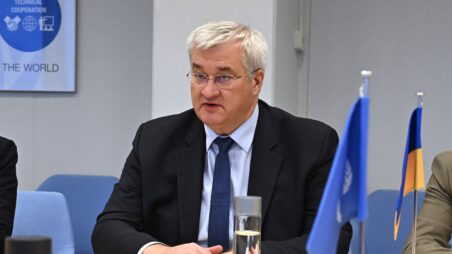
The wider challenge is China. Beijing already holds a dominant position in global battery manufacturing, giving its electric vehicle industry a powerful cost and scale advantage. “The Battery Booster Facility does exactly that: it steps in at the most critical and capital-intensive phase of industrial scale-up and does so in a way that is financially sound,” said Wopke Hoekstra, Commissioner for Climate, Net Zero and Clean Growth.
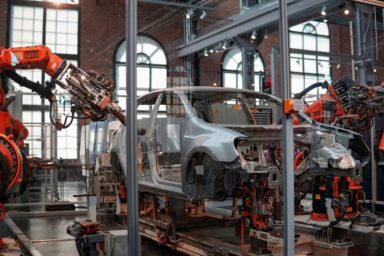
European carmakers already feel that advantage. They are cutting jobs as they face weaker demand, tighter margins and fierce Chinese competition. Porsche plans to cut around 9,000 jobs by 2035, while reports suggest Volkswagen is weighing cuts of up to 100,000 jobs and possible plant closures. If the EU relies too heavily on imported cells, it risks keeping the assembly lines while losing control over one of the vehicle’s most valuable technologies.
Brussels frames the Battery Booster Facility as more than a financing tool: an attempt to stay in the battery race, protect industrial know-how, and keep clean-tech jobs on the continent. Europe does not only need electric cars; it needs the batteries that make them European.