The European Commission unveiled its proposal for the EU’s next long-term budget exactly one year ago today. Twelve months later, negotiators remain no closer to a breakthrough. Instead, the talks have exposed deep divisions over how Europe should finance its ambitions and which priorities should take precedence when resources are limited.
While governments increasingly agree that the EU must invest more in defence, competitiveness and security, consensus quickly disappears when the discussion turns to funding and trade-offs. Disputes over the budget’s size, spending priorities and new sources of revenue continue to block progress, leaving one of the Union’s most important negotiations at an impasse.
Twelve months of negotiations have exposed the political fault lines shaping the next EU budget. Here are five key lessons.
1. Europe agrees on the challenges — but not how to pay for them
Over the past year, one point of consensus has emerged: Europe needs to invest more.
Russia’s war against Ukraine has pushed defence to the top of the agenda. The EU also wants to strengthen its industrial base, boost competitiveness, accelerate the green and digital transitions and reduce its dependence on foreign suppliers. Meanwhile, from 2028 onwards, Brussels must begin repaying the borrowing undertaken through the €800 billion NextGenerationEU recovery programme.
The disagreement begins once the discussion turns to how to pay for it.
The Commission has proposed a budget of almost €2 trillion, financed partly through new “own resources” — sources of income flowing straight to the bloc’s coffers — including revenues from carbon pricing, tobacco products, electronic waste and a levy on large companies. But many member states argue that Europe should instead cut spending elsewhere, raise national contributions or simply scale back its ambitions.
2. The fight is now about priorities, not just money
When the Commission presented its proposal last July, much of the attention focused on the headline figure: nearly €2 trillion. Today, the negotiations have evovlved into a broader political debate about what the European Union should actually spend its money on.
The so-called modernisers, led by countries such as Germany, the Netherlands and Sweden, argue that Europe’s geopolitical reality has fundamentally changed. More money should therefore flow towards defence, innovation, industrial policy and competitiveness, even if that means accepting cuts elsewhere.
Not everyone accepts this shift. The Friends of Cohesion and Friends of Agriculture, including countries such as Italy, Spain and Poland, argue that regional development and farm subsidies remain central to the European project and should not be sacrificed for new priorities.
As Italy’s Europe minister Tommaso Foti put it earlier this year: “Competitiveness and cohesion are not competing against each other. They are two sides of the same coin.”
That fundamental disagreement has become the defining fault line of the negotiations.
3. Parliament refuses to choose between old and new priorities
If governments are debating trade-offs, the European Parliament has largely refused to accept them.
Throughout the negotiations, lawmakers have argued that defence, competitiveness and innovation should all receive more funding — without reducing support for agriculture, cohesion policy or the European Social Fund.
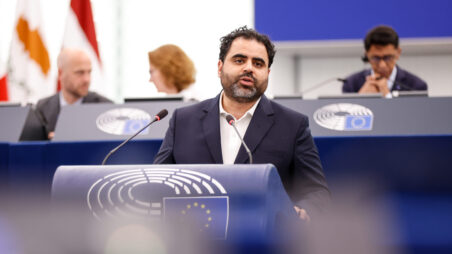
“New challenges cannot erase responsibilities. The Common Agricultural Policy, Cohesion Fund and the European Social Fund are not relics of the past. They are the backbone of European solidarity,” Parliament’s co-rapporteur Carla Tavares (S&D/PT) argued after lawmakers adopted their negotiating position.
“If everything is a priority, then nothing is a priority.”
— MEP Anouk van Brug (Renew/NL)
Parliament has also rejected the Commission’s proposal to finance repayments of the NextGenerationEU recovery fund from within the MFF itself. “NextGenerationEU debt must be repaid above the budget ceilings. Not at the expense of farmers, SMEs, researchers or Erasmus students,” co-rapporteur Siegfried Mureșan (EPP/RO) said.
In practice, that has placed Parliament closer to the Friends of Cohesion than to the more frugal member states.
Even so, not everyone in Parliament believes every priority can be funded at once. “If everything is a priority, then nothing is a priority,” Member of the European Parliament Anouk van Brug (Renew/NL) warned. “New spending on defence, innovation and industry is being layered on top of existing commitments to agriculture and cohesion — without clear cuts elsewhere.”
4. National politics increasingly drive the negotiations
National politics have become an increasingly important driver of the negotiations.
Countries facing budgetary pressure have become even more reluctant to increase national contributions. Germany, the Netherlands, Sweden and Austria have repeatedly insisted that the Commission’s proposal remains too expensive.
“The figures need to come down,” German Chancellor Friedrich Merz said at last month’s European Council summit. Swedish Prime Minister Ulf Kristersson has similarly argued that Europe needs “a better, not bigger budget.”
“There appears to be a strong incentive to reach a final agreement before the French presidential election in April 2027.”
— Bruegel senior fellow Zsolt Darvas
Resistance has also grown to the Commission’s proposed new revenue streams. Governments are reluctant to give Brussels new taxing powers, while countries benefiting from budget rebates are resisting efforts to abolish them.
Time is becoming another factor in the negotiations. Many governments see an incentive to reach an agreement before France heads to the polls in spring 2027, fearing a more difficult negotiating environment afterwards.
5. Ireland faces the toughest stage of the talks
The biggest disputes remain unresolved: the overall size of the budget, agriculture and cohesion funding, defence spending, new EU revenues and repayment of NextGenerationEU debt.
Every one of those issues is politically sensitive. Every member state also holds a veto over the final agreement.
Irish Prime Minister Micheál Martin has repeatedly said he hopes to broker a deal during his country’s presidency of the Council – before the end of the year. History suggests that ambition will be difficult to realise.
“There appears to be a strong incentive to reach a final agreement before the French presidential election in April 2027,” Bruegel senior fellow Zsolt Darvas recently told EU Perspectives. But political incentives alone, he cautioned, are no guarantee of success.
“In previous MFF cycles, the intention was consistently to conclude negotiations well before the start of the new budget period. In practice, however, agreements have repeatedly been reached only at the eleventh hour.”
Mr Darvas therefore argues that expectations should remain realistic. Rather than securing a final budget deal by December, he believes Ireland’s real benchmark of success should be reaching agreement among member states on the Council’s position, allowing negotiations with the European Parliament to move forward.
“I fear that anything short of a Council compromise would put at risk the prospect of concluding a final agreement before the French presidential election.”