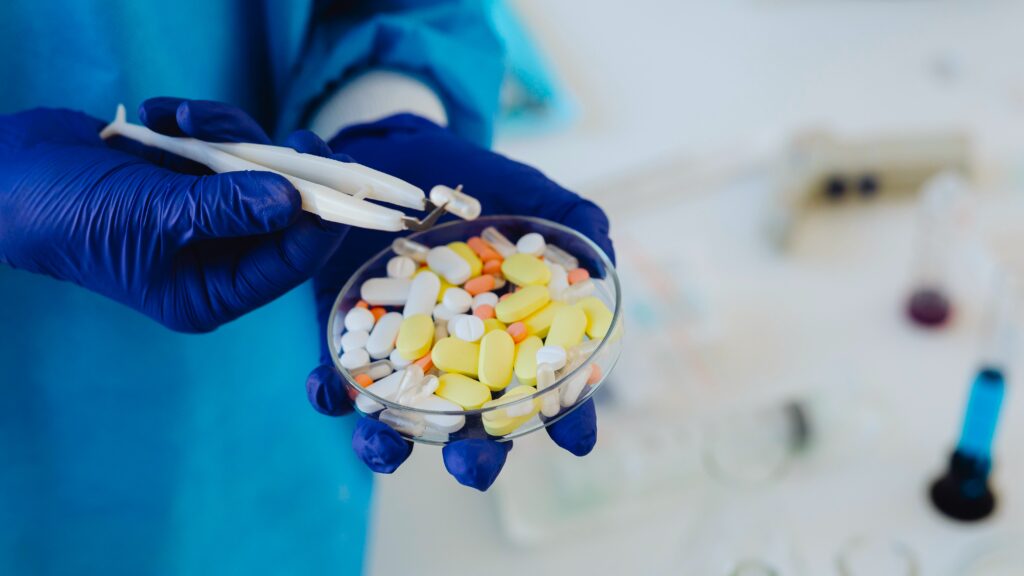
Europe’s pharmaceutical industry has two years to prepare. Donald Trump said imported generic drugs will remain tariff-free until 2028 before being hit with tariffs of up to 200 per cent in the latest step in his campaign to lure drug manufacturing back to the United States.
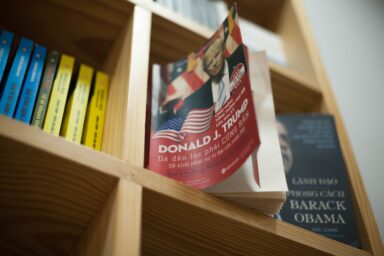
US President Donald Trump has announced that Washington will delay tariffs on generic medicines. From August 2026, imports of generic drugs will remain tariff-free for two years. After that, Trump said tariffs could rise first to 100 per cent and eventually to as much as 200 per cent for companies that fail to move production to the United States.
“This is done in order to reshore generic pharmaceutical production into America, with a penalty to those companies that decide not to build plant and equipment within the stated period of time given to them,” Trump wrote on his Truth Social platform.
Generic medicines contain the same active ingredients as original branded drugs whose patent protection has expired. They are typically sold at lower prices. Trump added that the current policy towards patented, branded and innovative medicines would remain unchanged.
The announcement is the latest move in Trump’s broader effort to use trade policy as a tool to bring industrial production back to the US. For Europe, however, this is not just another chapter in the tariff wars. Pharmaceuticals are one of the EU’s biggest export powerhouses. And the United States is by far its most important overseas market.
One of Europe’s strongest export industries
The EU has strengthened its position in global pharmaceutical trade in recent years. According to Eurostat, the bloc recorded a record trade surplus of €221 billion in pharmaceutical and medicinal products last year.
European pharmaceutical exports far exceeded imports, with the US emerging as the EU’s largest trading partner both for exports and imports.
In 2025, around 44 per cent of all pharmaceutical exports from the EU to non-EU countries went to the US. America’s share of European pharmaceutical exports has also grown significantly over the past decade, rising from roughly a quarter in 2015.
Put simply: if Washington were to seriously restrict drug imports, this would not be a minor trade dispute. It would hit one of the most successful parts of Europe’s industrial base.
As Andy Bounds, Financial Times correspondent, noted in an EU Perspectives podcast in April, pharmaceutical exports to the United States are worth more than €100 billion a year for Europe and represent a key pillar of transatlantic trade. “It is our biggest export to the US,” he noted.
America’s dependence on foreign suppliers
Trump’s push to bring production home is rooted in a real problem: the United States relies heavily on foreign suppliers for parts of its pharmaceutical supply chain. The biggest vulnerability is not necessarily cutting-edge patented medicines, where US companies remain strong. It is generic drugs and their active ingredients, known as APIs (active pharmaceutical ingredients).
According to data from the United States Pharmacopeia, more than half of the APIs used in US medicines come from India and the EU. India plays a particularly important role in supplying generic medicines, while the EU has a strong position in providing active ingredients for branded drugs.
The US itself produces only around 12 per cent of the total volume of active ingredients used in American medicines.
The battle for control of supply chains
The tariff dispute is therefore not just about prices for patients or trade balances. At its core, it is a wider battle over who controls strategic manufacturing capacity.
The Covid-19 pandemic exposed how vulnerable healthcare supply chains can become when production is concentrated in only a few regions. Since then, both the US and the EU have been trying to reduce their dependence on foreign suppliers of critical materials.
But bringing generic drug production back home is far more complicated than reshoring many other industries. The sector operates on thin margins, and companies have spent decades moving production to lower-cost countries.
Trump’s policy is therefore a bet that tariffs can change the economics of the pharmaceutical market — and persuade companies to invest in more expensive manufacturing facilities in the US.
Europe faces a similar challenge
The European Union is grappling with a similar problem, although it is taking a different approach. Brussels is working to strengthen domestic production of critical medicines and reduce dependence on a small number of foreign suppliers.
The irony is that the EU is already one of the world’s biggest pharmaceutical producers and exporters. Its strength, however, lies mainly in high-value products, while some parts of the supply chain, especially the production of basic active ingredients for cheaper generic medicines, remain heavily globalised.
Trump’s decision is therefore about more than American trade policy. It is another chapter in the growing competition between the US, Europe and Asia over who controls the production of medicines that modern healthcare cannot function without.