Europe’s post-war economic model was built on a world of expanding global trade, cheap energy and a stable international order. In an ever more fragmented world, can Europe adapt without losing prosperity?
“Europe’s post-war growth model is eroding. And it is unlikely to return to the form we once knew,” European Central Bank President Christine Lagarde warned this week.
Speaking at a World Economic Forum event in Geneva, Lagarde said Europe’s post-war growth had rested on three mutually reinforcing pillars: expanding global trade, access to relatively cheap energy and a stable international environment. All three are now weakening.
“Europe’s post-war growth model is eroding. And it is unlikely to return to the form we once knew.”
— European Central Bank President Christine Lagarde
For Europe, the first pillar is particularly important. The EU became one of the world’s most open economies, roughly twice as open to trade as the US. But the environment that allowed that model to flourish is changing.
Trade is becoming geopolitical
More than 2,500 trade restrictions were introduced globally last year, according to Lagarde. China has also moved up the value chain, increasingly competing directly with European producers in sectors where Europe once had an advantage.
Beyond finding the cheapest or most efficient supplier, governments are increasingly asking whether a particular supplier is politically reliable, whether a technology is strategically important and whether dependence on another country could become a vulnerability.
As Ursula von der Leyen put it in the political guidelines for her Commission presidency, Europe now operates in “a world shaped by the struggle for technological advantage, the militarisation of economic dependencies and an increasingly thin line between economy and security.”
From strength to vulnerability
European companies have been particularly successful at adapting to globalisation. In fact, they have often had little choice.
American and Chinese companies can build scale in enormous, relatively integrated domestic markets before expanding abroad. European companies operate in a single market that remains fragmented by national rules, languages, tax systems and other barriers. For many, expanding internationally was therefore a way to grow beyond the limitations of Europe itself.
That has made European multinationals unusually global. And, at the same time, unusually exposed when trade relations deteriorate.
Asia accounted for 41% of Mercedes-Benz’s sales in 2025. UK-headquartered AstraZeneca generated around 43% of its 2024 sales in the US. The consequences of trade tensions are already showing up in company accounts. BMW warned in March that tariffs imposed by the EU, US and China could wipe around €1 billion from its profits this year.
Globalisation is becoming geopolitical
For decades, economic interdependence was largely seen as a benefit. Countries traded because it made them richer. Companies built international supply chains because doing so made production more efficient.
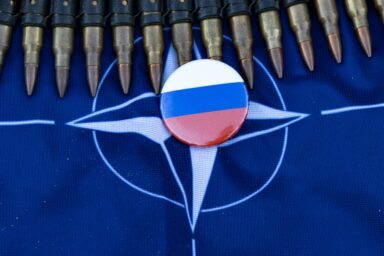
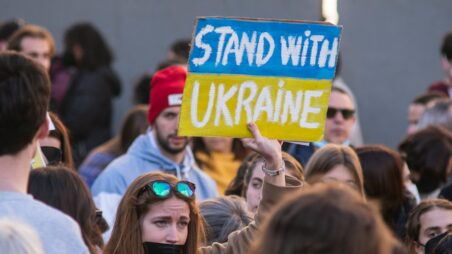
Now, the same interdependence can be viewed as a security risk. Energy is an obvious example. Russia’s invasion of Ukraine showed how dependence on a single external supplier could become a strategic vulnerability. The same logic is now being applied to critical raw materials, semiconductors, batteries and other technologies.
The result is what economists and political scientists increasingly describe as “weaponised interdependence”: the ability of countries to use their position in global economic networks to pursue strategic objectives.
As authors of the term Henry Farrell and Abraham Newman put it in Foreign Affairs in 2021, “geopolitics is slowly muscling free-market relations out of the way.”
Europe’s biggest untapped market is at home
The EU is responding accordingly. In March, the European Commission proposed its Industrial Accelerator Act, introducing “Made in EU” and low-carbon requirements for public procurement and public support in strategic sectors. The proposal also includes measures on foreign investment and faster permitting for industrial projects.
The logic is straightforward. If other major economies are protecting strategic industries and subsidising domestic production, Europe cannot simply assume that global markets will always remain open and competitive.
But this creates a difficult paradox. Europe needs to become less vulnerable to external shocks without becoming less open to the world because openness is one of the foundations of European prosperity in the first place.
“Geopolitics is slowly muscling free-market relations out of the way.”
— Henry Farrell and Abraham Newman, political scientists
European companies are already deeply embedded in global markets. If Europe responds to geopolitical competition by making it significantly harder or more expensive for companies to operate internationally, it risks encouraging them to put investment, production or research elsewhere.
The answer, therefore, is unlikely to be either unrestricted globalisation or European self-sufficiency. It is to make Europe itself a sufficiently large, integrated and competitive market that global openness becomes a strength rather than a vulnerability.
That means finishing the Single Market. Reducing the barriers that still prevent European companies from scaling across borders, deepening capital markets and making it easier for businesses to operate as genuinely European companies.
Lagarde’s warning is therefore about more than the future of global trade. It points to a challenge much closer to home. Europe has spent decades building a single market, but it may now need to make that market work much better if it wants to remain open to the world without being strategically dependent on it.