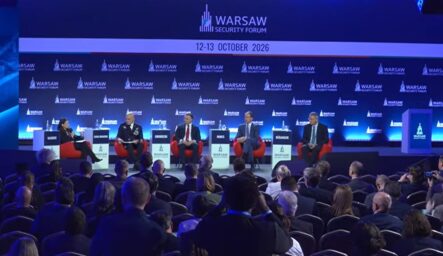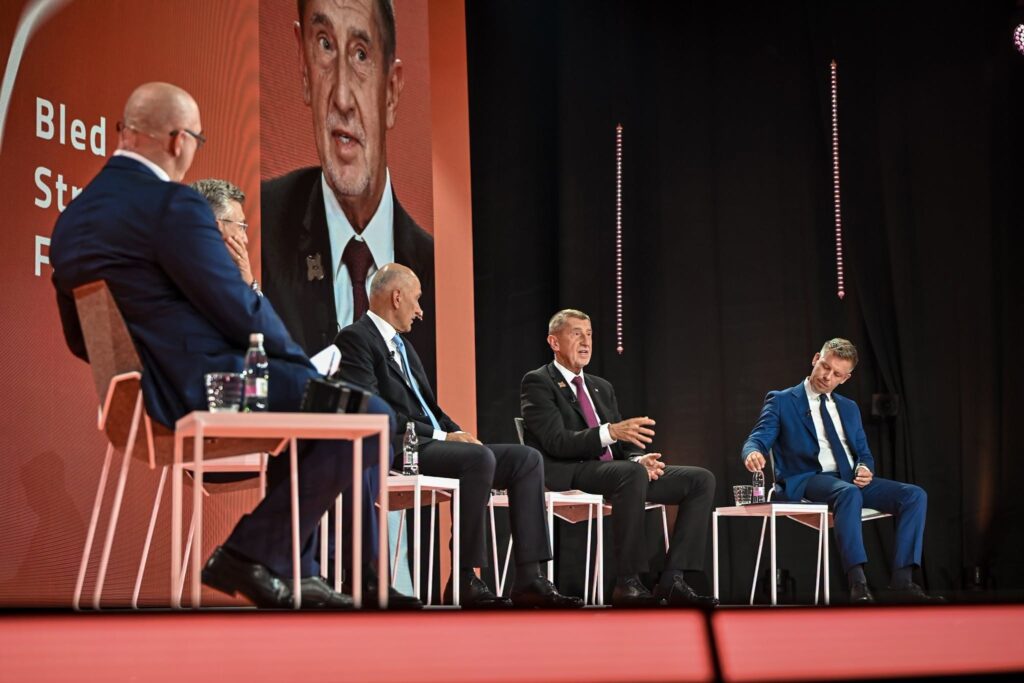
The prime ministers of Czechia, Hungary, Slovenia and Croatia have called for closer regional cooperation to give Central Europe more weight in EU decision-making. Meeting in Bled, Slovenia, they focused on the next EU budget and the region’s response to economic, energy and migration pressures.
“Meeting here is in a way an attempt to send a message to our partners that Central European countries are getting stronger, more resilient, more competitive, more democratic and more influential within the EU,” Croatian Prime Minister Andrej Plenković said.
Czech Prime Minister Andrej Babiš argued that closer coordination was needed because “Europe is not in the best shape nowadays”.
Hungarian Prime Minister Péter Magyar also welcomed efforts to reshape regional cooperation. “Central Europe can be the centre of Europe, but we have to do our homework,” Mr Magyar said.
Babiš proposes EU coalitions
“Today, the most important thing for us is to create coalitions,” Mr Babiš said. He proposed alliances of member states supporting competitiveness and cohesion funding during negotiations over the EU’s budget for 2028–2034. He also highlighted the revival of the Visegrad Group, comprising Czechia, Hungary, Poland and Slovakia.
The alliance had weakened because of disagreements over Russia’s invasion of Ukraine but was relaunched at a June 2026 summit. Its leaders subsequently agreed to coordinate on the EU budget, energy, migration, agriculture and competitiveness.
Mr Magyar called for governments to avoid “double-speak” between their domestic and European messages. He identified energy security, regional connections and enlargement into the Western Balkans as practical areas for cooperation.
Leaders criticise EU response to crises
Mr Plenković said migration, Brexit, the pandemic and the wars in Ukraine and the Middle East had reshaped Europe. He identified declining populations and energy infrastructure as common regional challenges.
Slovenian Prime Minister Janez Janša argued that EU membership had brought development funding and higher standards but that European institutions had increasingly responded to crises through excessive regulation. “It is all regulated, and it is the weakest point of the EU,” he said.
Central Europe can be the centre of Europe, but we have to do our homework.
— Péter Magyar, Hungarian Prime Minister
Mr Magyar accused the EU of treating Hungary unfairly over migration despite its role in protecting the bloc’s external border. Mr Babiš also criticised the Green Deal for increasing costs and weakening European industry.
The discussion, entitled “Shaping Europe from its Centre”, presented closer coordination as a way for Central European countries to exert greater influence. Negotiations over the EU’s next seven-year budget will test whether that shared message can produce a common position.