Europe is cutting red tape around food and feed. But the debate over pesticides exposes the awkward trade-off between giving growers more options and protecting public health and the environment.
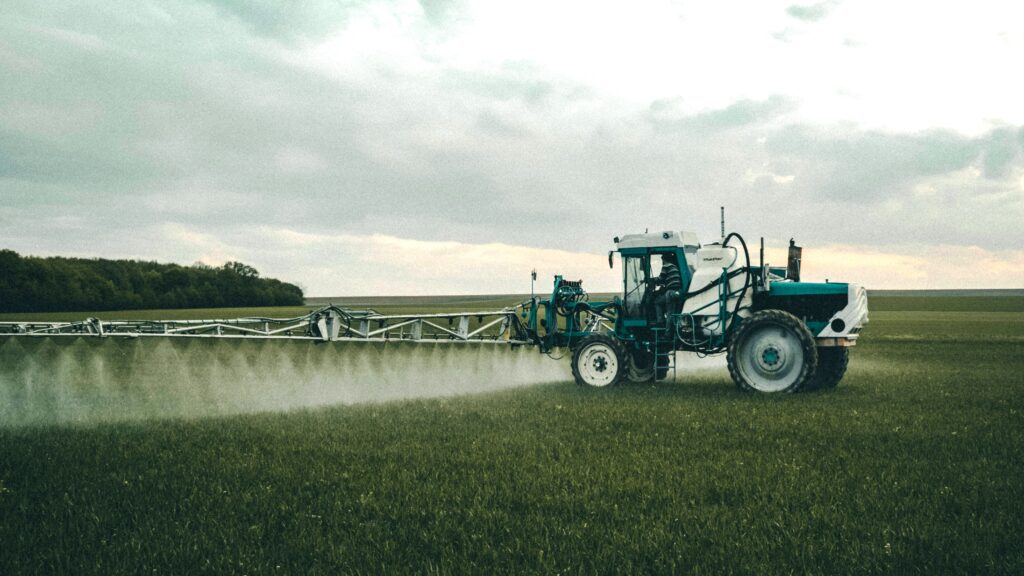
For farmers, the problem is increasingly practical: fewer approved substances mean fewer ways to deal with pests and diseases. For scientists, the concern runs in the opposite direction — some pesticide risks only become visible after years of exposure.
That tension was on full display on Wednesday as MEPs, farmers, scientists and regulators debated the European Commission’s food and feed simplification, also known as Omnibus X. The package aims to cut administrative burdens and speed up procedures covering plant protection products, biocontrol products, pesticides, import tolerances and food safety rules.
At the heart of the debate is a simple question: can Europe give farmers more room to protect their crops without weakening the safeguards designed to protect people and the environment?
A blocked system
The Commission proposal is part of a wider simplification agenda which aims at streamlining procedures both for companies and national authorities. For agriculture, a central question will be whether the EU can replenish farmers’ “toolboxes” more swiftly, for example, whether it looks to improve access to biocontrol pesticides and fast-track approvals for plant protection product.
European crop production is increasingly threatened by known and new pests and diseases, climate change, pesticide resistance and the loss of active ingredients, Anne-Kathrin Mahlein, Director of the Institute of Sugar Beet Research in Göttingen, told MEPs.
You can’t just ban things and not provide alternatives. — Cédric Benoist, Chair of the Cereals Working Party, Copa-Cogeca
For a host of pests and diseases, she added, there are almost no treatments. She argued that the EU needs a “clear, time efficient, and transparent procedure” for pesticide approvals, as well as more research funding, digital tools and artificial intelligence to help overcome backlogs.
Ms Mahlein’s call for faster approvals was echoed by MEPs on the agriculture committee. Herbert Dorfmann (EPP/ITA), the Parliament’s co-rapporteur, warned that Europe was losing older active substances without replacing them with new ones. “We’re not able to authorise new substances in this decade,” Mr Dorfmann said. He argued that Europe cannot keep losing existing crop protection tools without bringing new ones to the market.
Farmers warn of shrinking options
The practitioners’ panel made the same case from the field. Cédric Benoist, Chair of the Cereals Working Party, Copa-Cogeca, argued that farmers did not use plant protection products “for fun”‚ but to protect yield and crop quality. He also noted that weeds in cereal crops can take the light and soil nutrients‚ causing great loss of produce. Other plant health problems can cause deterioration in food quality, as in the case of ergot and mycotoxins. “You can’t just ban things and not provide alternatives,” he stated.
Robert Weidmer of the South Tyrolean Extension Service warned that fruit growers are also under pressure from pests like aphids in apple orchards. He explained that emergency authorisations help in dealing with specific outbreaks, yet they provide growers with no long-term solution.
According to Mr Weidmer, limited plant protection products were hampering investment and farm succession. Some farmers had already told their children not to take over the family orchards, he added.
Scientists caution against easing regulation
Environmental scientists cautioned that speedier authorisation cannot come at the cost of environmental safety. Martina Vijver, Professor and Scientific Director, Institute of Environmental Sciences, Leiden University, argued that several aspects of the omnibus proposal threaten to weaken the protection level of pesticide measures.
She criticised the idea of moving towards indefinite approvals for some pesticides. Periodic reassessment is not just administrative repetition but the mechanism that allows regulation to keep pace with science, she said.
Ms Vijver pointed to concerns over chronic low dose exposure, cocktail effects, endocrine disruption and links between pesticide exposure and serious health conditions. Pesticide residues have been detected in protected nature areas and surface waters, with impacts on bees, dragonflies, farmland birds and soils, she added.
For Ms Vijver, the EU needs stronger post-authorisation monitoring, green lanes for biocontrol products and a clear exit strategy for hazardous chemical pesticides.
Commission defends balance
The Commission insisted that the proposal would not lower EU safety standards. Almut Bitterhof, head of the pesticides and biocides unit at DG SANTE, said the package aims to reduce burdens, speed up procedures and help farmers fight pests, while maintaining protection of health and the environment.
Ms Bitterhof said conventional pesticides are still needed because the EU cannot rely solely on biocontrol substances. She also defended the risk-based approach to approving active substances. Unlimited approvals would not apply to those that raised concerns for human health or the environment, she stressed․
Imports and reciprocity
Another major issue was maximum residue limits, or MRLs, for imported products. Milvia Miccolis, Associate Professor at the University of Bari, pointed to a mismatch in approach. European farmers are not allowed to use certain pesticides in the EU, however, their residues are tolerated in the food imported from third countries. She said this was not only a food safety issue, but a question of reciprocity and fair conditions for European producers.
Several MEPs wanted to know whether the EU would apply stricter import tolerances to avoid double standards, while others warned this could hamper imports of food such as coffee or soya․
The Commission argued that its proposal struck the right balance between focusing on the most dangerous substances, setting MRLs at technical zero for the relevant products, and meeting its international commitments under World Trade Organization rules.
A fight over simplification
For farmers and many agricultural MEPs, simplification means faster approvals, fewer delays, better access to plant protection tools and more predictable rules. For environmental and health-focused lawmakers, simplification must not become deregulation. They argue that regular reassessment is essential because many pesticide risks become visible only after years of use.
The coming negotiations will decide whether Parliament backs the Commission’s balance, strengthens health and environmental safeguards, or pushes harder to accelerate market access for farm tools.