For the second year running, member states have refused to sign off the EU4Health budget 2026, over cuts to core funding for health NGOs. EUPHA (European Public Health Association) president Tit Albreht spoke to EU Perspectives about why public health cannot turn to industry money, and what Europe loses if it lets health funding fragment.
The European Union’s 2026 health budget is stuck. Member states have repeatedly refused to approve the Commission’s spending plan. At the centre of the dispute is a small line of money called operating grants, the core funding that keeps health NGOs running. It pays their staff salaries and their offices, and keeps them present in Brussels.
The Commission has moved away from these grants, and a growing group of governments is refusing to sign off the budget until they return. The 2026 work programme sets out how the year’s EU4Health budget is spent. EU4Health is the bloc’s main health funding programme for the 2021 to 2027 period.
The Commission defends its approach. Commission spokesperson Eva Hrnčířová told EU Perspectives that action grants—the money paid for specific projects—are “the best way to finance civil society working on health priorities”. They “provide reliable funding for concrete actions”. She calls EU money “a complementary source of funding” while noting that NGOs can also seek support from national, regional and local governments.
On the stalled vote itself, the Commission would say little. It said the process is ongoing and the draft shared with member states is “confidential”. Calls for proposals, it said, “will be launched once the Work Programme is adopted”, with work continuing under earlier programmes in the meantime.
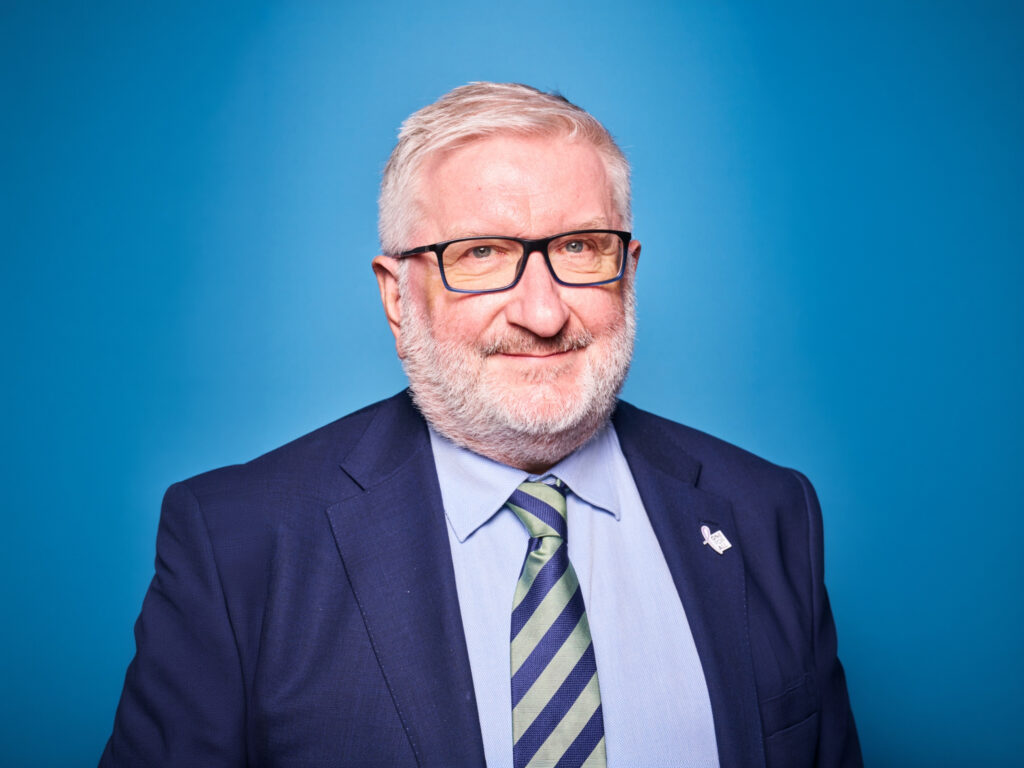
One of the groups caught in the standoff is the European Public Health Association (EUPHA), a network of national public health associations across Europe. Its president, Tit Albreht, a health systems researcher from Slovenia, spoke to EU Perspectives about what the cut costs, why public health cannot replace it with industry money, and why he warns that if Brussels does not defend health at Union level, no one else will.
The Commission says NGOs should rely on project grants instead of operating grants. Why is that not a substitute?
A project is not the same as an established institution. A project pays for a specific task, for a fixed time, and an association cannot [afford to] become unstable around that. We have a strategy, but you cannot build continuity on money that comes and goes. Our board and our section presidents are volunteers. They are not employed by us, and you cannot run permanent work off their goodwill alone. The operating grant is what pays a small professional team to hold the core together, the continuity, the presence, and the communication, which today matters enormously. You have to have people who do that. Take the grant away, and that part becomes totally unsustainable.
How large is the sum you are actually talking about?
We are not talking about millions. We are talking about three to four hundred thousand a year, for an association with 13,000 members. It is not an extravagant sum. It is just to pay for a small team of professionals. That is what makes the cut so hard to understand. It is a very small amount of money for what it holds together.
We are not talking about millions. We are talking about three to four hundred thousand a year, for an association with 13,000 members.
Could you replace public money with commercial sponsorship, as the big medical societies do?
We cannot raise commercial sponsors, and we do not want to. We have very strict rules, and many of our member associations do not want us anywhere near that money, because of the controversies around vaccines and around drugs. Our clinical colleagues are in a completely different world. A medical oncology congress has almost 30,000 people, its big sponsors contribute around 150 million euros, and members pay almost 200 euros a year. If we asked for even a fraction of that, we would not survive, and we would discredit our colleagues. So that door is closed to us.
The Commission also says NGOs can turn to their national governments. Does that work?
That is the most evasive answer, to say it is up to the member states. If they need it they will vote for it, and if not they will not. That is the logic of the minimum common denominator, which can end up being something very small. But some things are European infrastructure. Look at the European Reference Networks, which were once suddenly left without funding until a compromise was found. If you build a European structure, you cannot then say the member states will decide. What if they don’t? The Commission talks constantly about competitiveness. You do not become more competitive by pushing everything down to the lowest common denominator.
Is this only about NGOs’ own budgets, or something bigger?
It is also a political question, whether you have independent NGOs at all. Advocacy mattered enormously with HIV and AIDS, when patient groups pushed decision makers to develop new drugs. More recently in Slovenia, when we moved to ban smoking in closed spaces, it was young people’s groups who were instrumental, because it was not an institution pushing an agenda, it was people saying they want clean air. There are always groups in society who are neglected, and we need support for the weak, for people who cannot easily speak up about their health. And the damage is already real. The European Patient Forum lost six people who were employed, because of the loss of operating grants. This is not only public health in the narrow sense.
Why did the work programme fail a second time?
The countries that were against stayed against. They were not convinced by the Commission’s minor modifications, so everyone stayed with their votes, and that is what brought it down. In the past, countries hesitated, because they worried that if they blocked the programme they might lose money for their own projects. This time the community is more upset, and they took a very strong action that actually broke it. It is the second year in a row, and that is a very bad sign, because Europe is about compromise. It is a clear signal from many member states that the current approach is not working. And it feeds the idea that Brussels decides everything, which is exactly what we should avoid.
If you build a European structure, you cannot then say the member states will decide. What if they don’t?
What does the delay mean in practice?
Even if they agree at the end of September, you still need at least three months to put out the calls and set up the projects. The contracts will not be signed this year, and the projects will start in 2027 anyway. That puts real pressure on an agency like Hadea, which then also has to prepare the following year. And 2027 is the last year of the programme. If we fall into the same loop next year, it will be even worse, because everyone will be pushing for the next long term budget, which has to be agreed by the end of 2027.
What worries you about where health funding is heading after that?
In the next period, health risks being ground into a single track with biotechnology and agriculture, areas that are far more heavily shaped by commercial interests. If health disappears into that great sea, will anyone still notice it? Europe’s Beating Cancer Plan put more than four billion euros into motion, but there is no master plan for what happens when those projects end. We lack vision. You cannot say Germany wants this, Greece wants that, Sweden something else, and call it a European policy. If we are not going to protect health as a Union, as a continent, nobody else is going to do it for us.
So where does that leave EUPHA, and public health more widely?
We are not just sitting back and waiting. We will join the projects that matter for our work, on Horizon and in competitive tenders. But the EU talks about resilience mostly for defence. Resilience is also that we need people to be healthy. Europe is ageing, with low birth rates, and one of the main levers we have is public health. We do not pretend to be the most important piece. But in that mosaic we contribute some of the important stones.