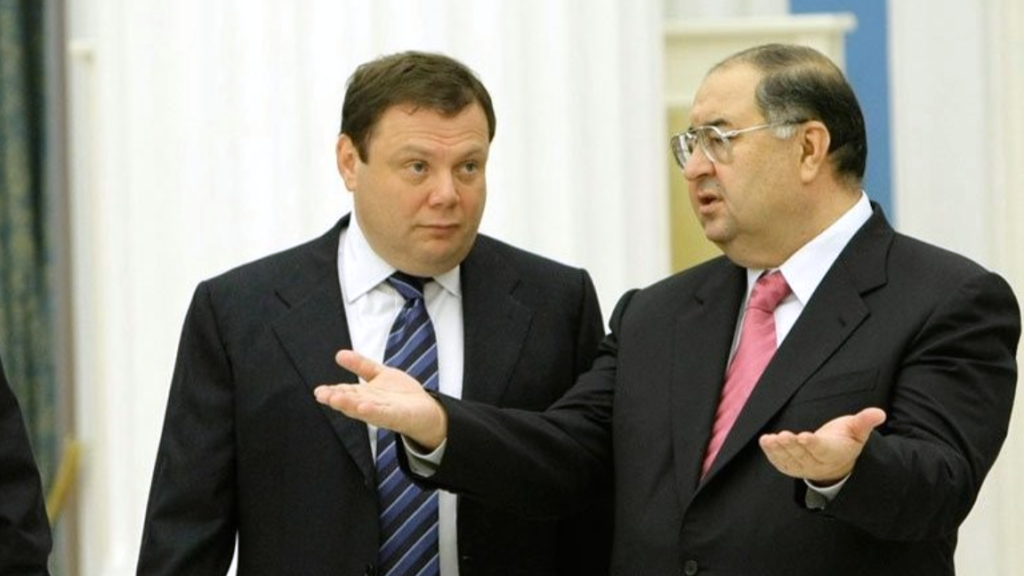
EU member states have ultimately backed Monday’s compromise to extend sanctions on thousands of Russian and Belarusian individuals and entities for three years, while removing Russian oligarchs Alisher Usmanov and Mikhail Fridman from the list.
The agreement was first reached on Monday afternoon but was held up after Latvia refused to back the compromise over the removal of the two men. EU ambassadors resumed talks on Tuesday morning and eventually confirmed the deal.
The formal approval means the sanctions will remain in force, avoiding their expiry at midnight.
The deal extends the individual sanctions regime until September 2029, compared with the usual six-month renewal cycle. Around 3,000 people and entities will remain under EU sanctions, which include asset freezes and travel bans.
Latvia holds up the deal
Latvia objected to the proposed removal of Mr Usmanov and Mr Fridman even though it supported the longer three-year extension. Latvian Prime Minister Andris Kulbergs said the country could not accept the delistings. “Extending the sanctions for 36 months would be the right move. However, the price for this must not be simply the removal of these two individuals from the sanctions list,” he wrote on X.
Latvia eventually abstained, allowing the agreement to pass without the unanimous objection that would have blocked it.
The dispute had already dragged on for more than a week. The sanctions were originally due to expire on 15 September, but member states agreed to extend them by seven days while they tried to resolve disagreements over the two names.
Why Usmanov and Fridman?
France joined Slovakia in pushing for Mr Usmanov’s removal earlier this month, citing national security concerns. Reuters reported that France had come under pressure from Azerbaijan over French nationals detained there. Baku has denied trying to influence Western sanctions decisions.
Luxembourg subsequently sought the removal of Mr Fridman. EU diplomats said the country argued that keeping sanctions on Mr Fridman while removing Mr Usmanov could weaken its position in an arbitration case in which Fridman is seeking $16 billion from Luxembourg.
The decision has drawn new sharp criticism from Ukraine. Foreign Minister Andrii Sybiha again attacked the delistings on Tuesday, calling them “shameful and unjustifiable”. “Moscow is celebrating because it got what it wanted: a sense of impunity, the humiliation of the EU, and division among Europeans,” he wrote. He urged EU countries to impose their own national sanctions on the two men.
The EU imposed sanctions on both billionaires in 2022. Mr Usmanov, who built his fortune largely in metals, mining and technology, was described by the EU as having “particularly close ties” to Russian President Vladimir Putin. Mr Fridman is the co-founder of Alfa Group and Alfa-Bank.