From secret NASA projects to government control, false claims are spreading ahead of today’s solar eclipse. Social media has transformed how far—and how fast—fallacies over astronomical phenomena spread.
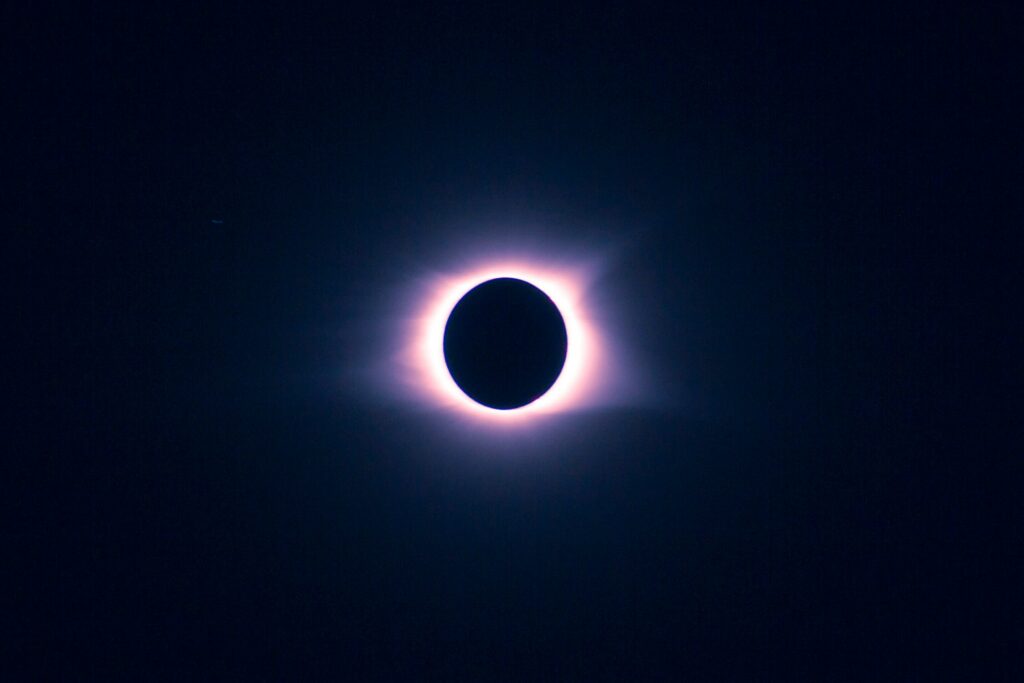
In a few hours, a total solar eclipse will be visible from Greenland and Iceland through regions of Spain, Portugal and Russia. Online, other versions of the event have assume lives of their own.
According to one claim, the Earth will lose gravity for seven seconds. Other posts warn that the sudden darkness could affect the nervous system, open dangerous spiritual ‘portals’ or form part of a government plan to control the population. None of these claims finds support in scientific evidence.
Old myths, adapted online
Eclipses have always attracted superstition, but this goes beyond traditional folklore in social media. “This time misinformation has focused specifically on the situation in Spain, one of the countries where the total solar eclipse will be visible,” Spanish fact-checking organisation Maldita told EU Perspectives. “Among the claims circulating is the idea that the eclipse is a government tool for social control—and that this is supposedly why free eclipse glasses are being distributed,” the organisation added.
This is the argument many users employ to explain why they do not intend to use this type of glasses (saying that they only recommend them to make money from their sale) or watch the eclipse at all. These users also claim that the eclipse “would be a distraction from the country’s real problems”, Maldita said.
According to the organisation, many of the accounts sharing the material already post about astrology, esotericism and predictions. Others have previously poseted conspiracies around COVID-19 and DANA.
The business model of many online platforms sees attention and time spent online as commercially valuable, therefore content that provokes a reaction is advantageous. For those reasons, the attention economy tends to privilege negative, emotional and conflictual information, while recommender systems influence which posts become most visible.
Spread the message!
At the same time, automatic decisions tend to replace human content moderators . TikTok is an example. More than 90 per cent of content removed during the second half of 2025 was automatic.
Meta has taken a different step in the US, where it ended fact-checking to put in place a Community Notes. The company has not made the same change in the EU.
The eclipse is just one more case of how false claims spread online. Recently, the European Commission turned to Meta, TikTok and professional fact-checkers after misinformation was linked to mass migration attempts from Morocco into Ceuta.
Under the Digital Services Act, the EU’s biggest online platforms must assess systemic risks created by their services, including risks linked to recommender systems, and adopt measures to reduce them.