War has disrupted Ukraine’s grain ports. Now a shrinking Danube is choking the backup route too. One river has become a weak link in Europe’s food supply chain.
Since Russia’s full-scale invasion in 2022, Romania’s Constanța port has carried a weight it was never built for. Grain from Ukraine reaches it by rail, road, and barge along the Danube, filling the gap left by a Black Sea under constant threat.
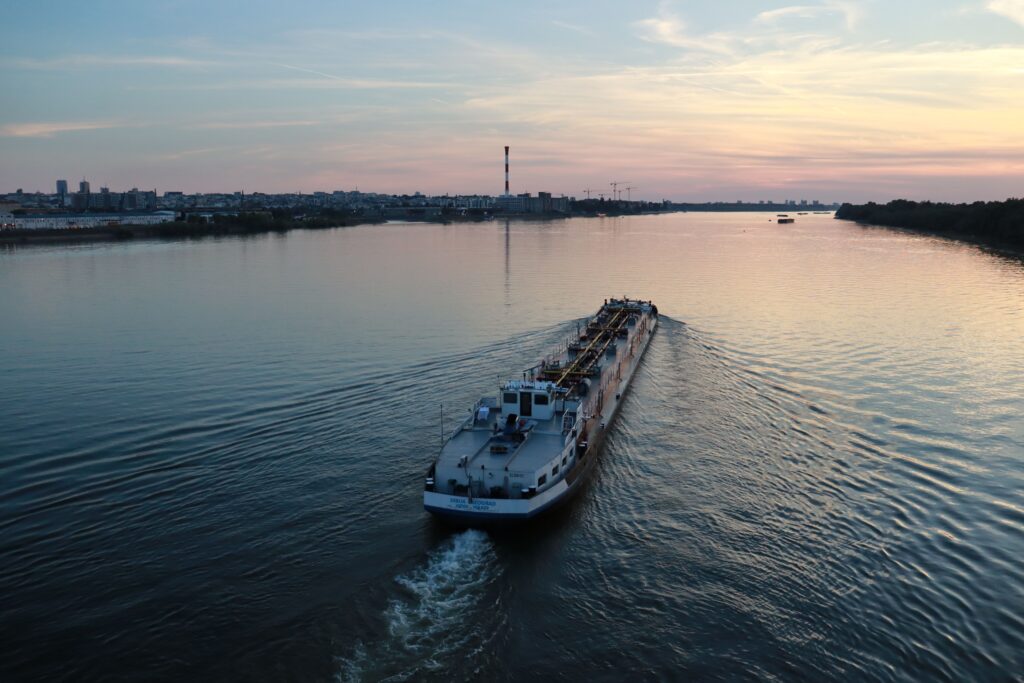
That gap is getting harder to fill. Heatwaves and months without rain have pulled the river down to record lows, and the vessels that once carried full loads now sail half empty.
Farmers without trucks
The strain shows up first on land, not water. “Romanian farmers no longer have access to trucks, and transport costs have increased dramatically,” said Stan Tiberiu-Dan, vice-president of the Forum of Professional Farmers and Processors of Romania. Fewer barge rotations mean longer waits and higher freight rates, already running above the seasonal norm.
Grain terminals feel the same squeeze from the other end. “My grain terminal could take 20 per cent more quantity to serve the Solidarity Lane project with Ukraine,” said Viorel Panait, president of the Constanța Port Business Association. But the Danube feeds the terminal, and there is not enough water to fill it.
The Solidarity Lane itself is a European Commission project, launched in 2022 to give Ukraine a way to export grain when its own ports are unreachable. Kyiv’s state rail operator is now in talks with neighbouring countries to open new routes. Even so, rail and river together can carry only about a third of what Ukraine’s Black Sea ports once handled, according to Agrarian Minister Taras Vysotskyi.
The timing could hardly be worse. Romania is heading for a record wheat, barley, and rapeseed harvest, while mild temperatures have delayed the corn harvest in the country’s main growing regions. Both crops are now converging on the same trucks, railways, and barges, at the exact moment the river can carry the least.
A river with no slack left
The pressure is already reaching supermarket shelves. Wheat and corn futures surged in both Paris and Chicago last month, driven by a mix of Black Sea disruption, a powerful El Niño, and rising energy costs. “With no immediate relief in sight, either through an easing of hostilities in the Black Sea or a recovery in Danube water levels, prices could remain well supported,” said Burak Cetinok, global head of research at shipping and energy brokerage Arrow.
The Danube is not the only river in trouble. On the Rhine, water levels at the critical Kaub chokepoint have fallen a third below their 2018 record, so far that several German states suspended their Sunday lorry driving ban for the first time in three years just to keep goods moving by road. Drought is no longer a Danube problem or a Rhine problem. It is a supply chain problem, and it is spreading, leaving little room for error for a corridor already stretched to its limits.
Constanța’s role has been to be the relief valve.
— Adrian Dobrita, Head of Trade, RWA Raiffeisen Agro Romania
Adrian Dobrita, head of trade at RWA Raiffeisen Agro Romania, put it plainly. “Since 2022, Constanța’s role has been to be the relief valve. When Odesa is under attack, cargo goes west and out through Romania. That assumes the corridor feeding Constanța has slack. It doesn’t,” he said. The river cannot promise what the war keeps demanding, and this summer, nobody can say when it will be able to again.