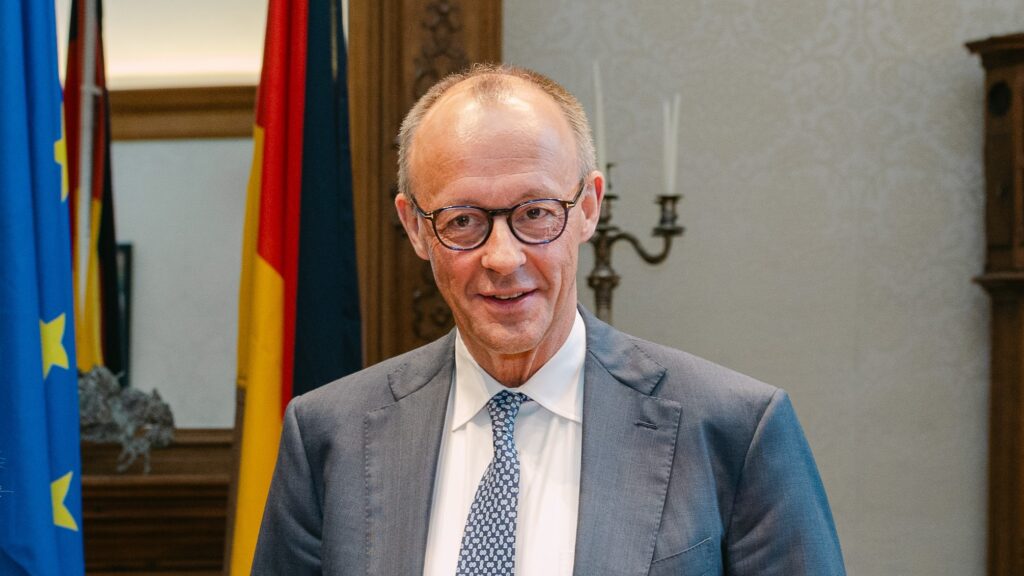
Berlin wants all EU countries to contribute to covering Ukraine’s budget shortfall next year, threatening to block talks on the bloc’s next long-term budget otherwise. This emerges from a letter Chancellor Friedrich Merz sent to European Council President António Costa.
Germany is making its support for the European Union’s next long-term budget conditional on every member state contributing to Ukraine’s funding. Chancellor Friedrich Merz wants a fairer sharing of the financial burden. He warns that Berlin will not agree to discuss other budget issues without a collective commitment.
In a letter to European Council President António Costa, Merz proposed making Ukraine funding a key item on the agenda of this week’s informal EU summit in Dublin. He argues that bilateral aid to Kyiv remains unevenly distributed among member states, with only a handful shouldering most of the cost.
“A collective commitment that all of us, without exception, will contribute fairly to closing this gap is an essential prerequisite for resolving this issue and for discussing any further matters, particularly those with financial implications,” the German chancellor wrote in the letter, seen by Bloomberg.
You might be interested

Ukraine faces a funding gap
Ukraine estimates it will face an additional budget shortfall of around €70 billion next year, which comes on top of the €45 billion already earmarked for 2027 under a previously approved €90 billion EU loan. To help fill this new gap, the European Commission has pledged to cover an additional €45 billion, but member states are still exploring how to secure these new funds and no concrete agreement has been reached.
Germany, the EU’s largest net contributor to the bloc’s budget, does not want to shoulder a disproportionate share of the costs. Czechia, Hungary, Slovakia and Bulgaria have already signalled they are unwilling to provide further financial assistance to Kyiv. Czechia, Hungary and Slovakia have also secured exemptions from guarantees for the previous €90 billion loan.
Merz’s demand comes as member states struggle to reach agreement on the EU’s 2028–2034 budget. Linking the two issues could make an already difficult negotiation even more complicated. The German chancellor wants EU leaders to agree on how to share the cost of supporting Ukraine first. Only then should they move on to other financial matters.