Europe is bracing for higher energy bills as the conflict in the Middle East pushes oil prices above $100 a barrel. Eurozone finance ministers are resisting a return to the broad subsidies used during the last energy crisis. Any new support, they say, should be temporary and targeted.
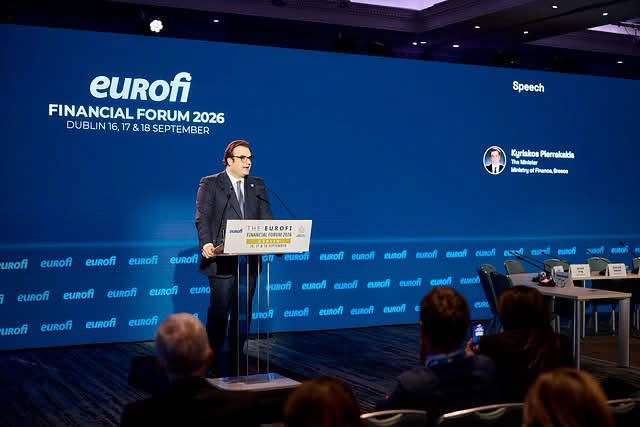
“We need to protect today without mortgaging tomorrow,” Eurogroup President Kyriakos Pierrakakis said after finance ministers of eurozone countries met in Dublin on Friday.
The Eurogroup is monitoring energy and financial markets daily, although Mr Pierrakakis said no emergency meeting was currently planned. Ministers could reconvene online if conditions deteriorated, but “right now that’s not the plan”, he told reporters.
Their immediate challenge is preventing higher bills from deepening the cost-of-living crisis without repeating the broad-based subsidies introduced after Russia invaded Ukraine. Governments must also avoid measures that encourage greater fossil-fuel consumption, European Economy Commissioner Valdis Dombrovskis said.
Oil prices have risen above $100 a barrel amid disruption in the Strait of Hormuz, roughly 50% above their level before the latest conflict. Higher wholesale costs are reaching petrol stations and placing further pressure on transport, manufacturing and household heating.
Support should target households most in need
Mr Pierrakakis said governments could intervene if conditions became more difficult. However, new measures should remain targeted, temporary and compatible with the EU’s fiscal rules.
Mr Dombrovskis described the rise in prices as a supply-side shock caused by Europe’s continued dependence on imported fossil fuels. Increasing demand through universal subsidies would not resolve that shortage, he argued.
We need to protect today without mortgaging tomorrow.
— Kyriakos Pierrakakis, Eurogroup President
Several countries are also considering taxing the additional profits earned by energy companies. Portugal has proposed a levy on energy-company profits that exceed the average of the previous two years by more than 20%. Germany, Spain, Italy, Poland and Austria are among the governments seeking further discussion, according to Reuters.
Mr Dombrovskis said member states could already introduce windfall taxes under national law. The Commission was prepared to share successful approaches, but it was not proposing a common EU levy.
Energy costs feed into interest rates and debt
The energy shock is also spilling into financial markets, raising inflation expectations and government-bond yields. In turn, this raises borrowing costs for states, companies and households. The European Central Bank (ECB) increased its policy rate by 25 basis points last week.
“Uncertainty defines our horizon,” ECB President Christine Lagarde said. Energy prices would influence future decisions, but not determine them automatically, because they can simultaneously increase inflation and weaken consumption and growth.
Euro-area debt is expected to reach 90% of GDP this year, while government interest payments will exceed 2% of GDP, according to European Stability Mechanism chief economist Rolf Strauch. The impact will emerge gradually because much of the debt has long maturities, but highly indebted countries face greater exposure to higher borrowing costs.
The gap between French and German ten-year bond yields has reached 100 basis points for the first time since 2012. Nevertheless, officials said markets continued to function normally, with Mr Pierrakakis describing himself as “concerned but not anxious”.