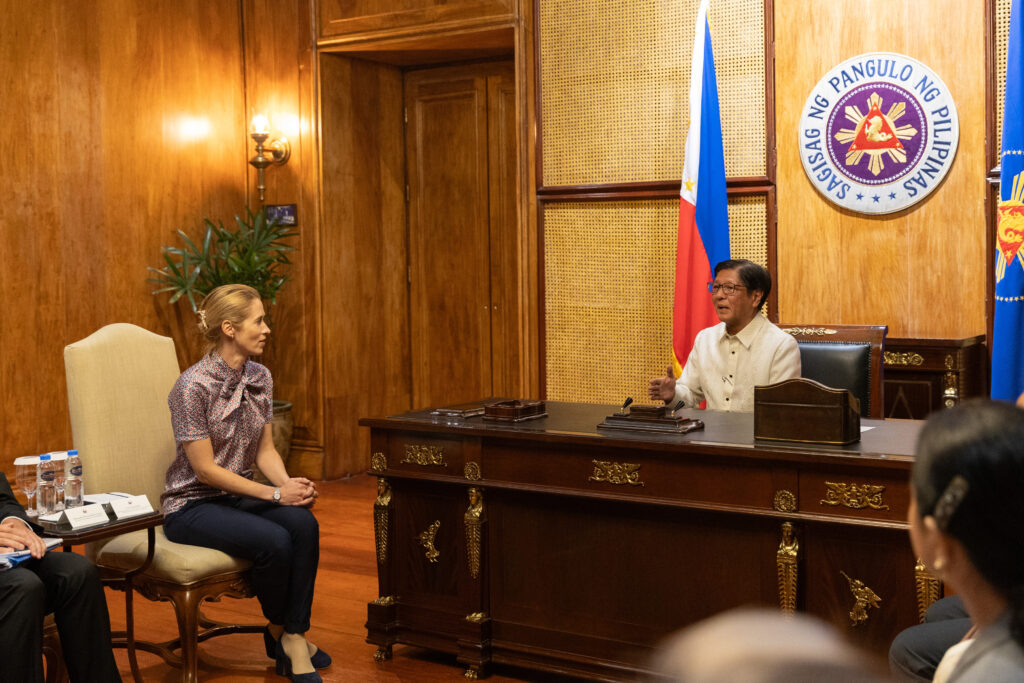
European companies could soon gain easier access to the Philippines’ 113-million-strong market under a new EU trade deal that would remove or reduce barriers on more than 97 per cent of bilateral trade. The agreement would also open Philippine public procurement to foreign bidders and give European exporters better access to sectors ranging from machinery and medicines to agriculture.
The agreement covers more than 94 per cent of tariff lines, according to the European Commission. European exports of machinery, transport equipment, medicines and medical appliances are among those expected to benefit.
European agricultural exporters would also gain improved access for pork, poultry, dairy products and spirits. Agriculture Commissioner Christophe Hansen said the agreement included tariff preferences for pigmeat and protection for almost 200 European geographical indications.
“It is good news for European farmers,” Mr Hansen said. Protected names prevent overseas producers from marketing imitations under established European product names.
Philippine public contracts open to foreign bidders
The Philippines would open its government-procurement market to foreign bidders for the first time. European companies could therefore compete for public contracts under clearer and more predictable rules.
The agreement also covers services, investment, intellectual property and digital trade. Trade in goods between the EU and the Philippines reached €17.6bn in 2025, while trade in services totalled €10.3bn in 2024. The EU was the Philippines’ fourth-largest trading partner, accounting for 8.3 per cent of its goods trade.
The Philippines already receives preferential access to the European market through the EU’s GSP+ scheme, which removes tariffs from approximately two-thirds of product categories. The free-trade agreement (FTA) would go further by creating broader, reciprocal and legally binding commitments for both sides.
Negotiations originally began in 2015 but stalled after two rounds. Brussels and Manila resumed talks in March 2024, completing six further rounds by May 2026.
Agreement still requires further work and approval
The political agreement does not immediately change tariffs or trading conditions. Negotiators must still determine how the deal will be implemented and finalise the remaining technical details. Commission officials said the remaining negotiations could take several weeks. The full text and detailed market-access commitments will not be published until the agreement formally concludes. Once completed, the text must pass through the EU approval process, including scrutiny by governments and the European Parliament.
This is another mutually beneficial partnership that will strengthen our resilience and trade diversification. It is good news for European farmers.
— Christophe Hansen, Agriculture Commissioner
Rules governing food safety, animal and plant health and technical product standards should reduce costs and delays for exporters. The deal also includes provisions on energy and raw materials intended to encourage investment, particularly in renewable energy. Canned tuna remains a sensitive issue for European producers. The Commission said negotiators were balancing Philippine market access with the interests of Europe’s canning industry, but withheld tariff details.
“Our FTA does not just remove barriers to trade and investment,” Trade Commissioner Maroš Šefčovič said. “It builds a modern, forward-looking partnership between the EU and the Philippines.” Human rights and the Paris climate agreement would become essential elements of the deal.
The Commission has not announced when the agreement could enter into force. Once implemented, EU trade agreements would cover countries representing more than half of the world’s population. Brussels already has deals in force with Singapore and Vietnam and has concluded negotiations with Indonesia. Thailand is its most advanced continuing negotiation in Southeast Asia, while Brussels also hopes to make progress with Malaysia.