Ireland is putting competitiveness, artificial intelligence and copyright at the heart of its six-month EU Council presidency, with the government aiming to break down single-market barriers, advance the EU Inc. proposal and build consensus on rules for AI and creative works.
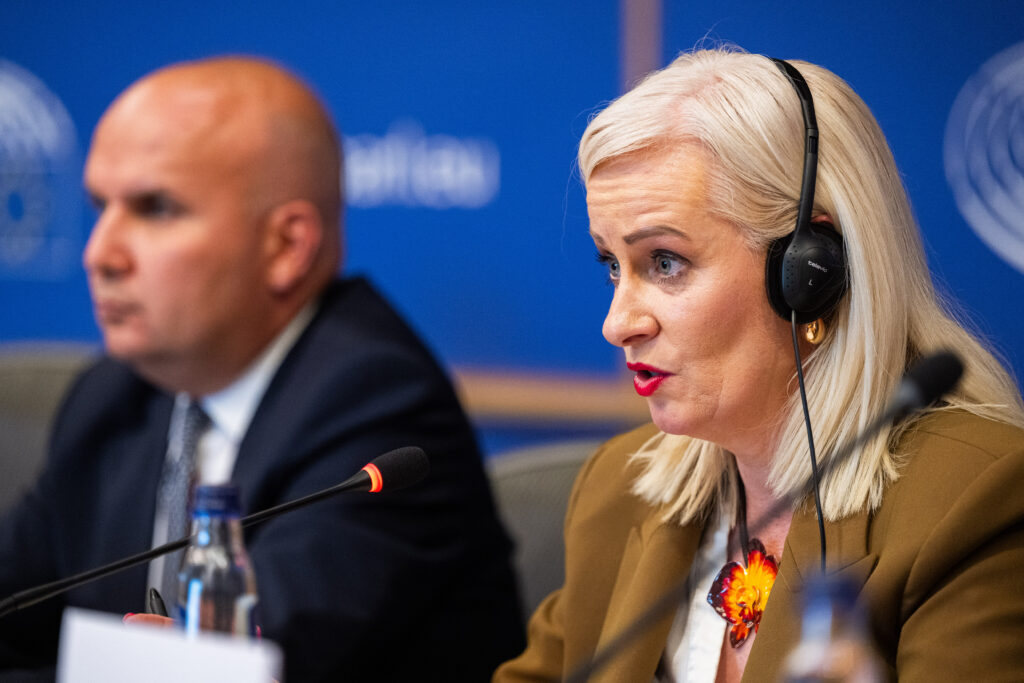
“Enhancing our competitiveness is a key priority for this Presidency,” Niamh Smyth, Minister of State for Trade Promotion, Artificial Intelligence and Digital Transformation, told lawmakers on the European Parliament’s Legal Affairs Committee.
Under the Presidency’s motto, “strength through unity”, Ireland aims to overcome the fragmentation of the single market, regulatory complexity and difficulties in scaling European businesses.
EU Inc. and AI: Ireland’s priorities
EU Inc. is a proposal for common European rules to help companies establish and expand across the Union more easily. “A company seeking to operate across the European Union should not be required to navigate 27 different legal systems,” Smyth said. Therefore, for Smyth, advancing the file is a central objective of the Presidency. Ireland wants to secure a Council position and move towards trilogue negotiations in November. “The weeks ahead will be a crucial period for this proposal,” she said, while acknowledging the timing challenge.
“Enhancing our competitiveness is a key priority for this Presidency.”
— Niamh Smyth, Ireland’s Minister for Trade Promotion, Artificial Intelligence and Digital Transformation
Artificial intelligence is another priority. The country has established a national AI office, and on 14 October the Presidency will hold an international AI summit. Smyth described it as “one of the most important events” of the Presidency, with a particular focus on AI adoption by businesses and SMEs.
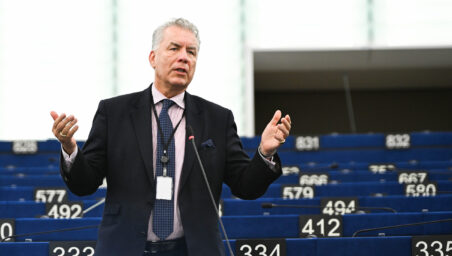
Lawmakers pressed Smyth on the topic. Tobiasz Bocheński (ECR/PL) said the bloc is “a leader of regulation” but not “of technology and development”.
Europe’s copyright struggle
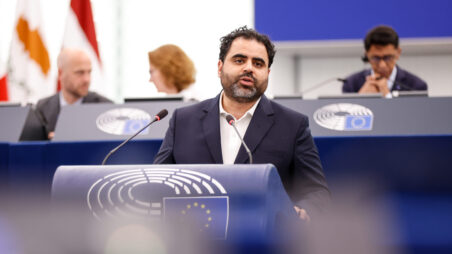
On copyright, Tiemo Wölken (S&D/DE) raised concerns over AI companies buying and destructively scanning books for training data. He asked the Presidency to prevent companies from circumventing copyright rules and the destruction of European cultural works.
Michael McNamara (Renew/IRE) also asked how the country intends to build consensus between member states, creators and AI companies over remuneration for copyrighted material, while ensuring Europe has access to the data it needs to develop competitive AI systems.
In response, Ireland aims to establish a framework that rewards creativity, supports innovation and cultural diversity, and remains fit for the digital age. To the minister, discussions should take account “creators, rights holders, users, researchers and innovators”.
Four months left to turn priorities into agreements
Ireland took over the rotating Presidency on 1 July and will hold it until 31 December 2026. It is the country’s eighth time holding the role. When Ireland launched its Presidency in July, it said the six-month term would be defined by “action and by delivery”.