Teenagers wait in the dark at the port of Antwerp, paid a few hundred euros to prise cocaine from a shipping container. Behind them is a criminal economy that recruits minors, pressures dockworkers and reaches into local politics. Lawmakers now want Brussels to match that scale with a coordinated response.
That response arrived on Thursday. The European Parliament voted 601 to four, with five abstentions, in favour of a resolution demanding a coordinated EU crackdown on drug trafficking networks. MEPs want more money and equipment for police, and tighter security at ports. They also want closer information-sharing between customs, law enforcement and judicial authorities across the bloc.
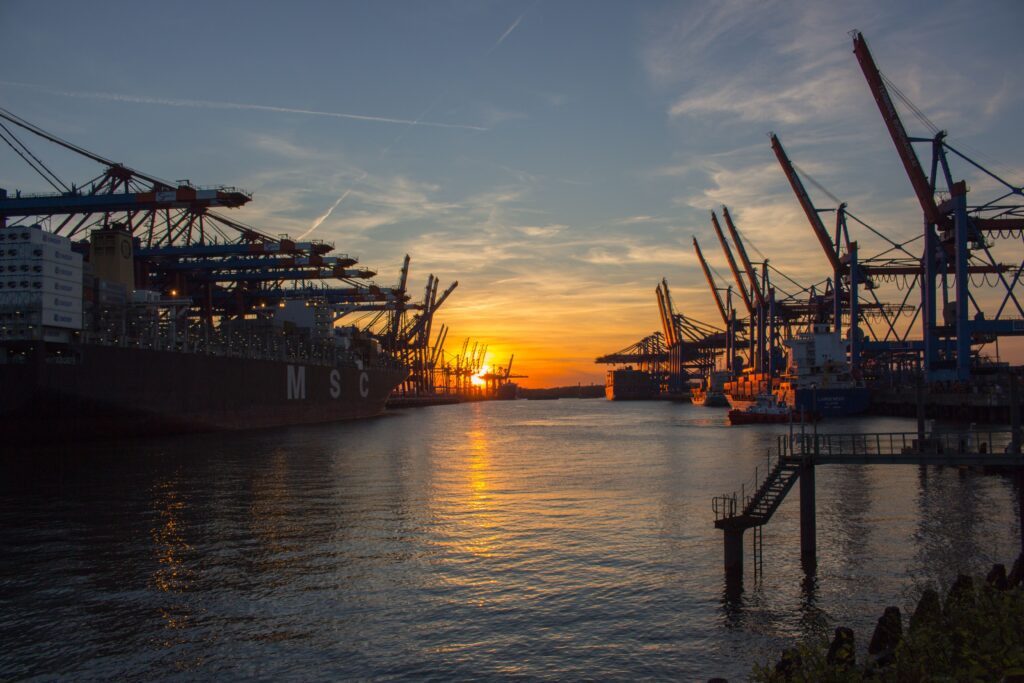
The scale of the problem is already visible at Europe’s busiest ports. Belgian customs alone seized 55 tonnes of cocaine in Antwerp in 2025. Yet investigators reckon they intercept only 10 to 40 per cent of what actually arrives. A Europol report published in June found that drug trafficking accounts for 36 per cent of the EU’s most threatening criminal networks. That is more than any other criminal activity.
Children paid to do the dirty work
Behind those numbers are, increasingly, children. Traffickers recruit teenagers through Snapchat or Telegram. The teens slip into container terminals at night to pull the drugs out before customs finds them, a practice known in the ports as ‘extraction’. The youngest such ‘extractor’ caught in Antwerp last year was 13. In Rotterdam, police have previously arrested a 14-year-old doing the same job.
Belgian police say gangs offer boys rewards ranging from a smartphone to €20,000 for a single night’s work. “Sometimes they’ll do it for an iPhone or a few hundred euros,” An Berger of the Belgian federal police said. If caught, minors can spend weeks in juvenile detention. If not, the gangs simply discard them once the risk grows too high.
The violence reaches well beyond the docks. In November 2025, gunmen shot 20-year-old Mehdi Kessaci dead in broad daylight on a Marseille street. MEPs said he was targeted because his brother campaigns against organised crime. Drug-related violence killed 24 people in Marseille in 2024 alone. The year before, it killed 49.
Dockworkers face their own pressures. Rival gangs fighting for control of Antwerp’s cocaine trade have set off bombs across the city. Port staff report threats aimed at keeping them silent. MEPs want port workers and fishers to receive proper training, equipment and legal protection. They also want stronger vetting to root out corruption on the docks.
A highway across the Atlantic
Much of the cocaine now bypasses the big container ports altogether. Smugglers transfer loads at sea between the Canary Islands and the Azores. They use speedboats to dodge patrols along what investigators call the ‘cocaine highway‘. A joint operation this spring seized 11 tonnes of cocaine and 8.5 tonnes of hashish from that stretch of ocean alone, arresting 54 people. Spain’s Guardia Civil led the operation, coordinated through the Maritime Analysis and Operations Centre – Narcotics (MAOC-N).
Mad Max on the ocean — Dimitri Zoulas, Head of Ofast, France’s anti-narcotics office
The remoteness of those waters is precisely what makes them useful to traffickers, and dangerous to everyone else. Dimitri Zoulas, head of France’s anti-narcotics office Ofast, has described the scene of armed speedboats crossing the corridor as “Mad Max on the ocean”. It is, he added, “a phenomenon never before seen in Europe on this scale”. The vessels are often fitted with four powerful outboard motors and can reach speeds above 130 km/h. Armed men authorities link to South American cartels typically guard them. MEPs want Europol, Eurojust, Frontex and the European Maritime Safety Agency to deepen cooperation with MAOC-N. They call it “a model of international collaboration against crime”.
Money remains the other front. A kilo of cocaine bought for a few thousand euros in Latin America can fetch close to €30,000 once it reaches European streets. MEPs argue that stopping the trade means stopping the profits. The resolution calls for tougher anti-money-laundering rules across the bloc’s banks. It also wants member states to freeze and seize traffickers’ assets more quickly.