Benjamin Netanyahu enters Tuesday’s election with Donald Trump’s backing, but relations with Europe remain strained. Polls point to no clear winner. A change of government could improve ties with the EU, while leaving disputes over Gaza and Palestinian statehood unresolved.
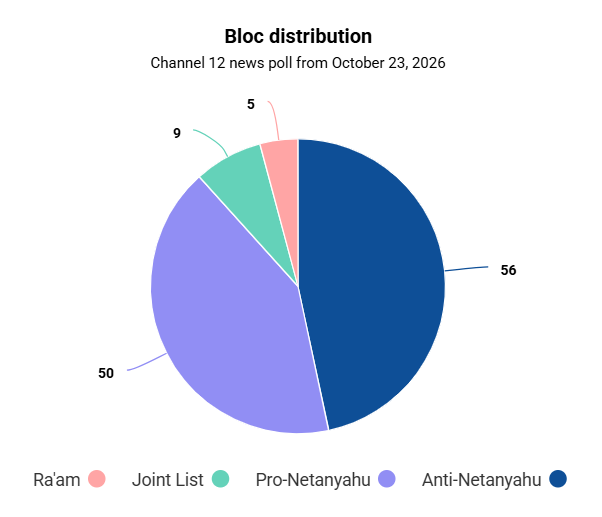
US President Donald Trump repeated his endorsement on Sunday as Israel’s campaign entered its final days. Meanwhile, Reuters reported on Monday that the race had narrowed, with smaller parties potentially deciding who governs. The outcome depends on coalition negotiations as well as which party finishes first.
A close race, with no straightforward majority
Former army chief Gadi Eisenkot has emerged as Mr Netanyahu’s leading challenger. His Yashar party has led Likud in polling, but that does not guarantee a government. His opposition to working with parties representing Arab citizens complicates his route to the 61 seats needed for a parliamentary majority.
Who will best cooperate and coordinate with the President to finish the job in Iran and expand peace in the region? — Ophir Falk, Netanyahu’s foreign policy adviser
The opposition also includes former Netanyahu allies Naftali Bennett and Avigdor Lieberman, alongside centrist and left-wing parties. Their shared determination to replace the prime minister does not remove their differences. Mr Netanyahu, meanwhile, retains potential partners among far-right and ultra-Orthodox parties.
Security and responsibility for 7 October remain central. Reuters’ reporting on Monday highlighted survivors’ anger and demands for an investigation into the failures preceding the attack. Mr Netanyahu’s campaign instead stresses his subsequent military record and relationship with Washington.
His foreign policy adviser, Ophir Falk, made that argument explicit in remarks published on Monday by The Jerusalem Post: “Who will best cooperate and coordinate with the President to finish the job in Iran and expand peace in the region?” The campaign is presenting closeness to Mr Trump as an electoral asset.
Eisenkot offers a different leader, not peace
The distinction matters for European governments hoping for a reset. Mr Eisenkot opposes Mr Netanyahu’s far-right coalition partners and has criticised settler violence. But he also opposes Palestinian statehood. “Two states for two peoples is a mistake,” he said in an interview reported by Reuters on Friday.
His position on settlements combines support for continued construction with opposition to some government plans. He has rejected development in the E1 area, which European governments oppose because it would further undermine the territorial basis for a Palestinian state. He also insists that Hamas’s military capabilities must be destroyed or dismantled.
Associated Press reaches a similar conclusion: a new government might curb settler violence and remove some unauthorised outposts, while allowing established settlements to remain and expand. Its reporting suggests that removing Mr Netanyahu would leave much of Israel’s policy towards Palestinians intact.
Europe must decide what a reset would require
Israel’s international standing is receiving less electoral attention than security. “Israeli voters are very much one-issue voters, and the issue in this election is security,” Ofir Dayan, a senior fellow at the Institute for National Security Studies, told JTA. Concern about isolation has not become the campaign’s defining issue.
European demands are more specific than a change of leadership. In their latest conclusions, EU leaders called for humanitarian access to Gaza, the withdrawal of Israeli forces, Hamas’s disarmament and a reversal of settlement expansion. They reaffirmed support for two states. Mr Eisenkot’s rejection of Palestinian statehood would therefore leave a fundamental disagreement unresolved.
The election could bring Europe a different negotiating partner or leave Mr Netanyahu governing through another period of uncertainty. Either way, the next coalition’s decisions on Gaza and the West Bank will determine whether warmer diplomacy produces a substantive improvement in relations.