As Washington pushes for a diplomatic breakthrough, Kyiv and Brussels are turning to the hard financial question of what comes next.
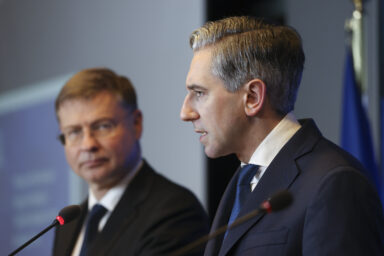
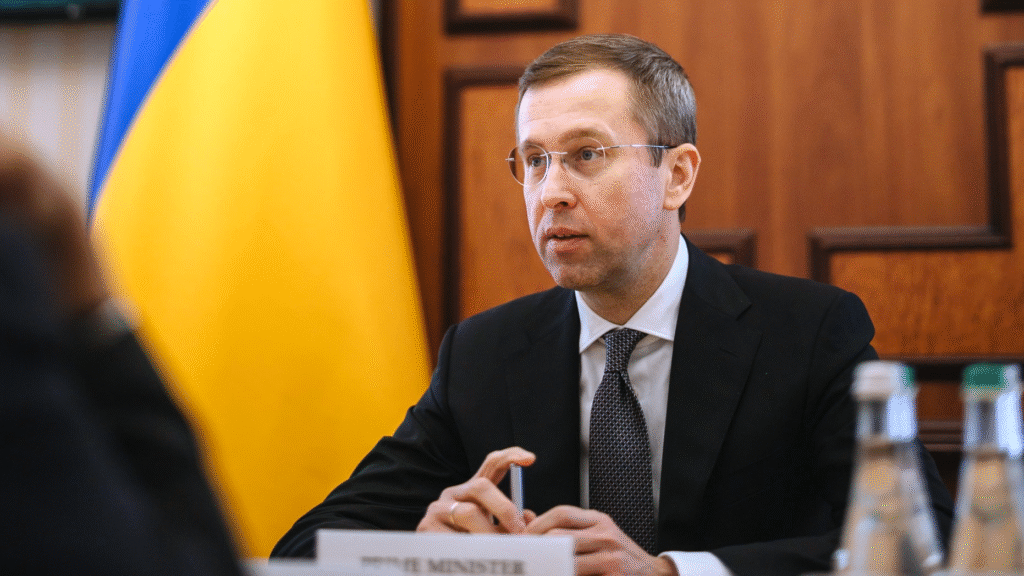
Ukraine and Europe have begun taking a closer look at how much money Kyiv will need in 2026 and 2027. And how to fund it. Ukraine’s new prime minister, Sergii Koretskyi, held his first talks with Economy Commissioner Valdis Dombrovskis on Monday.
The meeting focused on Ukraine’s financial needs for 2026 and 2027, reforms needed to unlock money under the approved €90bn loan programme, and preparations for Ukraine’s financial strategy for 2027. The aim is to strengthen the country’s economic resilience.
The European Commission also stressed that Europe cannot shoulder Ukraine’s financing needs alone. Mr Dombrovskis and Mr Koretskyi agreed that other international partners need to step up their support, whether for budgetary or defence purposes. “It is essential that international partners deliver on their commitments, strengthening Ukraine alongside the EU,” Mr Dombrovskis wrote on X.
Commission spokesperson Balázs Ujvári pointed to Norway, which has pledged $9bn for Ukraine in 2027. “This is the path, and we expect other partners as well to step up to the plate.”
No figure yet for Ukraine’s funding gap
The size of the financial gap that will need filling remains unclear. Ukraine has provided the Commission with information about its situation, but Monday’s meeting was only a first step, Ujvári said.
“What you need to do first is to get a clear picture of what the budgetary and financial situation is. That is step number 1, and then as a potential step number 2, you can look at ways of addressing it.”
No specific figure has therefore been set yet. The Commission plans to continue technical talks with Kyiv over the coming days and weeks.
It also wants input from the International Monetary Fund, whose programme is closely linked to the EU’s macro-financial assistance. “Before we can establish a concrete figure, more discussions will be needed,” the spokesman added.
Money talks as US diplomacy gathers pace
The financial discussions come shortly after US special envoys Jared Kushner and Steve Witkoff visited Kyiv. The Commission expressed appreciation for the latest diplomatic efforts. “The push for a new momentum through diplomatic contacts and the visit of the US negotiators to Kiev is particularly welcomed,” Commission spokesperson Christian Wigand said.
Brussels has not, however, suggested that the talks have brought a fundamental shift in Russia’s position. It pointed to continued Russian attacks on civilians, Ukrainian energy infrastructure and grain exports through the Black Sea. “Putin’s actions lead to devastation. Putin’s words reiterate Russia’s maximalist goals. None of them contribute to an end of Russia’s war,” Mr Wigand stressed.
The EU’s position therefore remains unchanged: it continues to support a full and unconditional ceasefire, stands ready to help broker a diplomatic settlement and will keep pressure on Russia through sanctions.
Frozen Russian assets remain on the table
Prime minister Koretskyi and commissioner Dombrovskis also discussed frozen Russian assets. Ukraine proposed moving their management from Belgium to the EU level, according to the Commission.
Mr Ujvári stressed that this is not a new initiative. The issue remains on the European agenda, he said, noting that the European Council called last year for further work by member states and the European Parliament on its technical and legal aspects. He also recalled that the proposal lacked sufficient support in the Council at the end of last year.
Monday’s talks did not produce a new funding package or a concrete figure for how much the EU should provide to Ukraine. They do, however, show Brussels and Kyiv laying the groundwork for the next phase of financing, just as a new US diplomatic push tests whether it can bring an end to the war closer.