With no Bolsonaro in sight for the next four years, relations between Brazil and the EU are set to remain pragmatic. Brussels will offer open markets, Brasília can be a partner on a number of issues — apart from the most important one, Russia.
An underdog’s victory chases away the European Union’s nightmare of having to face yet another world leader of the Trump–Putin–Xi axis of thuggery. On Sunday, Brazilian voters gave the incumbent President Luiz Inácio Lula da Silva a fourth term. He beat Flávio Bolsonaro, his right-wing challenger and the son of former president Jair Bolsonaro, with 51.8 per cent of the vote to 48.2 per cent.
It was a surprise as Mr Lula entered the run-off from behind. He had finished two percentage points behind in the first round. No Brazilian candidate had ever lost the first round and then won the second. But turnout rose, and Mr Lula drew ten million additional votes.
The winner’s first thanks went to the young generation of voters. “I want to thank the generosity of the Brazilian youth, who took to the streets to defend democracy,” he said.
The road not taken
Now consider the alternative: what a Flávio Bolsonaro government would have meant for Europe. He was expected to continue his father’s political legacy, including his confrontational approach to the EU’s environmental agenda. Jair Bolsonaro’s government has often criticised the EU’s environmental standards as barriers to trade, Brussels media wrote. The EU–Mercosur deal might have faced delays or renegotiation. Mr Lula inherits an accord that is already running.
Forests would have been the flashpoint. Under Bolsonaro senior, deforestation rates surged, despite wide international condemnation. Resistance to the EU’s deforestation rules would have been likely. Sanctions or trade barriers might have followed.
Under Bolsonaro, Brazil’s agricultural policy focused on expanding exports to China and the US, potentially sidelining EU interests. — Global Banking & Finance.
Alignment would have shifted too. Mr Bolsonaro’s policies often closely mirrored those of the Trump administration. US President Donald Trump had embraced the Bolsonaro family. He remained silent about Mr Lula’s win on Sunday.
Mr Lula chose a different path. He campaigned on Brazilian sovereignty and painted his rival as a puppet of the US. Many Brazilians rejected the Bolsonaro family’s cosy ties with Washington. Brussels now has a counterpart that prizes its independence; even as that rose comes with many a thorn.
Open markets, rigid rules
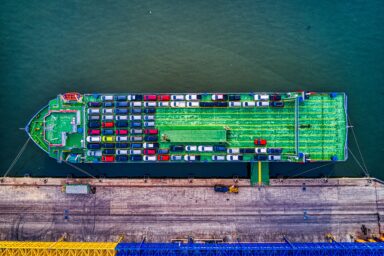
The foundations of the relationship are solid. The EU is Brazil’s second-biggest trading partner, accounting for 15.3 per cent of its total trade. Brazil is the bloc’s largest supplier of agricultural products, which made up 42 per cent of Brazilian exports to the EU in 2025.
Europe sells machinery and transport equipment, which make up 40.9 per cent of its exports to Brazil. Chemical products add 28.7 per cent. The interim trade agreement has applied provisionally since 1 May 2026. It created one of the world’s largest free-trade areas.
Ursula von der Leyen, president of the European Commission, welcomed the result in that spirit. “Together we will keep working closely for free and open trade,” she said. Media editorials reported a wider chorus. “Democracy and multilateralism have won in Brazil. Europe’s partnership with Brazil is thriving,” a Brussels voice was quoted as saying.
A Bolsonaro junior presidency might have redirected farm exports elsewhere. “Under (Jair) Bolsonaro, Brazil’s agricultural policy focused on expanding exports to China and the US, potentially sidelining EU interests,” wrote Global Banking & Finance. The outlet also said that “Bolsonaro’s government has often downplayed climate change and sought to expand agricultural land at the expense of the Amazon.”
Green leverage, green limits
Mr Lula still faces tough European rules. “Regulation on deforestation-free products imposes rigid requirements on imports, directly impacting trade relationships with countries like Brazil,” Global Banking & Finance explained. Yet he arrives with leverage. His government reported the Amazon’s lowest deforestation rate since 1988, a drop of 41.8 per cent.
It should not be too difficult for Brussels to see an opening. It can use the new rules and the Amazon’s progress to brand Brazilian supply chains as deforestation-free. Soy and beef should keep flowing in large volumes. They will simply face stricter sustainability metrics.
Congress is (…) likely to move further to the right. This could undermine the green promises of the EU–Mercosur agreement. — Heinrich Böll Foundation
The danger lies in Brazil’s new legislature. Voters elected an overwhelming number of Mr Bolsonaro’s political allies. Mr Lula is bound to face resistance at every turn. The Heinrich Böll Foundation is blunt on the stakes. “Congress is already willing to override the president on environmental law, and is likely to move further to the right. This could undermine the green promises of the EU–Mercosur agreement,” it wrote.
That would damage Europe’s central bargain. If Congress weakens environmental law, frictions will follow. Mr Lula’s green pledges are only as good as his ability to keep them. Brussels must therefore watch Brasília’s politics as closely as its forests.
A yawning gap on Russia
Europe wants more than soy. “Brazil supplies over 90 per cent of the world’s niobium, a metal used to enhance steel products’ strength,” the European Parliament’s research service notes. A secure flow of such minerals would help the EU diversify away from Chinese rare earths. Joint research on green technology is another prospect.
Digital cooperation is the other prize. Brussels is expected to fund open-source digital public goods through the OPIN network. These tools support climate monitoring and traceability. They also link directly to compliance with the deforestation rules. ECDPM, a think-tank, describes the task. “The policy challenge now is how to make these systems more interoperable, trusted, sustainable, resilient, less dependent on foreign technologies and useful beyond Brazil’s borders,” it wrote.
Politics will warm, but not completely. “Although Lula condemned the violation of Ukraine’s territorial integrity by Russia, Brazil has neither applied sanctions against Russia nor provided weapons to Ukraine,” the European Parliament’s research service states dryly. The South American country’s dependence on Russian fertiliser means little will change soon. Differences over Venezuela will persist as well.
A Bolsonaro government would have widened the gap. His position on Ukraine could have strained relations with the EU severely. Brussels will still press Mr Lula for closer votes at the United Nations. It will also seek common ground on climate at COP 31 and at the World Trade Organisation.
Why Brazil chose Lula
Christian Lynch, a political scientist at the State University of Rio de Janeiro, saw a verdict on democracy. “People here realised they don’t want to surrender democracy,” he said in what appears a rather sceptical view of the nation’s will to govern itself. “It was a big surprise.” The younger Mr Bolsonaro had promised to seek amnesty for his jailed father and to change the constitution.
Thomas Traumann, a political analyst and press secretary for Dilma Rousseff, a disgraced former leftist Brazilian president, expressed his views in sharper terms. “Most people want change, but not the Bolsonaro change,” he told The New York Times. The result was also a rebuke to the Trump administration, which had appeared willing to help Mr Bolsonaro.
Together we will keep working closely for free and open trade. — Ursula von der Leyen, European Commission president
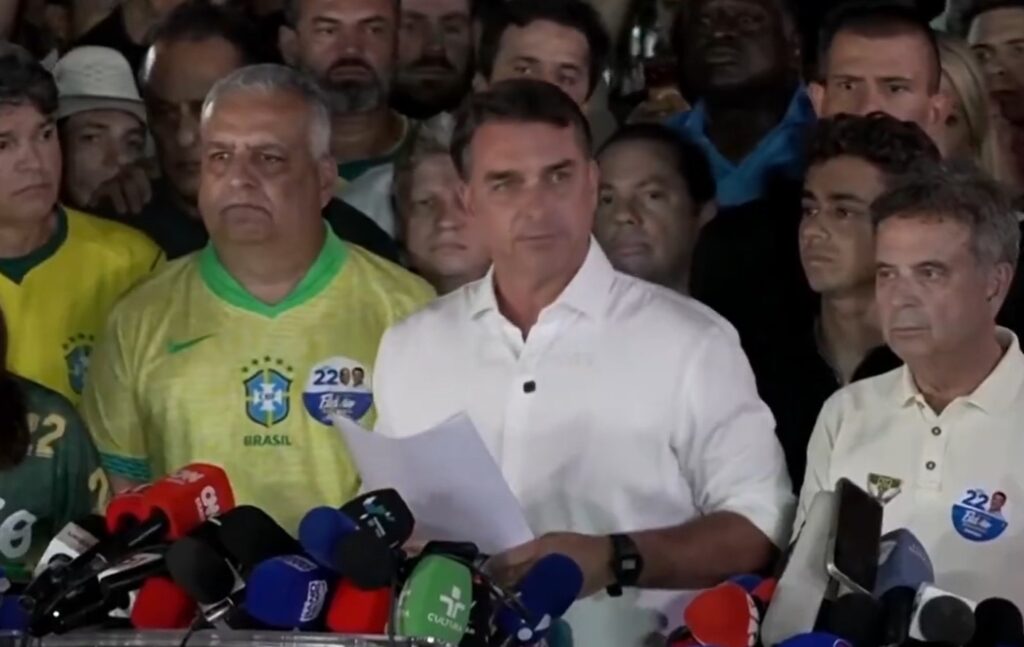
Mr Bolsonaro has not conceded. He called the extension of voting hours a “dirty trick” and demanded that the election be annulled. “There’s a lot that needs to be cleared up before Brazil simply accepts this foul play that took place in these elections,” he said at a news conference in Brasília.
History is against him. No Brazilian presidential election has been annulled since the return to democracy. Yet his supporters are angry. “We know we’ve been robbed again,” said Valéria Maria de Melo, a 49-year-old housewife, bursting into tears.
Crime, debt, and the bottom line
Security is where cooperation looks most promising. Brazil’s major ports make it a primary departure point for cocaine shipped to Europe. In September 2026, Europol and the Brazilian Federal Police dismantled a major trafficking network. Security cooperation—counter-narcotics, cyber, and maritime—will expand.
Mr Bolsonaro would have been a poorer partner. “His focus on domestic issues might have limited Brazil’s engagement with Europol on transnational crime,” Global Banking & Finance said. “Brazil’s role as a transit point for narcotics could have intensified under Bolsonaro’s more isolationist stance,” it wrote.
Mr Lula is not a flawless partner. At 80, he must lead a polarised nation plagued by a spiralling debt crisis, high grocery prices, and growing fears about organised crime. His popularity waned in his third term. Voters also gave his opponents a strong hand in the legislature.
For Brussels, the verdict is positive but conditional; it merits partial relief rather than all-out celebration. Mr Lula’s fourth term locks in a trade accord and a somewhat friendly trajectory. It will pay off — if the EU couples market access with firm, verifiable green and governance standards that survive Brazil’s fractious politics.