Energy prices are pushing eurozone inflation higher again. But will the shock spread further? Economist Pia Fromlet spoke to EU Perspectives how Europe has held up so far better than expected and what is the ECB waiting for.
Inflation is now heading towards 4% year-on-year, roughly twice the European Central Bank’s (ECB) target. But rather than responding with aggressive interest-rate hikes, ECB President Christine Lagarde said last week that the bank would continue with a “measured” approach, watching how the energy shock develops before deciding how far rates need to move.
So what does a “measured” approach actually mean, and why has the European economy so far proved more resilient to the latest energy shock, instigated by the US’s aggression on Iran, than many expected?
EU Perspectives spoke to Pia Fromlet, a euro-area economist at the Swedish SEB Bank, about what the ECB is looking for, why Europe has absorbed the shock relatively well, and what could still make inflation and the economic outlook worse in the months ahead. “The longer this crisis continues, the bigger the effects, but it hasn’t been as bad as feared,” she says.
When the ECB says it is taking a “measured” approach, what does that mean in practice?
We see higher energy prices, and they will likely spread. The increase has moved beyond fuel into things like natural gas and electricity for households, but we don’t see any signs of second-round effects on wages yet.
In simple terms, that means the initial jump in energy prices has not yet set off a wider chain of price and wage increases. The important thing is to watch whether it happens.
There is an important difference. Interest rates are already much higher than they were in 2021 and 2022. That means the ECB doesn’t have to raise them very far before they start putting a significant brake on the economy.
That is why the ECB is looking beyond the headline inflation number alone. The question is whether this remains mainly an energy shock, or whether it starts affecting other parts of the economy.
Is the current situation, resulting from US military action in Iran, different from the post-pandemic energy shock, or the one following Russia’s invasion of Ukraine in 2022?
The shock itself is similar: it is a supply-side shock. But there is an important difference from the ECB’s perspective. Interest rates are already much higher than they were in 2021 and 2022.
That means the ECB doesn’t have to raise rates very far before they start putting a significant brake on the economy. Borrowing becomes more expensive for households and businesses, investment becomes harder, and demand can start to weaken.
So there is less room for the ECB to keep raising rates without risking damage to the recovery.
Many were expecting far-reaching effects from the rise in energy prices. Has the European economy held up better than expected despite the shock?
We have indeed been a bit surprised by the resilience on the economic side. We had a certain forecast for the global economy at the beginning of the year, then in May we downgraded that forecast. But in August, when we had another forecasting round, we revised it up.
I think maybe after all these crises, households and firms are better prepared this time. They seek other solutions.
If we look at energy, for instance, we had a big reliance on natural gas from Russia in 2021 and 2022. After that, we cut those ties and started importing lots of natural gas from Norway and the US.
Winter, but also early spring, can be a bit tricky for the European economy. Natural gas prices have risen a lot lately and inventories are extremely low.
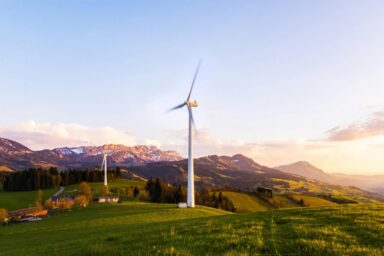
We have also invested more in other energy sources and accelerated the energy transition. There is still much to be done, but Europe is less exposed to a sudden interruption of Russian gas than it was a few years ago.
It has also helped that despite blockades, more oil has passed the Strait of Hormuz than initially feared.
You say the economy has been resilient, but you also expect the effects of the energy shock to still become more visible. What would determine whether that happens?
I still think the big test lies ahead of us. The longer this crisis continues, the bigger the effects, but it hasn’t been as bad as feared.
We do think that the winter, but also early spring, can be a bit tricky for the European economy. Natural gas prices have risen a lot lately and inventories are extremely low.
For heating, they are more important for consumers. If we have high gas prices and inventory levels are low, there is a risk that if the winter is cold, we will see higher inflation. So a lot depends on how long the shock lasts, what happens to gas prices and how cold the winter is.
To what extent is this something the ECB can anticipate?
The ECB has to make a judgement before it can see the full effect in the data. That is why the staff projections are important. They are trying to work out what higher energy prices could mean for wages, transportation costs and the wider economy in the months ahead.
The ECB is effectively trying to decide how much weight to put on risks that haven’t happened yet.
But there is obviously a lot of uncertainty. You can try to forecast what happens to gas prices, but you cannot know exactly how long the conflict will last or what will happen politically.
So the ECB is effectively trying to decide how much weight to put on risks that haven’t happened yet. It has to be careful not to wait until the second-round effects are already fully visible, but it also doesn’t want to raise rates aggressively in response to something that could disappear within a few months.
So what does all of this likely mean for the ECB’s next moves?
I would be very surprised if they did not hike the interest rates further. But as an economist, it is also easy to argue why you should not hike when there is a supply-side shock.
According to macroeconomic theory, you should not react to those kinds of shocks. But I think the reality is not that easy, as there is also a fear that these shocks will be transmitted into higher wage demands.
So there is a trade-off. If the ECB doesn’t hike enough and these second-round effects emerge, inflation could stay high for longer. But if it hikes too aggressively and the energy shock then fades, it risks putting too much pressure on an economy that is already recovering from various crises, including the pandemic still. So the ECB has to balance the risk of persistent inflation against the risk of doing too much and interrupting that recovery.
That is why I think they will continue to move cautiously, watching the data and taking it step by step. The key question is really how persistent this shock turns out to be, and whether it starts spreading into wages and the broader economy.