The far-right AfD has won in north-eastern Germany while the Left has captured Berlin. Together, the results show that Germany’s old East–West divide remains, while the gap between big cities and rural regions is also growing.
Sunday’s elections produced two winners with radically different answers to Germany’s problems. The anti-immigration Alternative for Germany (AfD) secured 38.2 per cent in Mecklenburg-Western Pomerania, more than doubling its previous result. The Left took 25.7 per cent in Berlin after campaigning on rents, housing shortages and the rising cost of urban life.
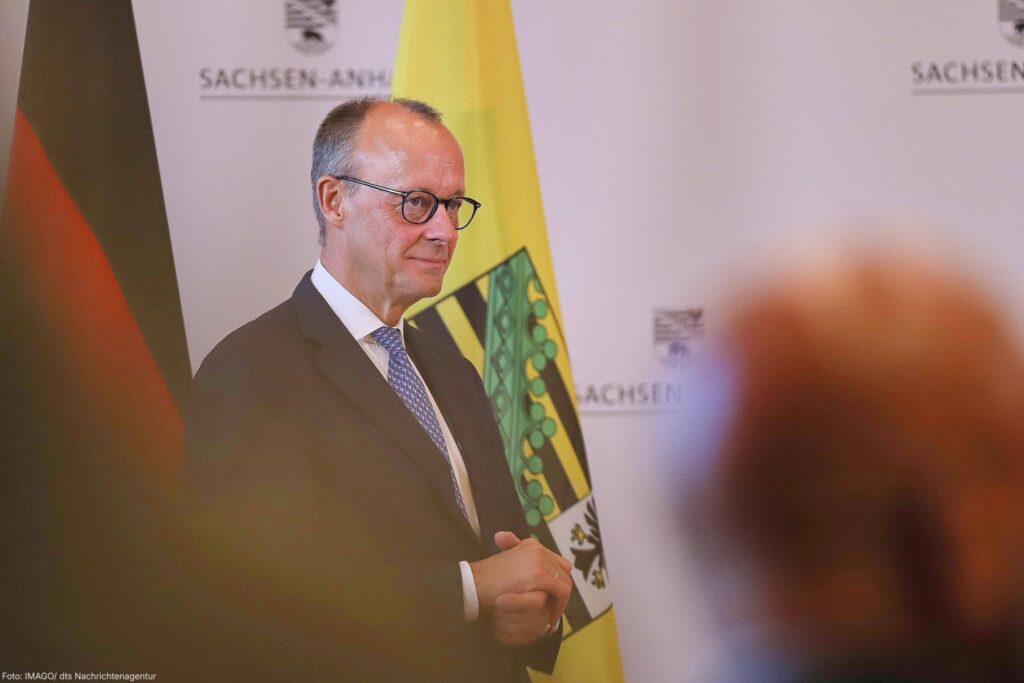
The common loser was Chancellor Friedrich Merz. His Christian Democrats (CDU) fell to 4.9 per cent in Mecklenburg-Western Pomerania, removing the party from a state parliament for the first time. In Berlin, the CDU fell from first to second place with 18.8 per cent.
Trust in our country’s institutions is waning and is being actively undermined by radical parties on both the left and the right. — Friedrich Merz, Chancellor of Germany
“It is a disaster,” Mr Merz acknowledged. However, he rejected calls to step down and promised to continue reforms covering taxes, healthcare, pensions and bureaucracy. The results suggest that Germany’s political centre is losing voters in opposite directions.
AfD wins on migration, energy and Ukraine
The AfD’s victory in Mecklenburg-Western Pomerania reflected anger over migration, energy costs, economic insecurity and Germany’s support for Ukraine. The party promised faster deportations, renewed access to Russian gas and a more conservative social order.
The state is home to the terminal of the suspended Nord Stream pipelines. The AfD argued that restoring Russian gas supplies would reduce energy prices, while the governing Social Democrats (SPD) said opposition to military assistance for Ukraine had helped the party attract voters.
The result followed the AfD’s 43.8 per cent victory in Saxony-Anhalt two weeks earlier. It has now finished first in two consecutive eastern state elections and leads national polling with approximately 29 per cent.
Berlin voters demand action on housing
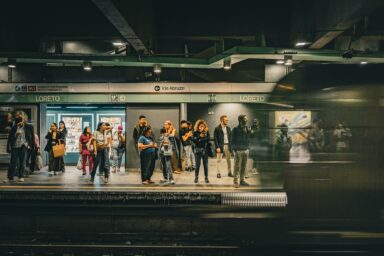
Berlin moved in another direction. The Left almost doubled its previous vote after concentrating on the housing crisis rather than migration or national identity. “The rental situation is the biggest social problem in this city,” lead candidate Elif Eralp said. “From today, we’re changing Berlin together.”
Ms Eralp promised to limit excessive rents, reduce holiday lets and implement a 2021 referendum supporting the transfer of approximately 220,000 homes from large private landlords into public ownership. Almost 58 per cent of participants supported the proposal in the referendum.
The rental situation is the biggest social problem in this city. — Elif Eralp, Lead candidate of The Left
The SPD estimates that the policy could cost about €20 billion and face difficult negotiations. However, its political appeal was clear in a city where housing costs have become the dominant social issue.
The Berlin result therefore represents more than a revival of a party with roots in communist East Germany. Ms Eralp, the daughter of Turkish left-wing activists, built her campaign around housing affordability, inequality and resistance to property speculation.
Germany’s old divide never disappeared
The AfD has become the dominant political force across much of the former communist east, particularly outside the largest cities. Mainstream parties increasingly struggle to convince voters there that decisions made in Berlin reflect their interests.
Economic convergence has progressed since reunification, but large gaps remain. Average household wealth in eastern Germany, including Berlin, stood at approximately €125,500 in 2023. That was less than half the western German average of €257,100, according to figures reported by Reuters.
Eastern companies invest approximately 25 per cent less per worker than their western counterparts. The former East Germany has also lost around 1.2 million people to net westward migration since 1991, excluding Berlin. Its remaining population is older and contains a smaller proportion of working-age residents.
Berlin presents a different form of alienation. The capital attracts younger workers, migrants and graduates, but many struggle to find affordable homes. Its voters turned towards a party offering direct state intervention rather than towards the AfD’s nationalist programme.
The new political wall therefore runs through more than geography. It separates metropolitan and rural Germany, owners and renters, growing cities and shrinking regions. Both sides increasingly view the established centre as unable to protect them.
Merz loses on both sides of the divide
Mr Merz entered office in May 2025 promising to revive the economy and reduce support for the AfD. Less than 17 months later, his party has suffered historic defeats to both the far right and the Left.
“Trust in our country’s institutions is waning and is being actively undermined by radical parties on both the left and the right,” he said after the elections. Germany faced “profound upheaval”, while public debate had become “harsher and more irreconcilable”.
He argued that economic reform offered an antidote to what he called the growing “poison of authoritarianism”. His critics contend that unpopular reforms and weak communication are helping to drive voters away. CDU deputy leader Karin Prien said the government had failed to listen properly. “There is a lack of empathy,” she said.
The defeats also weakened Mr Merz in Europe. Germany is struggling with industrial job losses, high energy costs and slow growth at a time when the EU faces pressure from Russia, China and the United States. Political instability in Berlin could make European agreement more difficult.
Election winners may still remain outside government
First place does not guarantee power in Germany’s coalition system. The other major parties continue to rule out cooperation with the AfD, leaving it without an obvious path into the Mecklenburg-Western Pomerania government. The SPD, Left and Greens could instead form a three-party coalition, according to Reuters.
Berlin also faces complicated negotiations. The Left could govern with the SPD and Greens, potentially making Ms Eralp the first Left politician and the first person of Turkish origin to lead the capital. The CDU could attempt to assemble the same two partners behind its own candidate.
The firewall around the AfD remains intact for now. However, the stronger the party becomes, the more complicated every alternative coalition becomes. Sunday’s results did not rebuild the Berlin Wall, but they showed that Germany has never fully overcome the inequalities and resentments associated with it.