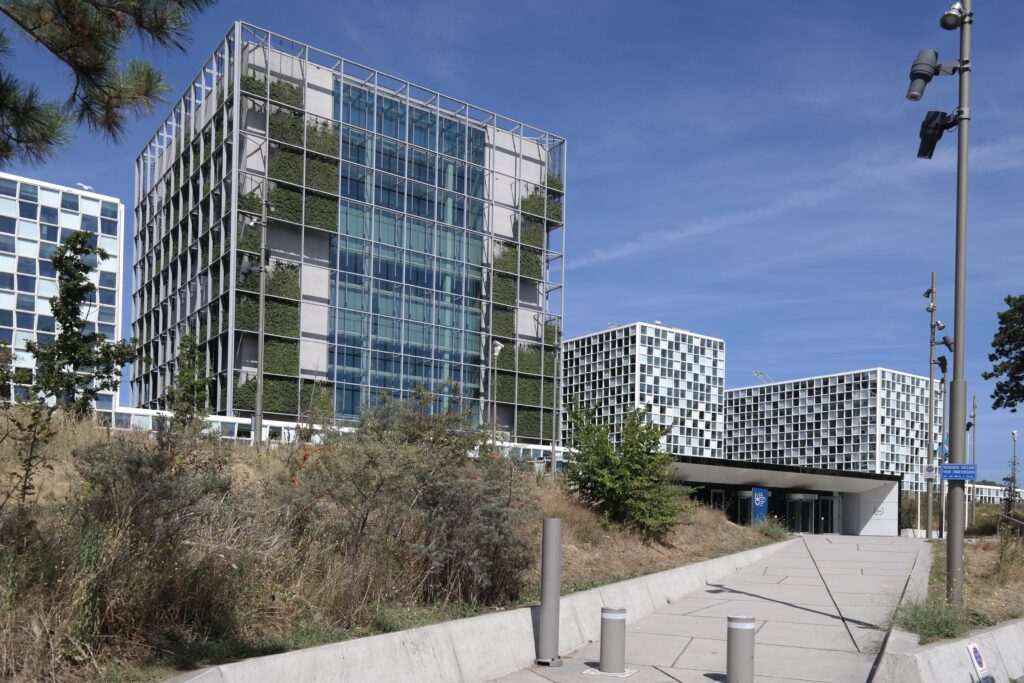
Facing US sanctions over its investigations, the International Criminal Court (ICC) received two high-profile gestures of EU support this week. First, the European Parliament awarded it its human rights prize on Thursday, then EU foreign policy chief Kaja Kallas visited its headquarters in The Hague on Friday.
The show of support comes as Washington seeks to put pressure on the Court over its investigations into the US and its allies.
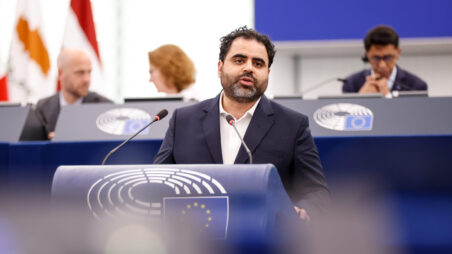
“Every state party to the International Criminal Court must help the Court continue its work, not only at its headquarters, but also in the field, for instance in Ukraine, where evidence of mass war crimes is being gathered,” Kallas told the European Parliament in Strasbourg earlier this week.
We will use diplomacy to secure the reversal of these measures.
— Kaja Kallas
Lawmakers debated the US sanctions and urged EU member states to stand behind the Court. Kallas said the EU would use the coming months to press Washington to reverse the measures, while the ICC looks for ways to limit their impact.
What the US sanctions mean for the ICC
The US measures restrict the Court’s access to American financial services and technology, and make it harder for the ICC to carry out transactions in US dollars. They also give US companies and citizens with business ties to the Court six months to end those relationships.
The EU hopes to use that period to persuade Washington to change course.
“We will use this time to analyse all the legal implications, to initiate a dialogue, and to seek solutions,” Kallas told lawmakers. “We will use diplomacy to secure the reversal of these measures.”
The ICC is meanwhile exploring alternatives to help it continue its work, Kallas said. The EU is also assessing what further support it could provide.
The sanctions have drawn condemnation beyond the EU. The United Kingdom, Italy, France, Germany, the Netherlands, Denmark, Japan and Canada issued a joint statement opposing the measures. European leaders also reaffirmed their support for the Court at the latest European Council meeting, calling for the US sanctions to be revoked.
The European Commission is considering whether to activate the EU’s “blocking statute”, a mechanism intended to protect European companies from complying with certain extraterritorial sanctions imposed by the United States. The Commission has not yet decided to invoke it, and is assessing the potential consequences.
EU’s show of support
The Sakharov Prize for Freedom of Thought is the European Parliament’s annual award for individuals and organisations defending human rights and fundamental freedoms. Established in 1988, it is named after Soviet dissident and Nobel Peace Prize laureate Andrei Sakharov.
The ICC and its officials were nominated by the Socialists and Democrats (S&D) group. The laureate is selected by the European Parliament’s President and political group leaders from candidates put forward by the Parliament’s political groups.
Every state party to the International Criminal Court must help the Court continue its work, not only at its headquarters, but also in the field.
— Kaja Kallas
Founded in 2002, the ICC prosecutes individuals accused of genocide, war crimes, crimes against humanity and the crime of aggression. It is designed to act when national courts are unable or unwilling to prosecute such crimes.
The Parliament’s award and Kallas’s visit underline the EU’s political backing for the Court at a time when its work is facing pressure from Washington. Over the past two years, the EU has provided €30 million to the ICC and says it is prepared to consider further support to protect the Court’s independence.