A weight-loss jab bought through a social media advert can contain the wrong drug, the wrong dose, or no active ingredient at all. Fake medicines now reach Europeans through the same feeds as holiday photos. Every advert earns the platform money, and the tools to stop it already sit in EU law.
Illegal and falsified medicines reach Europeans through paid adverts on Facebook, Instagram, Google, and TikTok. EU lawmakers say the platforms earn money from every advert. In a European Parliament debate in Strasbourg on 5 October, they urged the Commission to use the Digital Services Act (DSA), the EU’s rulebook for online platforms, against them.
A question of trust, and a crime
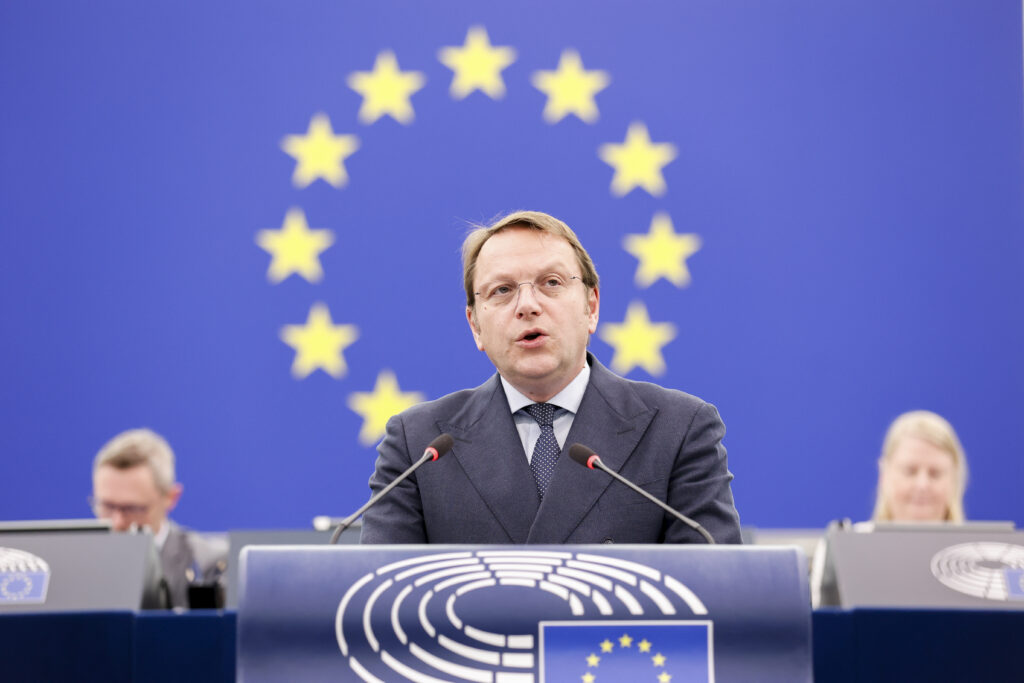
Falsified medicines “don’t only circulate through hidden in-person channels but also increasingly online”, Health Commissioner Olivér Várhelyi says. “More and more Europeans are buying medicines online for many reasons. For some, it is more convenient or more private.”
“Patients should be able to trust that the medicines they take are safe and genuine,” he says. Falsified medicines put that at risk. Deceptive websites, illicit sellers, online marketplaces, and cross-border schemes “can lead people to believe they are buying from legitimate sources”, Mr Várhelyi says.
Counterfeiting medicinal products is not simply an intellectual property crime. It endangers public health and puts consumers’ lives at risk. — Olivér Várhelyi, Health Commissioner
“Counterfeiting medicinal products is not simply an intellectual property crime,” Mr Várhelyi says. “It endangers public health and puts consumers’ lives at risk.”
Paid adverts, banned products
Nicolás González Casares (S&D/ESP) points at the platforms. He says half of the medicines that Spain’s medicines agency declared illegal were still marketed on Facebook, Instagram, Google, and TikTok. “The platforms say they can’t control everything, but they are charging,” Mr González Casares stresses.
A Spanish investigation gives a similar figure. The outlet Maldita.es looked at 20 products the agency declared illegal over two years. It found adverts for 45 per cent of them on the four platforms, placed after the ban.
Mr González Casares also speaks of 350,000 adverts for illegal and dangerous medicines on Facebook alone. The non-profit Reset Tech collected a sample of 350,549 Facebook adverts for a report this year. They promoted unregulated health supplements, including products that national health authorities had declared illegal, according to the Irish Times.
The platforms say they can’t control everything, but they are charging. — Nicolás González Casares (S&D/ESP)
Most of the trade in illicit medicines happens on the open web, the EU’s police agency Europol wrote in a 2025 report. Sellers use targeted adverts on social media and messaging apps. They rely mainly on post and courier services to deliver the products.
Fake weight-loss drugs on the rise
The European Medicines Agency (EMA) warned in September 2025 of a sharp rise in illegal medicines marketed as semaglutide, liraglutide, and tirzepatide. These are GLP-1 medicines, used for weight loss and diabetes. Sellers often use fraudulent websites and promote the products on social media, the agency says.
Ireland’s medicines regulator detained 48,752 units of GLP-1 medicines in 2025, up from 1,582 in 2024. When it tested some of the seized patches, it found no semaglutide in them, despite what the packaging promised.
What exists: a directive, a logo, a platform law
The Falsified Medicines Directive dates from 2011. It requires a unique code and a tamper-proof seal on prescription packs. A network of manufacturers, wholesalers, and pharmacies can verify each pack before it reaches the patient. The safety features have applied since February 2019, according to EMA.
For online pharmacies, the EU has a common logo. Legal online pharmacies have had to show it since 1 July 2015. Clicking on it leads to a national register of authorised sellers. Each country still sets its own conditions and may ban the online sale of prescription medicines. “Logos and labels are by themselves not enough in the face of criminal networks,” Mr Várhelyi says.
For the platforms, there is the DSA. It obliges them to verify traders, act on notices from authorities, and take down illegal content, Mr Várhelyi says. Large platforms that break it risk fines of up to 6 per cent of their global annual turnover.
For supplements, the law is clear, Mr Várhelyi says. A product that claims to treat or prevent a disease counts as a medicine and needs a marketing authorisation, the official approval to be sold. EU law also bans supplement adverts from claiming to prevent, treat, or cure a disease.
Two fines, 66 websites
The Commission already uses the DSA against illegal products, “including illegal and falsified medicines”, Mr Várhelyi says. He names two fines for unsafe products: €200m against Temu and €550m against AliExpress.
Police have acted too. Europol coordinated Operation SHIELD VI in 30 countries between April and November 2025. Authorities prosecuted 3,354 people and shut down 66 websites. They seized illicit medicines and doping substances worth €33m.
Pressure on the platforms
Mr González Casares wants the DSA used against the platforms that carry the adverts. “The Digital Services Act is clear. Illegal content means taking action,” he says. He asks for “investigations, deadlines, penalties”.
András Tivadar Kulja (EPP/HUN) welcomes the closure of the websites but wants more speed. “We have to accelerate the measures and we have to educate people on the social media platforms themselves,” he says.
An alert system, like the one for food
Vytenis Andriukaitis (S&D/LTU), a former EU health commissioner, proposes a rapid alert mechanism for falsified medicines. He wants it modelled on the system that exists for food. All 27 member states could then react quickly, he says. Mr Andriukaitis also wants “more stringent control measures on internet pharmacies”.
National medicines authorities already have a rapid alert system. They use it when a quality defect poses a serious risk. The procedure also covers counterfeit products that may have entered the legal distribution network.
Mr Várhelyi calls for joint work “to implement and enforce the measures we have as effectively as possible”. Member states also have a role, he says. A Council of Europe treaty, the MEDICRIME Convention, obliges countries to make the falsification of medical products a crime. Only a minority of member states have ratified it, Mr Várhelyi says.