A job ad on social media, a promised visa, a debt that keeps growing. Traffickers still trap people this way, and authorities registered more than 20,000 victims in the EU in just two years. A new strategy now wants to hit the criminals where they operate today: online, in workplaces, and along migration routes.
Behind those lures lies a grim count. In 2023 and 2024, national authorities across the EU registered more than 20,000 victims of trafficking, a rise of 16.1 per cent, according to the European Commission. The real figure is likely much higher, because many cases never come to light. Victims end up in sexual exploitation, in exploitative jobs, in forced marriages, begging on the streets, or committing crimes for their exploiters.
Traffickers pick people who have little to fall back on. According to the Commission’s figures for 2023 and 2024, women and girls make up 63 per cent of registered victims, most of them sexually exploited. Children account for 15 per cent. Men form the majority of those forced into labour exploitation, at 74 per cent. Almost two in three victims come from outside the EU.
Crime moves online
The Commission presented its new strategy against human trafficking on 16 October, two days before EU Anti-Trafficking Day. It rests on six priorities. The first targets the place where much of the crime now starts: the internet.
Criminals use online platforms to recruit, advertise, and control their victims. The strategy builds on the Digital Services Act, which requires platforms to address illegal content and systemic risks, and on the EU Internet Forum. Through the European Multidisciplinary Platform Against Criminal Threats (EMPACT), the EU will also back new methods of digital investigation, including hackathons.
Exploitation often hides behind ordinary jobs. The Commission therefore plans a European business coalition against trafficking. It also wants labour inspectors from different countries to work together more closely through the European Labour Authority (ELA).
Most trafficking runs through criminal networks that cross borders. Brussels wants to hit them in their wallets. A new sanctions regime, proposed in July, would freeze traffickers’ assets and restrict their travel. It still needs unanimous backing from all member states. Europol, whose mandate against smuggling and trafficking the EU recently strengthened, should support more joint investigation teams across borders. Lawmakers are now negotiating an even broader mandate for the agency.
Danger on the move
Migration routes carry their own risks. People who pay smugglers to cross a border can easily fall into the hands of exploiters. The Pact on Migration and Asylum, which has applied since June 2026, adds screening, a new border procedure, and safeguards in reception centres. A stronger mandate for Frontex, the EU border agency, should help border guards spot victims and uncover networks early.
Crises open further gaps. When millions of Ukrainians, mostly women and children, fled Russia’s war, the EU had to act fast to protect them from exploitation. Building on its anti-trafficking plan with Ukraine, the Commission will now draft practical guidance on how to detect trafficking risks in future crises.
The final priority puts victims first. Police and courts must protect their rights and support them throughout investigations and trials. The strategy also counts on closer work with partner countries and international organisations, since traffickers rarely stop at the EU’s borders.
Law stuck in capitals
The new plan lands on an awkward backdrop. Member states had until 15 July 2026 to bring the revised Anti-Trafficking Directive into national law. Twenty of them failed to report full transposition on time. In September, the Commission opened infringement procedures against them, including Germany, France, Spain, Poland, and the Netherlands.
The delay matters for victims. The revised law makes it a crime to knowingly use the services of a trafficking victim. It treats forced marriage, illegal adoption, and the exploitation of surrogacy as trafficking. It also counts online sexual exploitation as an aggravating circumstance. Where national laws lag, these tools remain on paper.
Traffickers will be held accountable, their networks disrupted and victims protected. People should not be for sale. — Magnus Brunner, Commissioner for Internal Affairs and Migration
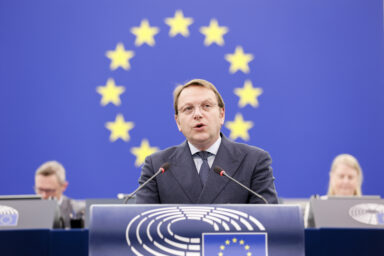
Magnus Brunner, Commissioner for Internal Affairs and Migration, said the EU must keep pace with criminals who change their methods online and along migration routes. “Traffickers will be held accountable, their networks disrupted and victims protected. People should not be for sale,” he said. The European Parliament and the Council will now discuss the strategy, while the EU Anti-Trafficking Coordinator works with national coordinators on putting it into practice.