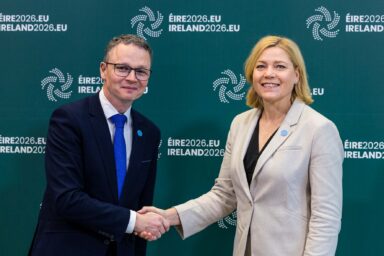
At the EU–Canada summit, the Brussels foreign-policy chief called for a special tribunal for the crime of (war) aggression. Her Canadian counterpart agreed that current rules need teeth.
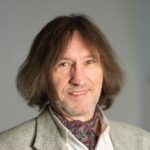
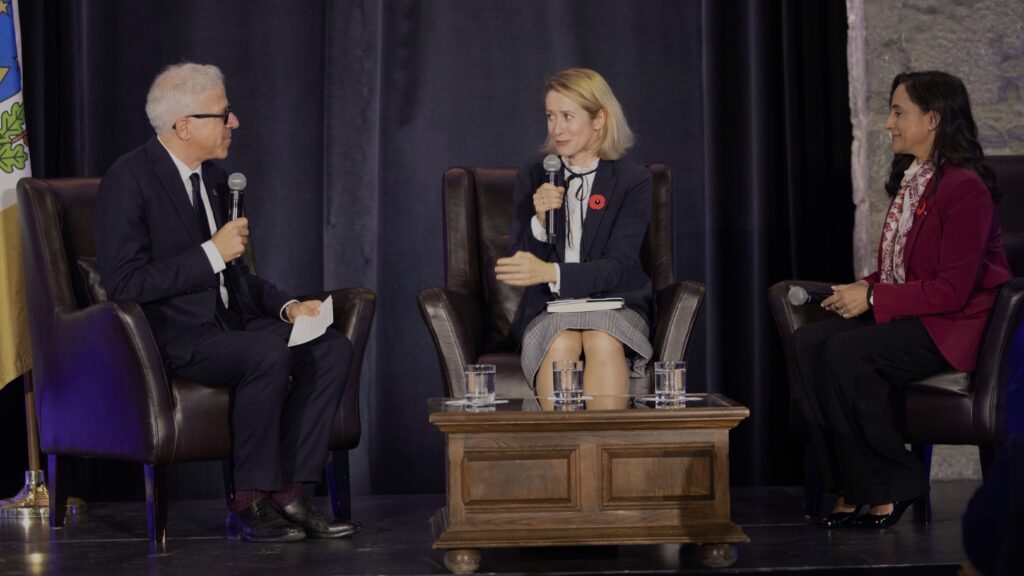
Kaja Kallas, vice-president of the European Commission and High Representative of the European Union for Foreign and Security Policy, does not hide her gloom. Sharing a ‘fireside chat’ stage with Anita Anand, Canada’s foreign minister, on Thursday, she said the world was in a bad way. “I’m very happy about your optimism regarding the multinational order, because I see we are in a very dark point right now,” she said — about the multilateral order, that is, not the bilateral ties.
Her diagnosis was blunt. “There are countries that want to see a world that is based on whoever has the power can take what they want,” Ms Kallas said. The majority of states, she added, want rules of some kind. The question is who will defend them.
In order for a country to become better, it has to lose its last imperial war. — Kaja Kallas, the EU’s foreign policy chief
Ms Anand sounded distinctly less gloomy. “I am optimistic about the Canada–EU relationship. I’m also realistic about the international rules based order and multilateral institutions,” she said. She did not dispute the damage. She noted that the global trading order has shifted since the United States stepped back from multilateralism towards protectionism.
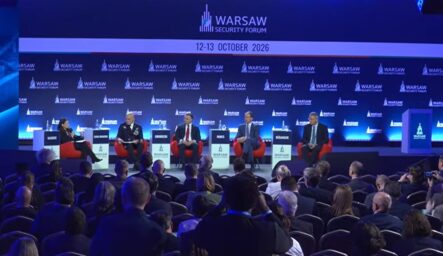
The diplomats had their exchange on the fringes of the EU–Canada summit in Montreal after Presidents Ursula von der Leyen of the European Commission and António Costa of the European Council spoke. Mr Costa’s remarks included a mention of the Partners for Multilateralism initiative, launched in September. “With this initiative for multilateralism, peace, and prosperity, we defend the United Nations and international law,” Mr Costa said.
The price of glory
On one point the EU foreign policy chief and the Canadian minister agreed wholeheartedly: the current international system lacks teeth. Ms Kallas called the UN Charter good but said it imposes no accountability on anybody. Aggressors see that nothing happens when rules are broken. Starting a war costs leaders little, she argued, because someone else’s son does the fighting.
She offered a cultural explanation too. For small countries, such as her native Estonia, war means destruction and suffering. Big countries, she said, build monuments to conquerors. She cited a poll in which 49 per cent of Russians who backed the war gave glory as their first reason.
“In order for a country to become better, it has to lose its last imperial war,” Ms Kallas said. Russia, she argued, is fighting precisely that war. Each global crisis in history has pushed international law forward. She believes this is the next such moment. Her proposal is a special tribunal for the crime of aggression, and she invited Canada to join. War-crimes law reaches soldiers only, not those who give them orders, she noted.
Ms Anand agreed that the system is flawed. “The idea of international law is taking a beating right now,” she said. She named the ICC as another victim. “But we cannot retreat from the institutions themselves and we certainly cannot retreat from the principles,” she said.
The cost of waiting
Ukraine tested that resolve. Ms Kallas said Ukrainian forces are making battlefield gains. Vladimir Putin, she said, is stepping up attacks on civilians and infrastructure because he cannot win at the front. He still presents maximum demands to anyone who talks to him.
The divide among western allies, she said, is something he enjoys. She recalled a Soviet foreign minister’s three-part tactic: make demands, issue ultimatums, then wait for westerners to fold. Appeasement is no answer. “This appeasing actually never has worked before,” she said.
The idea of international law is taking a beating right now. — Anita Anand, Canada’s foreign minister
Money is the lever. Ms Kallas said the 27 member states have agreed that frozen Russian assets will not be released unless Russia pays reparations. “Wars also end when aggressors run out of money to finance them,” she said. The shadow fleet hurts Russia’s economy more than she expected, though Russia keeps adapting.
Ms Anand stressed Canada’s record. It has put up $25.5bn in assistance for Ukraine, she said, and is working on a 100-year partnership agreement covering drone production and security guarantees. The minister also explained the Claims Commission, of which Canada is a member. It lets Ukrainians harmed by the war seek compensation even while the fighting continues.
Friends, not adversaries
Both insisted that new partnerships are not aimed at anyone. “Our alliance is not against anybody. It’s for ourselves,” Ms Kallas said. Geopolitical shifts, she added, make countries look around and ask whom they can trust. The EU’s top diplomat said many countries now see Europe as the first big power that comes to mind.
Ms Anand cast it as a matter of sovereignty. Canada has signed more than 20 security and trade agreements in the past year, reaching 1.5bn consumers, and aims to double its non-US trade over the next ten years. “It’s not about any other country, it’s about us,” she said.
Canada’s national security strategy, issued on the day of the event, holds that Canadians must protect their own sovereignty, Ms Anand said. Partnerships follow, with the EU at the top of the list. “It is often said that Canada is the most European of non-European countries,” she said.
The Canadian also looked north. Some 40 per cent of her country’s landmass and 70 per cent of its coastline lie in the Arctic. She wants NATO to adopt a long-term Arctic strategy, a point she has pressed with Secretary General Mark Rutte. Meanwhile, she said, Arctic nations are coordinating outside existing structures as the Russian threat creeps closer.
Rules for a new age
Ms Kallas ended on the practical side. Maritime law, she noted, was drafted before undersea cables existed or islands could be built from scratch. Europe, she said, has launched a no-fees, no-tolls pledge for the Bab al-Mandab and the Strait of Hormuz, and has won African and Asian backing.
The most vulnerable countries would pay for tolls, she argued, through dearer fertiliser, food, and fuel. Europe, she said, is built on little projects that grow into bigger ones. It can offer the same method to others. Her faith lies in modest steps, not grand designs.
There are countries that want to see a world that is based on whoever has the power can take what they want. — Kaja Kallas
One of such modest steps took place right after the diplomats exchanged their views. The EU and Canada signed the Agreement on the Establishment and the Privileges and Immunities of the Delegation of the European Union in Canada. The convoluted title denotes a formal treaty that upgrades the legal status of the European Union’s diplomatic mission in Canada.
The move provides the Union’s delegation with protections similar to those of a sovereign nation’s embassy, rather than just an international organisation’s regional office. If Ms Kallas desired the steps to be modest, her wish was granted. But, unlike many plans rich in audacity, it is in place.