Montreal’s Canada–EU summit heard about ‘association without accession’ after European capitals insisted on dropping the ‘associate membership’ label.
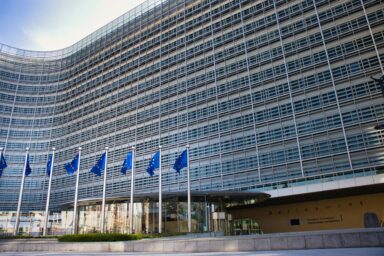
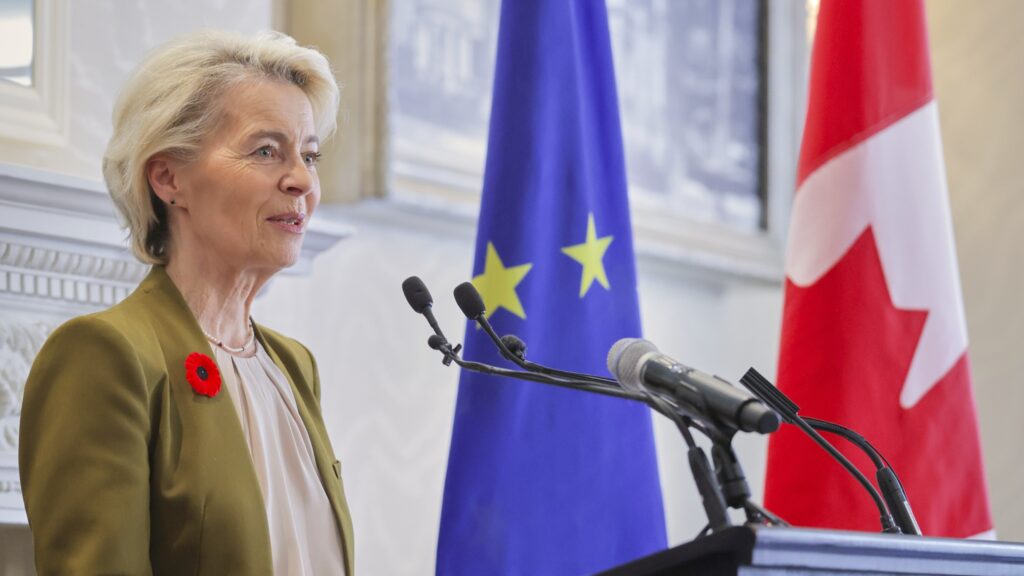
European Commission President Ursula von der Leyen came to the EU–Canada Montreal summit with a list of measures. In her opening speech on Thursday, she said the two sides would build a common space for growth, prosperity, resilience, and economic security. “We can build a partnership that comes closer to membership than anything we’ve done before,” she said.
First came supply chains. Ms von der Leyen said the EU and Canada would build a single space for strategic supply chains. That means joint or complementary investment, including private finance on both sides. A project pipeline would be drawn up with investment, export, and infrastructure banks.
We can build a partnership that comes closer to membership than anything we’ve done before. — Ursula von der Leyen, European Commission president
Critical raw materials provided the showcase. Last year, EU imports of Canadian critical raw materials jumped by 62 per cent in value, to €3.3bn, or C$5.18bn. They include lithium, cobalt, nickel, and graphite. She added that trade has grown by more than 80 per cent under CETA, the free-trade agreement.
People are part of the offer. The EU will deepen Canada’s engagement in the Erasmus programme and strengthen its role in the next generation of Horizon Europe. The two sides are also working on skills and qualifications, so that professionals can work more easily on both sides of the Atlantic.
Security and the Arctic
Security featured too. Ms von der Leyen noted that Canadian troops lead a multinational NATO brigade in Latvia. She said Canada was the first non-European country to take part in the EU’s joint defence procurement plan. She also praised Canada’s support for Ukraine.
The Arctic was the third theme. She said Russia is rebuilding its Arctic military footprint and pursuing hybrid strategies against its neighbours. The EU and Canada are developing joint projects on ocean monitoring, critical raw materials, and connectivity for remote communities.
She framed all this as a response to a decaying international order. “In a world of growing rivalries, sovereignty and independence are no longer just the freedom to act alone, it is the capacity to act together,” she said. Then came the idea that has caused trouble: Canada as the first associate member of the EU.
A label too far?
Her pitch was an ‘association without accession’. She said Canada cannot become a full member because of geography. Instead, she proposed close alignment on policies, on governance, including parliament-to-parliament and court-to-court cooperation, and on programmes.
She had floated the idea of ‘associate membership’ in her State of the Union address on 16 September, with Canadian Prime Minister Mark Carney in attendance. A draft summit declaration reportedly envisaged Canada being consulted on major EU political and regulatory initiatives. The scope was to be worked out by the 2027 summit.
Then the capitals pushed back. Germany, France, Italy, and Greece objected to draft language describing Canada as a future associate member. The revised text drops the phrase. It calls instead for an ever closer association, or closer ties.
Their reasons were several. EU treaties define no associate-member category, so governments feared signing up to unclear rights and obligations. Others worried that a special label for Canada would invite similar requests from other non-EU countries.
The Ukraine problem
The term also carries baggage. German Chancellor Merz had earlier used associate membership for Ukraine, as a possible interim step towards full membership, with a seat at summits and ministerial meetings but no vote. Ms von der Leyen—using the same words for Canada, which has no route to membership—risked confusion, or a cheapening of the Ukrainian status.
Process mattered too. Reports before the summit said the Commission had not adequately consulted national capitals. German Ambassador to Canada Matthias Lüttenberg said ‘the idea was not clearly understood by all member states’. He added that the 27 governments needed time to reflect, and noted that Germany had used the term for Ukraine and Moldova.
In a world of growing rivalries, sovereignty and independence are no longer just the freedom to act alone, it is the capacity to act together. — Ursula von der Leyen
At the Commission’s midday briefing on 29 October, a journalist asked whether the idea was still alive, since Ms von der Leyen had used the term in a post on X as she landed in Montreal. The spokesperson said it was. Associate membership, the spokesperson argued, simply means an ever closer association of Canada with the EU, short of full membership.
Reporters pressed the point. They asked how the Commission could proceed without a mandate, and whether it had copied the name from Mr Merz’s paper on Ukraine. The spokesperson said the Commission was fully on board with member states on the objective. Unity on the initial wording would have been better, the spokesperson conceded, but a strong basis was agreed.
A test still to come
Mr Carney shrugged off the row. “The good news is it doesn’t matter about specific names or nomenclature. What matters is the difference it will make to the lives of Canadians,” he said. He described the summit as the start of formal talks expected to continue over the following year.
Washington looms in the background. Reports say US President Donald Trump dismissed the idea as laughable and warned of trade consequences if he saw it as hostile. Yet the reporting does not show that American pressure drove the objections of EU governments. Their stated worries were legal uncertainty, precedent, and consultation.
The substance survives the retreat. Draft proposals include a joint initiative on international connectivity and subsea cables, a feasibility study on Canadian liquefied natural gas exports to Europe, and more chances for young Canadians and Europeans to work across the Atlantic.
The test is whether the new wording yields concrete cooperation. The summit is underway, so the final text may change. One question remains open: how much influence, consultation, or access Canada will actually receive. The capitals have shown their determination that they, not the Commission, call the shots.