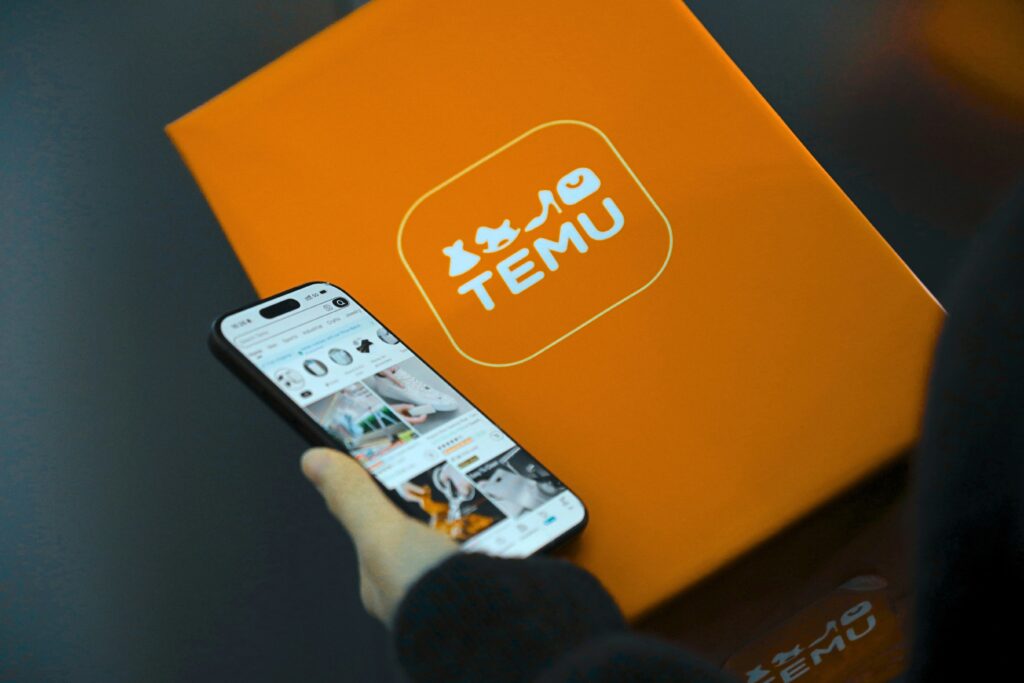
A baby toy laced with chemicals above legal limits. A charger that fails basic safety tests. Five months after the EU fined Temu €200m over such products, the online marketplace has a plan to fix how it spots them. Brussels has signed off. Now Temu must prove the plan works.
Until now, Temu judged its risks by looking at online retail in general. From now on, it must look at its own shelves. That is the core of the action plan the European Commission accepted on 26 October. The plan rests on five measures. Temu must also prove with reliable figures that its safeguards actually keep illegal goods away from shoppers.
The company will also look at its own blind spots. It will examine where its content moderation falls short and whether its recommender systems push illegal products to shoppers. It will also study how sellers exploit Temu’s features to spread dubious listings.
The first check is due soon. Within four months, Temu must hand Brussels an interim risk assessment covering the six months up to 30 November 2026.
Toys that fail the test
The plan answers a damning verdict. In May, the Commission fined Temu €200m under the Digital Services Act (DSA), the EU’s rulebook for large online platforms. An independent testing organisation bought products on the platform for the Commission. Many chargers failed basic safety tests. A high share of baby toys contained chemicals above legal limits or had small parts that could come off and suffocate a child.
Consumer groups found the same. Tests in France, Denmark, and Germany showed that 53 of 81 toys, jewellery items, and electronic products contained dangerous substances or materials. Earlier, Toy Industries of Europe bought 19 toys on Temu. Not one of them complied with EU rules. One slime toy contained 11 times more boron than the law allows.
Yet Brussels did not fine Temu for any single toy. It fined the company for not knowing its own shop. Temu’s 2024 risk assessment relied on general data about e-commerce, not on evidence from its own platform. As a result, it underestimated how often Europeans come across illegal products there. The Commission also blamed Temu’s recommendation algorithms and its influencer programmes for helping such goods spread.
The stakes are high. Temu reaches 130 million consumers in the EU, according to the Commission. The fine was only a fraction of what the law allows. The DSA caps penalties at 6 per cent of global annual turnover. With Temu’s estimated 2025 turnover of €53bn, that would mean roughly €2.8bn.
Not the only platform in the dock
Temu disputes the verdict. In May, it called the fine disproportionate. “The decision relates to our first DSA assessment in 2024 and does not reflect the current state of our systems,” a company spokesperson told Tech Policy Press. Temu also insists it has since strengthened its risk assessment and user protection.
Whoever earns billions on the European market must also comply with European rules.
— Anna Cavazzini (Greens/EFA/DEU), chair of the Internal Market and Consumer Protection Committee
Lawmakers want more pressure, not less. “Whoever earns billions on the European market must also comply with European rules,” said Anna Cavazzini (Greens/EFA/DEU), who chairs the European Parliament’s Internal Market and Consumer Protection Committee (IMCO), when the fine was announced in May. Temu is not alone either. Last week, the Commission opened a DSA case against Booking.com over fake listings and phishing. Both cases turn on the same question: Do platforms understand the risks their own business creates?
The Temu case is far from closed. Brussels is still investigating the platform’s potentially addictive design, its recommender systems, and researchers’ access to its data. If Temu fails to deliver on its plan, the Commission can impose periodic penalty payments. Until then, the burden of proof lies with Temu.