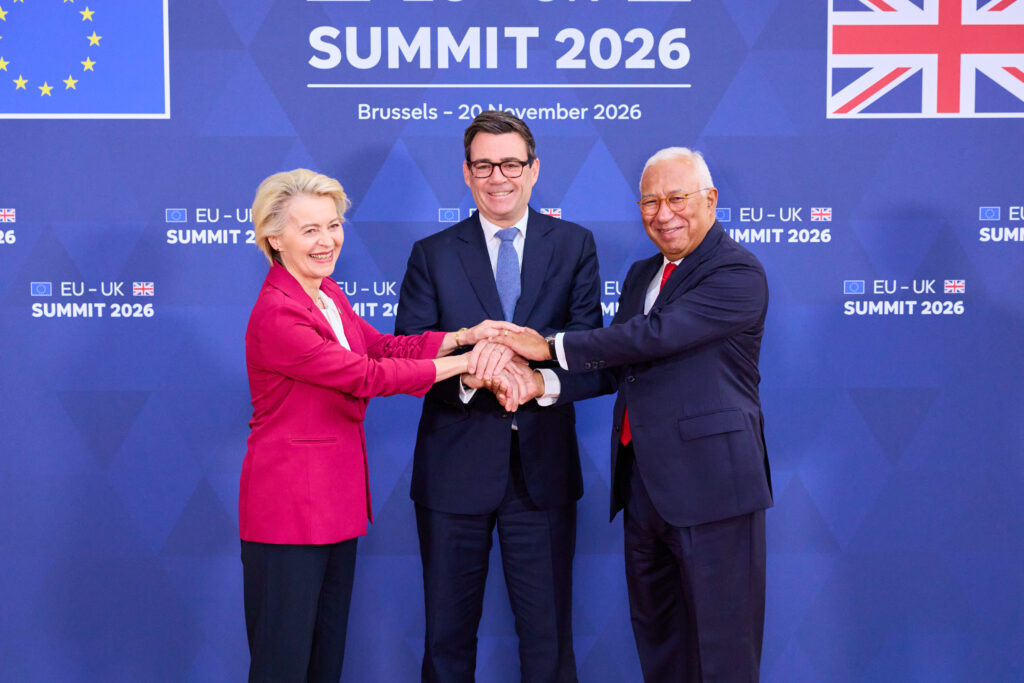
Britain and the EU announced agreements on food trade, carbon markets, and youth mobility after their Brussels summit on Friday. Major trade changes are planned for 2028, while university fees remain unresolved and negotiations on electricity-market access will continue.
“This is a good day for Britain, and this is a good day for Europe,” British Prime Minister Andy Burnham said on Friday, 20 November. He presented the package as an answer to high food prices, weak growth and opportunities lost after Brexit.
The summit delivered the core package outlined in Britain’s pre-summit plans. The distinction is between completing negotiations and making those agreements usable: legal approval, implementation and further bargaining still lie ahead.
Easier trade, but no immediate bills cut
The food agreement would remove most certificates and checks on animal and plant products moving between the two markets. The joint statement targets 1 March 2028 for application. Linking emissions trading systems is also planned for 2028, allowing mutual recognition of allowances and exemptions from respective carbon border charges.
You might be interested
“For our businesses on both sides of the Channel, it means easier trade and lower costs,” Commission President Ursula von der Leyen said of the food deal. Mr Burnham cited a Treasury estimate of a £17bn (over €20bn) boost to the British economy.
Electricity remains unfinished business. “Work also continues towards the United Kingdom’s participation in our electricity market,” Ms von der Leyen said. The declaration sets a goal of concluding those negotiations in 2027 and links participation to a British financial contribution towards reducing disparities between EU regions. Friday’s summit therefore did not conclude the electricity agreement behind the prospect of lower bills.
Industrial access, closer cooperation
Britain’s bid to benefit from the EU’s ‘Made in Europe’ manufacturing rules also remains unresolved, Associated Press reported. Leaders announced an economic-security dialogue, with steel and electric-vehicle supply chains among the priorities. University fees also remain unfinished business. EU officials told AP that implementation of the wider package depended on reaching a tuition fee agreement within six months.
This is a good day for Britain, and this is a good day for Europe. — Andy Burnham, UK Prime Minister
Defence cooperation advanced through the conclusion of negotiations on a framework for British participation in EU civilian security missions. Leaders also committed to closer work on defence capabilities, moving military personnel and equipment across Europe, and protecting critical infrastructure. “We will also strengthen our cooperation against hybrid threats, cyber attacks and foreign interference,” Ms von der Leyen said. These commitments build on the security and defence partnership launched at last year’s summit.
Support for Ukraine remains central to that partnership. “We will continue to support Ukraine politically, financially and militarily for as long as it takes until a just and lasting peace is achieved,” Mr Costa said. The joint statement commits both sides to closer coordination on training Ukrainian forces and countering Russia’s shadow fleet, including information sharing and action against sanctions evasion.