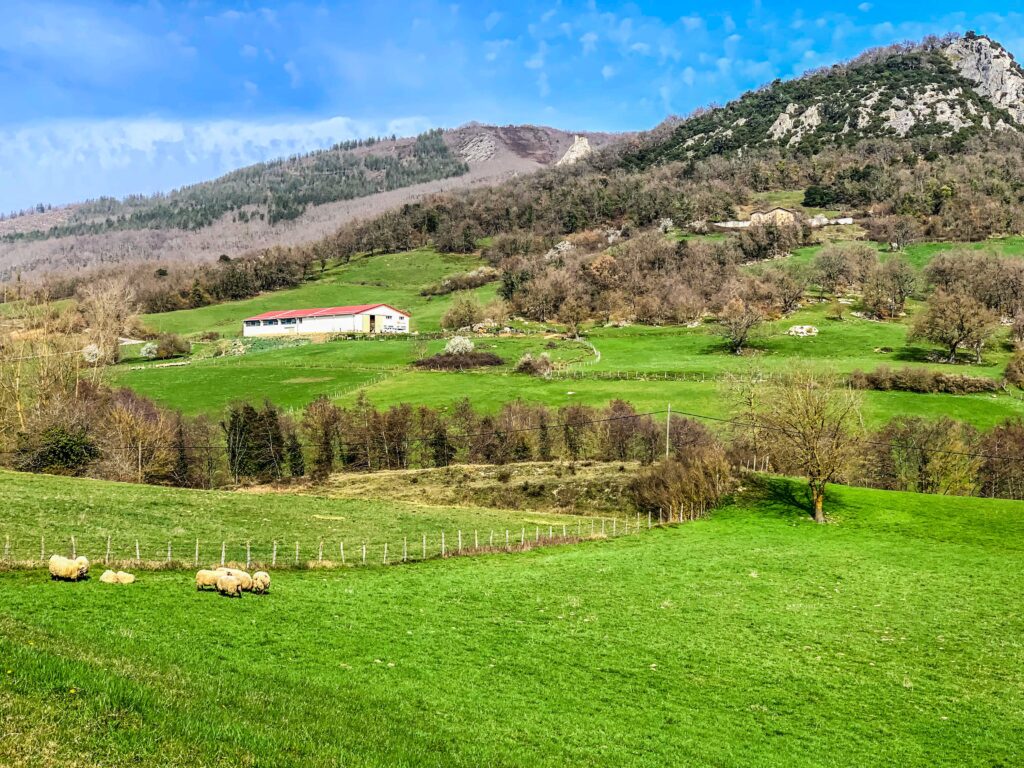
Laurence Marandola farms in the mountains of southern France. Ministers now want to turn shared EU farm rules into national options. In an interview with EU Perspectives, the French farmer warns that small farms will pay the price.
The rules that will decide how the EU supports its farmers from 2028 to 2034 are taking shape. On 26 October, agriculture ministers agreed the negotiating position of the Council of the EU on the future Common Agricultural Policy (CAP). The position is only partial, as the money itself depends on talks about the EU’s next long-term budget. The Council must now negotiate the text with the European Parliament.
Laurence Marandola is a former spokesperson for the Confédération paysanne, a French union that champions small-scale family farming. Her farm lies in Ariège, in the French Pyrenees. She is also active in the European Coordination Via Campesina (ECVC), a network of European small farmers’ unions. She argues that giving national governments greater freedom could undermine the common rules that protect farmers, agricultural workers, and the environment.
EU agriculture ministers have agreed their position on the future farm policy. What do you make of it?
The Council of the European Union has agreed on its partial general approach concerning the Common Agricultural Policy (CAP). The available information raises serious concerns about the direction taken by member states. By favouring an à la carte approach and extensive subsidiarity at the expense of common commitments, the Council risks undermining the foundations of the CAP.
The ‘dismantling’ of the common character of the CAP is becoming dangerously apparent, as the announced ‘flexibility’ amounts to a renationalisation of the CAP. — Laurence Marandola, French farmer
The ‘dismantling’ of the common character of the CAP is becoming dangerously apparent, as the announced ‘flexibility’ amounts to a renationalisation of the CAP. The diversity of European agriculture cannot justify such renationalisation, which will increase competition within Europe and drastically reduce ambitions for the transition and fair remuneration of all farmers.
How does the text treat small and medium-sized farms?
The guiding principle of the text is the systematic replacement of ‘shall’ with ‘may’. It also introduces national exemptions from the remaining obligations.
The CAP 2028–2034 is becoming a menu of national options without minimum European guarantees for those who produce food, particularly on small and medium-sized farms. The Presidency text turns most of the obligations in the Commission’s proposal into options for member states.
For small farms, peasant farming, organic farming, and workers’ rights, the result is a step backwards. For social conditionality [the rule that cuts subsidies to employers who break labour law], it is a removal.
The AGRIFISH Council proposes raising the thresholds for degressivity [gradual cuts to large payments] to €100,000 and for payment capping [an upper limit per farm] to €300,000. Such thresholds do not change the current imbalances in access to CAP support. The text contains no European definition of a ‘small farm’ and no obligation to allocate resources to small farms.
Everything is left to member states, and the dedicated instrument becomes optional. Without mandatory redistributive payments, the distribution of support per hectare will continue to reward the amount of land held.
Support for organic farming, the green transition, and areas facing natural constraints would become optional. What does that mean in practice?
Despite their crucial role in supporting the sustainability of European farming systems, these measures become optional and have no dedicated budget. This raises fears that they will be reduced to almost nothing.
Organic farming formally remains among the priority environmental areas, but loses the obligation for specific support provided for in the Commission’s proposal and receives no minimum earmarked funding. The text makes no reference to the target of 25 per cent of agricultural land under organic farming by 2030.
The transition towards more sustainable systems becomes optional (‘may provide support’) and loses the explicit reference to conversion to organic farming. Measures supporting the transition and the maintenance of these practices will therefore depend entirely on national plans, in a context of very tight budgets and strong pressure to reduce rules protecting soil, water, and biodiversity.
Each country would have more freedom to decide how it distributes support. Do you fear that farmers will be treated differently from one country to another?
These changes undermine the common foundations of the CAP and worsen disparities in the support granted to farmers across the EU. Making essential measures optional would mean leaving their implementation dependent on national choices, which would intensify competition between European farming systems instead of strengthening solidarity between agricultural territories.
A strong Common Agricultural Policy must not be reduced to a framework of national options. — Laurence Marandola
A strong Common Agricultural Policy must not be reduced to a framework of national options. Instead, it should strengthen food sovereignty and ensure that public support contributes to fairer livelihoods for all farmers in the Union, food production and food security, environmental sustainability, and the agroecological transition.
The European Parliament still has to discuss the text. What happens to workers’ rights, and what would you like to see changed?
This setback demonstrates an unacceptable lack of commitment to protecting workers’ rights. This removal eliminates both the requirements and the monitoring system: there is no longer any link between the rights of workers, which are already widely disregarded in agriculture, and CAP payments.
Respect for working conditions and pay for employees must remain a condition for receiving public support and limiting unfair competition between farmers. The weakening of the ‘starter pack’ intended for young farmers comes at a time when the agricultural population continues to age and generational renewal requires all our efforts.
ECVC calls for degressivity, payment caps, and support targeted towards small and medium-sized farms. It also wants mandatory redistributive payments on the first hectares and compulsory payments for small farmers, including in the EU’s outermost regions. These payments should be compatible with support for areas facing natural constraints in mountain regions, with a ceiling of at least €3,000 and a minimum European definition of a small farm.
Support for areas facing natural constraints should remain mandatory. ECVC also calls for the restoration of compulsory environmental and climate measures, as well as support for the agricultural transition, backed by dedicated funding.
For organic farming, the organisation wants mandatory support restored for both maintaining and converting to organic production. It also wants a minimum share of CAP spending reserved for these measures.
Finally, ECVC calls for social conditionality to remain compulsory. It also wants stronger implementation and monitoring mechanisms to ensure that agricultural workers’ rights are respected.