A small European company builds a military prototype with EU money. Then it hits a wall of testing, certification, and procurement that can take years. European lawmakers now want to knock that wall down.
The road from prototype to the armed forces can take years, and investors are hard to find along the way. By the time a product reaches the market, military requirements may already have changed. This is one of the problems facing Europe’s defence industry, according to a report the European Parliament adopted on Thursday by 411 votes to 133, with 41 abstentions.
MEPs warn that small and medium-sized enterprises (SMEs) and start-ups developing defence technologies struggle to turn innovation into operational capabilities. As a result, some promising companies cannot scale up, while others look for investors outside Europe.
Stuck between lab and barracks
Lawmakers identify two critical bottlenecks, which they call ‘valleys of death’. The first separates the development of a technology from its military validation. The second comes after successful testing, when companies still have to find customers willing to buy and deploy their products.
You might be interested

In practice, a prototype does not guarantee a contract. Smaller companies often lack access to military testing facilities, certification infrastructure, and the armed forces themselves. Even when a technology proves effective, navigating national procurement systems and lengthy administrative procedures can stop it from reaching the market.
Losing European innovation?
The problem is also financial. European defence start-ups often struggle to find the capital to move from research and development to industrial production. The report warns that some companies have to sell to non-EU investors or move abroad to raise the money they need to grow.
The European Parliament’s own figures illustrate the gap. SMEs account for the majority of companies in the European Defence Technological and Industrial Base (EDTIB) and provide about 70 per cent of the total value of European defence systems. Yet since the first European Defence Fund call in 2021, only seven per cent of total financing has gone to project lines specifically linked to innovation and SMEs.
Europe has no shortage of brilliant ideas. What it is short of is the willingness to take risks. — Mārtiņš Staķis (Greens/EFA/LVA), rapporteur on defence innovation for SMEs and start-ups
MEP Mārtiņš Staķis (Greens/EFA/LVA), who drafted the report, argues that Europe’s problem is not a lack of technological expertise, but its inability to take risks and bring new solutions into production. “Europe has no shortage of brilliant ideas. What it is short of is the willingness to take risks,” he said. Promising companies, he added, too often fail to reach industrial production or end up expanding in the US and elsewhere.
His report proposes giving smaller companies access to actual procurement contracts, testing facilities, and joint purchasing opportunities across EU member states. It also wants to spare them from navigating 27 different national approval procedures. “If it is invented in Europe, it must be made in Europe, by Europe’s start-ups, for Europe’s security,” Mr Staķis said.
Drone warfare as a stress test
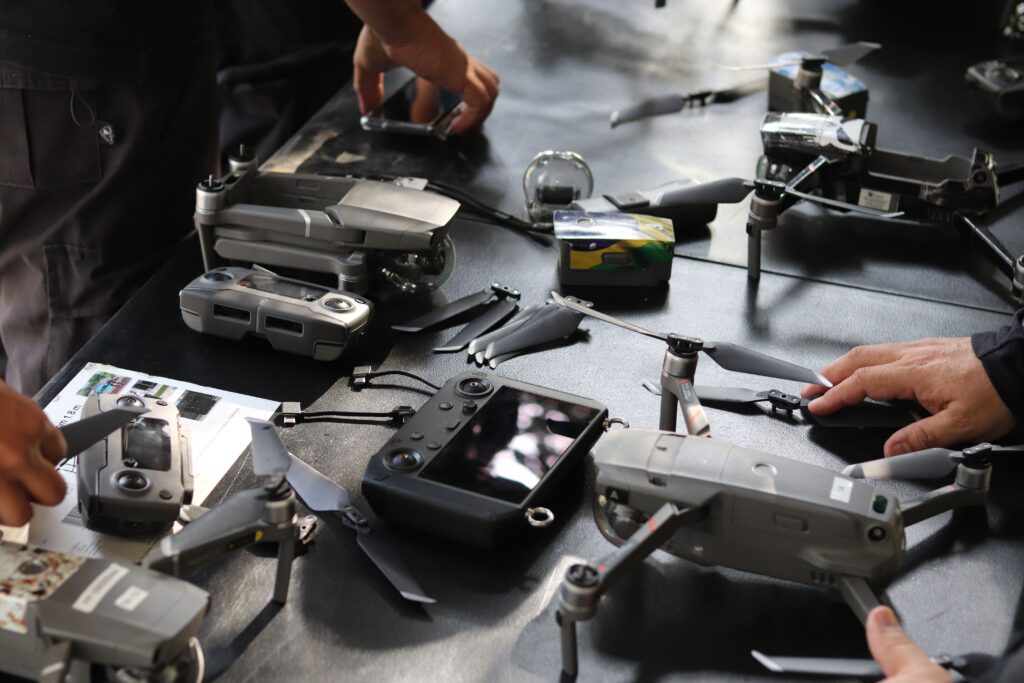
The rapid evolution of drone warfare shows clearly why defence production needs to become more flexible. Unmanned aircraft systems and counter-drone technologies have become increasingly important in today’s conflicts. Their development cycles are also often much shorter than those of traditional military equipment.
MEPs therefore call on the European Commission to provide dedicated support for autonomous systems, counter-drone systems, and next-generation drone technologies through EU defence programmes. Smaller companies could play a major role in this area, where innovation often comes from specialised firms rather than established defence manufacturers. The report also welcomes NATO’s initiative to connect defence innovators with civilian companies that have unused production capacity.
Lawmakers now want the Commission to explore similar initiatives at EU level. Such schemes could allow defence start-ups to expand production without building new industrial infrastructure from scratch.
Lessons from Ukraine
The war in Ukraine has also exposed the limits of traditional defence procurement systems. MEPs want European governments to make greater use of Ukrainian expertise. They point to existing cooperation between EU and Ukrainian defence companies through joint ventures, contracts, and technology exchanges.
Parliament’s message is that Europe’s defence readiness cannot depend exclusively on increasing spending or expanding the production capacity of established manufacturers. It also requires a procurement system that can identify, test, and buy new technologies before they become obsolete.
For Europe’s smaller defence companies, the challenge remains the same. They still have to turn technological breakthroughs into products that European armed forces are actually prepared to buy.