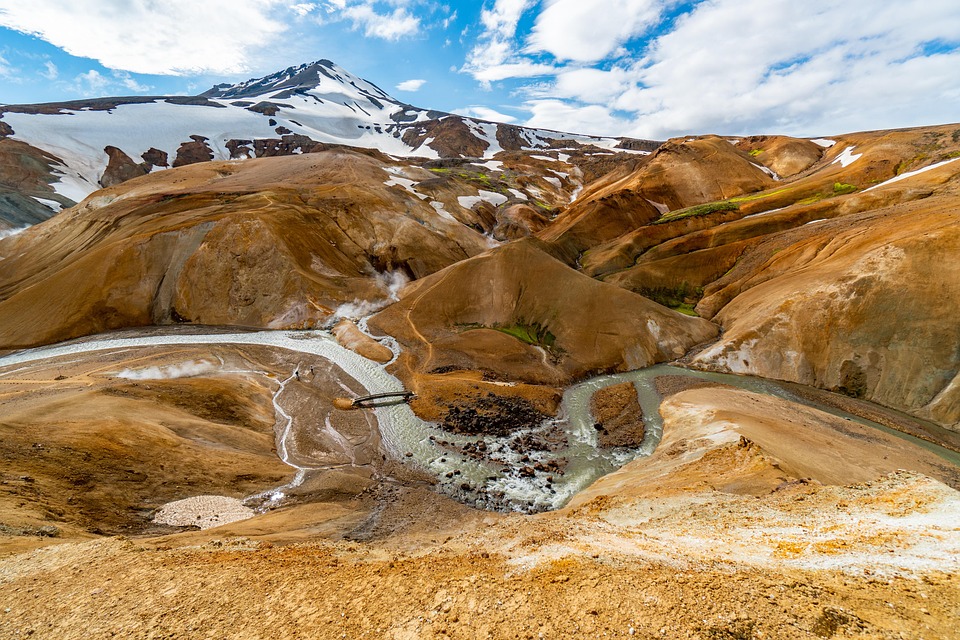
The strategically positioned island, which is a NATO member but has no regular army, froze accession talks with the Union in 2013 after having recovered from the financial crisis. The Icelandic government’s renewed interest in the EU is clearly motivated by growing instability in the Arctic region against the backdrop of US President Trump’s threats to ’take over’ nearby Greenland.
Iceland will vote on whether to continue accession talks with the European Union on August 29. On Friday, 6 March Icelandic government approved the Foreign Minister’s parliamentary resolution on holding such a referendum.
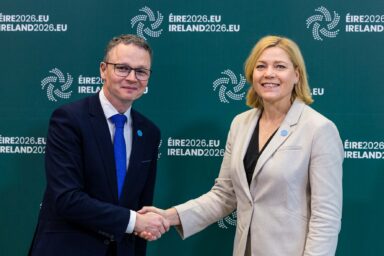
Þorgerður Katrín Gunnarsdóttir, Minister for Foreign Affairs, said there was unanimity within the government about submitting the parliamentary resolution. Ms Þorgerður said she would never sign an agreement involving relinquishing Iceland’s control over its natural resources.
Accelerated process
The ruling coalition agreement stipulates that a referendum on continuing membership negotiations with the European Union will be held no later than 2027. According to the law, a national referendum must be held no earlier than three months after the Parliament approves such a proposal, and no later than within one year.
Although the government has not given any explicit reason for trying to speed up the process, it is clear that Iceland—one of the richest countries in the world—is now more interested in anchoring itself in supranational institutions due to the deteriorating international situation.
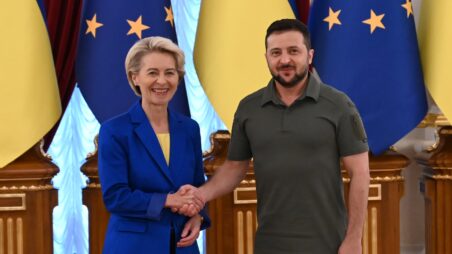
“In a world where spheres of influence compete with each other, EU membership offers support in a bloc based on values, prosperity, and security,” said Marta Kos, European Commissioner for Enlargement, according to AFP.
In a world where spheres of influence compete with each other, EU membership offers support in a bloc based on values, prosperity, and security. – Marta Kos, Commissioner for Enlargement
The move comes shortly after a number of visits by EU politicians to Iceland and by Icelandic politicians to Brussels. If Icelanders vote ’yes’ in the referendum, Iceland could join the EU before any other candidate country.
Population divided
Opinion polls, however, show that the Icelandic society—numbering less than 400,000 people—is deeply divided on the issue of EU membership. According to one of the latest polls, conducted in late January 2026, 42 per cent of Icelanders are in favor of EU accession. Exactly the same portion of Icelandic society, however, is against.
Fishing rights are a traditional point of contention. This is despite the fact that, from an economic perspective, fishing is of little significance to Iceland today. However, it remains important part of the national psyche.
Relations with the EU are intense
After applying for European Union membership in 2009, Iceland suspended its well-advanced accession process in 2015. However, the country’s relations with the EU have remained positive. Iceland maintains close economic, political and sectoral ties with the EU, largely shaped by the European Economic Area Agreement.
This agreement, in force since 1994, brings all EU member states plus Iceland, Liechtenstein, and Norway, into the single market. It also enables free movement of people, services, goods and capital in the European Economic Area.