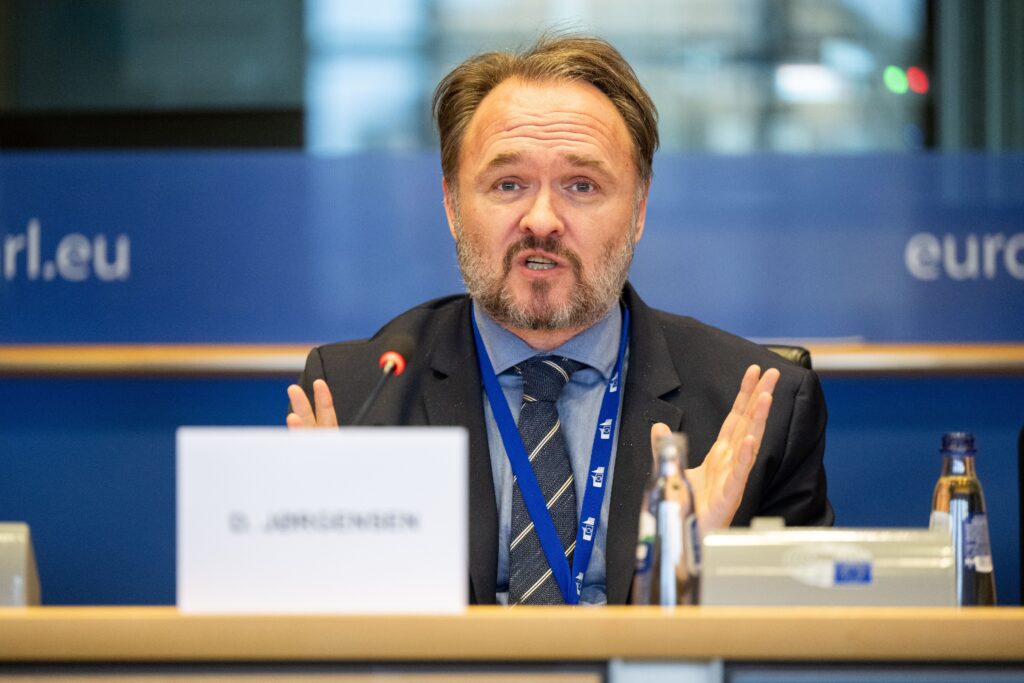
Green energy cooperation and energy security were at the centre of EU–Azerbaijan talks in Baku. Both sides underlined the ambition to expand the partnership beyond natural gas towards renewable energy, electricity transmission and cross-regional infrastructure. Countries in the South Caucasus are crucial for the EU’s natural gas supply.
In his opening remarks, European Commissioner for Energy Dan Jørgensen emphasised the strength of the EU–Azerbaijan energy partnership, describing it as advancing “in step with Europe’s clean energy transition.”
Data presented at the meeting showed that in 2025, Azerbaijan and its state‑owned energy company SOCAR supplied 12.5 billion cubic metres of natural gas to EU Member States, a 53.8 per cent increase compared to 2021.
According to the Commissioner, the South Caucasus could emerge as a hub for clean technology and infrastructure development. “Azerbaijan and the wider region hold immense potential for further cooperation in renewables, energy efficiency, and regional connectivity,” he said.
The partnership between Azerbaijan and the European Union has become a cornerstone of regional energy security. – Parviz Shahbazov, Minister of Energy of Azerbaijan
Azerbaijani Minister of Energy Parviz Shahbazov reiterated the country’s commitment to serving as a reliable energy partner not only in gas exports but increasingly in “green energy”, including plans for cross‑regional green energy corridors and interconnectors linking Azerbaijan, Central Asia and Europe.
“The partnership between Azerbaijan and the European Union has become a cornerstone of regional energy security,” Shahbazov said, adding that cooperation now extends beyond natural gas to include renewable energy, electricity transmission and sustainable infrastructure.
Closer integration
Dan Jørgensen and Shahbazov also insisted that the Strategic Gas Corridor (SGC) remains a reliable and competitive network of pipelines delivering Azerbaijani natural gas to European markets.
Energy agencies also present in Baku, including the International Energy Agency (IEA) and the International Renewable Energy Agency (IRENA), warned that increased investment in electrification, including grids and storage, remains key in reducing emissions before 2030.
Representatives from 27 governments and around 60 energy institutions and companies attended the high‑level in Baku on Tuesday, 3 March. The meeting took place in the framework of the Eastern Partnership, an EU initiative launched in 2009 to strengthen political, economic and sectoral cooperation with six eastern neighbours including Azerbaijan.
Regional stability
The framework supports collaboration in areas such as trade and energy security, with the EU seeking closer integration with partner countries while promoting regional stability and sustainable development.
Energy cooperation between the EU and Azerbaijan has developed gradually over the past two decades as Europe sought to diversify its energy supply sources. Since the Russian invasion of Ukraine, the European Commission has prioritized reducing the European Union’s dependence on Russian natural gas.
Both Azerbaijan and the European Commission expressed their commitment to driving a global electrification agenda and praised the efforts of the Global Energy Transitions Forum ahead of COP31.