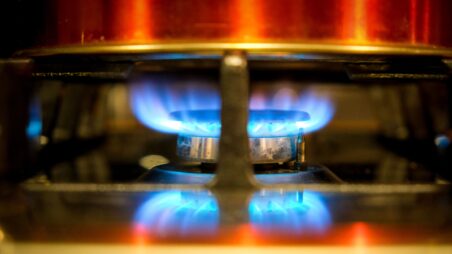
Geopolitical tensions far beyond Europe’s borders is pushing the continent towards yet another energy crisis — one that households will feel in heating bills and summer electricity costs. And one possible shield against the next price shock could lie much closer to home: in neighbourhood-level energy communities.
The European Commission unveiled its Citizens Energy Package as part of the executive’s strategy to combat high energy prices and boost access to clean energy across Europe.
The idea is to empower citizens, local authorities and businesses to collectively invest in renewable energy, such as solar panels on rooftops or community wind turbines. And then share the electricity they generate, reducing dependence on global fuel markets.
Energy shocks are back
The timing is not accidental. The crisis in the Middle East marks the second time in five years that conflict near Europe’s borders has driven up energy prices. Both the Russian invasion of Ukraine and the US-Israeli strikes on Iran triggered sharp spikes in energy costs almost immediately.
According to EU Energy and Housing Commissioner Dan Jørgensen, nearly one in ten citizens struggles to adequately heat their homes. “And a growing number suffer during the summer because they cannot properly cool their living spaces,” Jørgensen said.
Consumer groups warn that the current geopolitical situation could trigger another surge in prices. The European consumer organisation BEUC noted that instability in the Middle East has “potentially opened the door to another energy crisis”.
Big plans, few guarantees
To shield households from these volatile fossil-fuel prices and increase local control over production, the Commission’s Citizens Energy Package relies on expanding so-called energy communities.
REScoop.eu, the European federation representing these groups, praised the package for recognising the crucial role citizen-owned energy plays in improving affordability and strengthening Europe’s energy security.
It’s just a pity the Commission was not stronger in pushing governments to review the taxes on consumers’ bills. — BEUC, The European Consumer Organisation
However, organisations cautiously welcoming the initiative did not hesitate to mince praise with critique. They warned that the EU’s executive has proposed grand plans without a clear strategy on how to enforce them.
Consumer organisation BEUC argued the Commission missed the mark by leaving it entirely up to EU countries to make these plans a reality, adding: “It’s just a pity the Commission was not stronger in pushing governments to review the taxes on consumers’ bills.”
REScoop.eu echoed this concern, warning that without binding enforcement mechanisms, stronger oversight, or dedicated funding, the EU risks missing the mark on community energy expansion.
Laws already exist
ClientEarth, a collective of lawyers and policy experts, took the critique a step further, pointing out that member states are already failing to implement existing legislation.
They noted that laws like the Renewable Energy Directive (REDII) and the Internal Electricity Market Directive (IEMD) already grant citizens the right to produce and share renewable energy, yet many national governments have dragged their feet.
The Commission appears to recognise this enforcement hurdle, stating it will work with national governments, local authorities, industry, and civil society to ensure the new measures translate into tangible benefits for households.
Avoidable disaster
For legal advocates like ClientEarth lawyer Anna Fraczyk, policymakers cannot afford to underestimate the impact of these smaller-scale initiatives at the national level.
“Energy transformation is always talked about in terms of huge solar farms or other big developments, which inevitably evoke planning panic — but what if we could build national resilience within our own neighbourhoods,” Fraczyk said.
“That’s what energy communities are about, and that’s what the law is designed for. National failure to take it forward is paving the way to an avoidable disaster.”