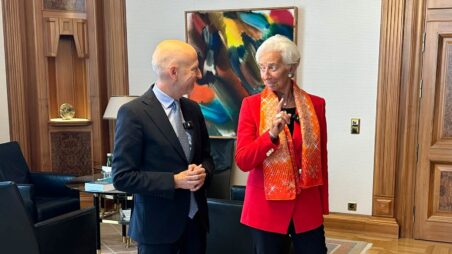
At the Foreign Affairs Council in Brussels, EU ministers reaffirmed support for Ukraine while grappling with the global economic and security consequences of the escalating US and Israel war on Iran and mounting instability across Europe’s neighbourhood.
Europe’s foreign ministers gathered in Brussels on Monday facing an increasingly complex security landscape, with Russia’s war in Ukraine, escalating conflict in the Middle East and growing risks to global energy and trade routes all shaping the discussion.
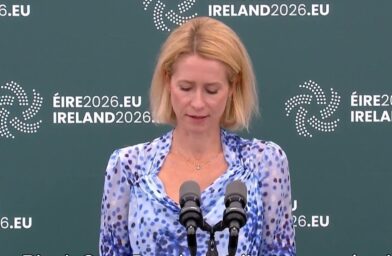
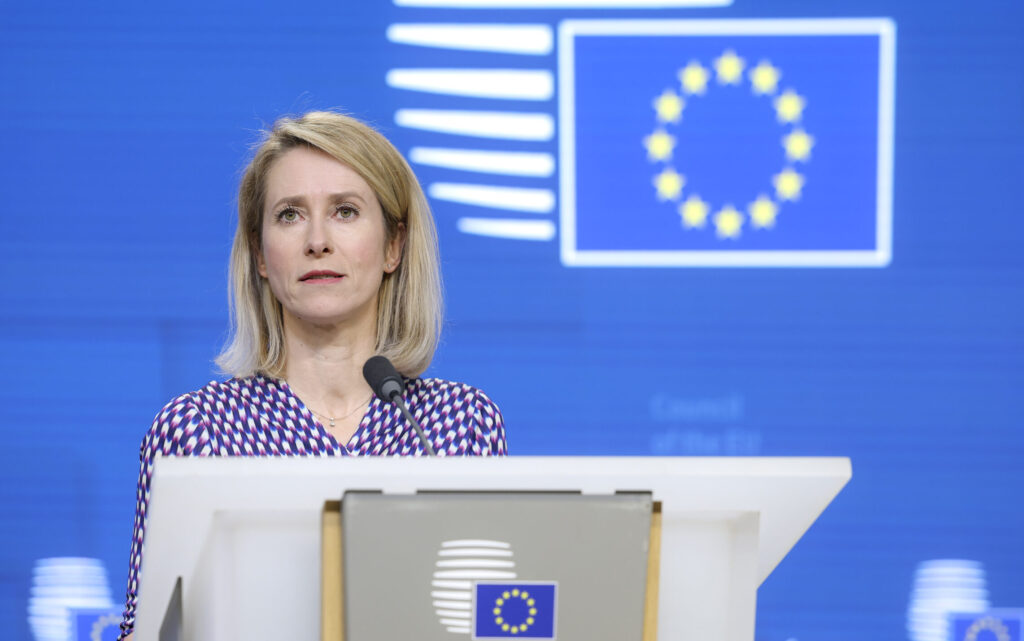
Following the meeting of the Council of the European Union’s Foreign Affairs Council, EU High Representative Kaja Kallas said ministers had begun the first exchanges on a broader European security strategy designed to reflect the changing geopolitical environment.
“The security environment is changing fast, and we cannot respond with emergency summits alone. We need a long-term policy,” Ms Kallas said, describing the effort to connect defence policy with other strategic vulnerabilities such as energy security, supply chains and economic resilience.
The aim, she explained, is to move beyond reactive crisis management and toward a more integrated framework capable of addressing overlapping geopolitical pressures.
Ukraine remains Europe’s central security concern
Despite the escalating tensions in the Middle East, ministers were clear that Russia’s war against Ukraine remains at the core of Europe’s security agenda.
“Ministers were clear that Ukraine remains European top security priority, and attention for Ukraine will not be allowed to fizzle out,” the High Representative said at the follow-up press conference on Monday evening.
At the same time, she warned that the widening regional conflict risks indirectly benefiting Moscow by pushing up global energy prices and diverting critical military resources away from Ukraine. “If we want this war to end, Moscow must have less money for the war, not more,” Ms Kallas said.
If we want this war to end, Moscow must have less money for the war, not more.
— Kaja Kallas, EU High Representative for Foreign Affairs and Security Policy
Ministers therefore discussed intensifying economic pressure on Russia, including new efforts to curb the shadow fleet used to bypass sanctions on Russian oil exports. “Dialling up pressure on Russia’s shadow fleet is one of the best tools we have… It is time for the gloves to come off on Russia’s shadow fleet,” Ms Kallas said.
The EU is also seeking to advance its twentieth sanctions package against Russia while continuing to target individuals and entities enabling the war effort.
Concerns for Moldova
Beyond Ukraine itself, ministers also discussed how the conflict continues to destabilise neighbouring countries. Ms Kallas pointed to Russian strikes on Ukrainian hydropower infrastructure that could contaminate Moldova’s water supply — a reminder that the consequences of the war increasingly reach beyond Ukraine’s borders.
The European Union is supporting Moldova with equipment assistance and satellite imagery, she said, underscoring that Europe intends to stand behind vulnerable neighbours facing the indirect effects of Russia’s aggression. Permanently eliminating any remaining vestiges of dependence on Russian fossil fuels remains another central pillar of EU policy as Brussels continues efforts to weaken Moscow’s ability to finance the war.
Global economic shockwaves
Alongside Ukraine, ministers devoted significant attention to the rapidly escalating confrontation between Israel and Iran and its wider global implications. “Two weeks of war have degraded Iran’s military capabilities but also generated damaging security and economic shockwaves. Iran is now waging war on global economy,” Ms Kallas said.
The EU’s immediate focus, she added, is de-escalation and protecting maritime trade routes. “Europe has no interest in an open-ended war… Nobody wants to go actively in this war,” Ms Kallas said, emphasising that diplomatic engagement remains Europe’s primary approach.
Roughly a fifth of global oil and gas flows through the Strait of Hormuz, making stability in the region essential not only for energy markets but also for global food security due to fertiliser shipments passing through the corridor.
“With wars it’s easy to start, very hard to stop,” the High Representative declared. “It gets very messy, it gets out of hand what we see right now in terms of the economic consequences.”
Risk of attention shifting from Gaza
Ministers also acknowledged that the widening regional conflict risks diverting international attention from the worsening humanitarian situation in Gaza and the West Bank. “It is true that this new war in the Middle East is diverting the attention away from what is happening in Gaza and the West Bank,” Ms Kallas admitted.
She warned that diplomatic progress has stalled, noting that “the second phase of the peace plan is totally stalled” while humanitarian access to Gaza remains restricted.
The EU will continue pressing for improved humanitarian access and reforms within the Palestinian Authority, while internal discussions continue over potential sanctions targeting violent Israeli settlers — a proposal supported by most member states but currently blocked by one government.
Multiple crises
Beyond the immediate conflicts dominating headlines, the Foreign Affairs Council also addressed broader regional pressures. Ministers agreed to deploy a hybrid rapid response team to Armenia to help counter foreign interference ahead of upcoming elections and discussed democratic backsliding in Georgia.
Taken together, the discussions illustrated how European policymakers are increasingly forced to navigate multiple interconnected crises — from Russia’s war in Ukraine to instability in the Middle East and disruptions to global trade. Maintaining strategic focus amid these overlapping pressures may prove one of the EU’s most difficult diplomatic balancing acts in the months ahead.