With the crisis in the Middle East putting further pressure on Europe’s energy prices, the EU’s energy ministers stressed the importance of improving the bloc’s cross-border energy infrastructure. One priority clearly stood out: speeding up permitting procedures for new projects.
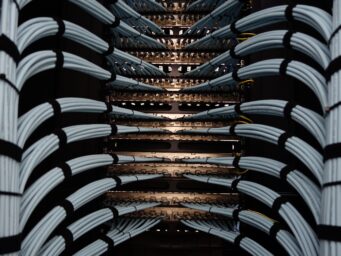
Cables running over the seabed, high-voltage transmission lines, and wind and solar farms are all part of the EU’s vast energy grid. This network spans more than 11m kilometres across the EU’s internal market, providing Europeans with energy every day.
With the recent attacks in the Gulf driving up electricity and fuel prices, the European Commission and member states eye expanding our own energy grids to solidify Europe’s energy independence. To help expand Europe’s infrastructure, EU energy ministers championed the European Commission’s proposal to shorten lengthy approval processes for new energy projects in a policy debate during the Energy Council on Monday 16 March.
Mismatch
The Netherlands was among the leading voices calling for streamlined permitting during the debate on the EU’s Grids package: a suite of measures designed to modernise and expand Europe’s power networks. It aims to amend four key EU laws, including the Renewable Energy Directive and Electricity Market Design.
“It is more crucial now than ever to increase our dependence,” Dutch minister of Climate and Green Growth Stientje van Veldhoven said, referring to the crisis in the Middle East. She emphasised that the EU must secure lower prices for citizens while maintaining a stable environment for investors. “Our system needs to work better and faster. We welcome simpler permitting; it is the key to accelerating the transition,” Ms Van Veldhoven said.
Renewable energy production is currently expanding faster than the EU’s ability to transport electricity. Large projects often require environmental impact assessments to evaluate potential damages — a process that can take years. Faster permitting processes should help combat this issue.
Germany echoed this urgency. According to Katherina Reiche, German energy minister, delays to grid expansion costs the country up to €3b annually. If electricity from new renewable installations cannot travel efficiently, grid congestion and higher prices follow.
“We need room for improvement to speed up procedures,” the German energy minister stated. Ms Reiche pointing out a stark mismatch: while renewable projects are being completed relatively quickly, the infrastructure to support them can take up to nine years to finalise.
Environmental concerns
Despite a broad consensus within the council meeting, the idea of shortening permitting periods sparked concerns amongst several countries’ representatives present at the meeting. Bulgaria emphasised that any reform must remain consistent with environmental legislation, while Malta argued that environmental protection should remain a central element of infrastructure planning.
Environmental groups echoed these concerns. They fear new projects could potentially harm existing natural habitats. Sabien Leemans, biodiversity manager at WWF European Policy Office, said in a statement that simplifying permitting procedures marks yet another “sad milestone in the deregulation madness”. She fears that MEPS and EU member states will start “ripping apart entire environmental laws”.
Acceleration must go hand in hand with robust environmental protection with nature, climate, and energy security goals reinforcing one another — Tom Lewis, Energy Policy Expert at CAN Europe
Tom Lewis, energy policy expert at CAN Europe, said that acceleration must go “hand in hand with robust environmental protection with nature, climate, and energy security goals”. Mr Lewis added: “Reopening […] environmental provisions for permitting could carry a real risk of delaying transposition and implementation, and with it Europe’s ability to rapidly deploy the renewables it urgently needs,” Lewis said.
Solidarity matters
SolarPower Europe welcomed the Grids Package: “The European Commission has also made the long-overdue move to introduce targeted permitting legislation for energy storage. This means that Europe will be able to connect battery storage faster – be it as hybrid plants with solar, or stand-alone.”
The idea of accelerating permitting procedures is not new. Following the Russian invasion of Ukraine, the Commission launched REPowerEU in 2022 to reduce the import of Russian fossil fuels. The plan aimed to rapidly diversify energy supplies and accelerate the transition to clean energy. While REpowerEU can be seen as the overarching plan to phase out fossil fuels, the EU Grids Package is supposed to further solidify European energy independence.
It is more crucial now than ever to increase our dependence — Stientje van Veldhoven, Dutch of Climate and Green Growth
EU Energy Commissioner Dan Jørgensen said he remains willing to work with member states to address national concerns during the current energy tensions and called for solidarity in upcoming discussions. “If we want steady investment in Europe’s clean transition, we need to show markets that we are stable,” Mr Jørgensen said.