A truck-clogged motorway remains the default image of European freight. The European Commission has adopted rules designed to change that, making it faster and easier for governments to fund railways, inland waterways, and combined transport. Entering into force on 30 March, it marks the most significant overhaul of EU transport state aid rules since 2008.
For nearly two decades, the rules governing how EU member states could financially back their rail and waterway sectors dating back to a time before serious climate targets — and before the EU had committed to cutting transport emissions by 90 per cent by 2050. The Land and Multimodal Transport (LMT) Guidelines and the accompanying Transport Block Exemption Regulation (TBER), adopted by the Commission on 17 March, replace that outdated framework with something fit for the decade ahead.
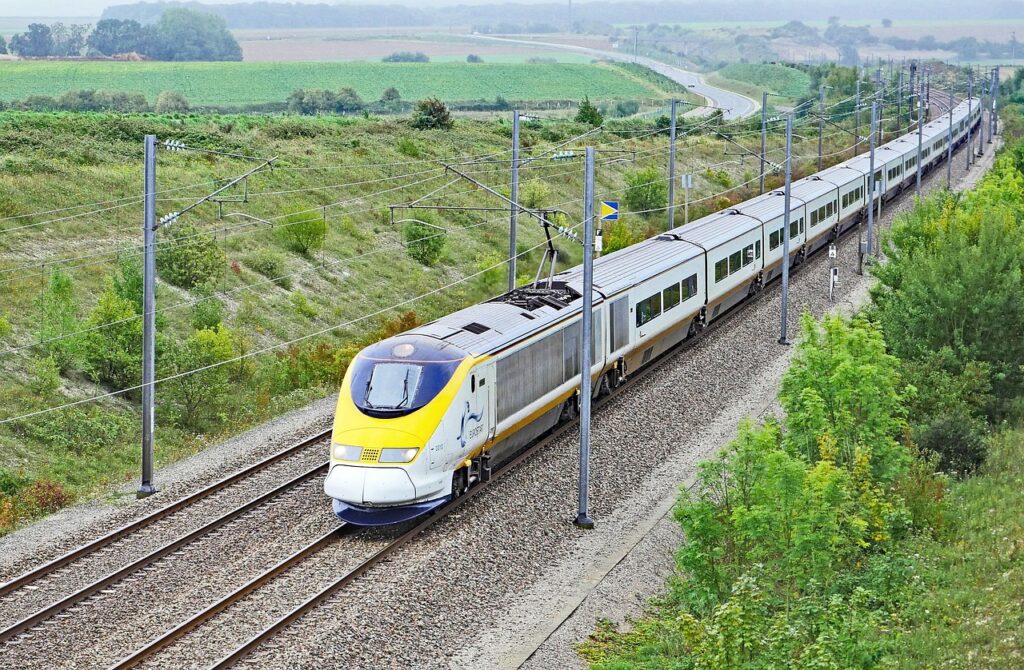
The scope alone marks a break with the past. Where the 2008 rules covered only railways, the new framework extends to all land transport more sustainable than road. This includes inland waterways and combinations of rail, water, and short-sea shipping. If goods or passengers can move without relying solely on lorries, Brussels now has the tools to support it.
Cutting the Brussels queue
The most immediately consequential change is the TBER itself. Previously, member states had to notify the Commission and wait for approval before releasing many categories of transport aid. The process would take months, discouraging smaller countries’ efforts. The new regulation exempts a wide range of standard measures from that requirement: investing in rolling stock, funding new rail connections, building multimodal freight terminals. Governments can act without waiting for Brussels to sign off.
Teresa Ribera, Commission Executive Vice-President for Clean, Just and Competitive Transition, described the adoption as equipping member states with a modern and coherent framework. The Commission argues that because the TBER builds on existing administrative structures, countries will not need additional staff or budgets to deploy it. The coming months will put the claim to the test.
The strategic logic behind the rules is straightforward: road transport remains the dominant mode for both passengers and freight across the EU, and the most polluting. By lowering the bar for state support of railways, inland waterways, and multimodal combinations, the Commission hopes to tip the economic balance. A haulier weighing the cost of road versus rail finds the latter commercially viable only with some form of public backing; these rules make that backing quicker and less painful to provide.
For ordinary travellers and freight customers, the potential changes are tangible. New rail connections that member states have wanted to fund but found entangled in approval procedures can now move forward faster. Small and medium-sized transport operators—previously disadvantaged by the cost of notification compliance—gain easier access to financing for rolling stock and vessels. More operators on the tracks tends to mean more competition, and more competition tends to mean better services and lower prices.
Borders without bottlenecks
The new rules also introduce more flexible provisions for aid supporting the digital transition in transport. One key target is interoperability, the ability of rail systems in different countries to communicate and cooperate. A freight train crossing from Poland into Germany should not have to grind to a halt while drivers swap out equipment or shuffle paperwork. Mismatched national standards have long added cost and delay to cross-border rail; the LMT Guidelines now explicitly support aid aimed at smoothing those frictions.
These rules simplify procedures and facilitate public support for sustainable transport solutions, thus contributing to a more efficient, affordable, and greener European land transport. — Teresa Ribera, Executive Vice-President for Clean, Just and Competitive Transition
The framework also targets the hidden costs of road transport—pollution, congestion, and damage to infrastructure—that society pays but hauliers do not. Aid designed to reduce those costs, including incentives for switching from road to rail or water, falls under the more flexible provisions.
What comes next
The Commission has built safeguards into the rules to prevent aid from entrenching existing operators at the expense of new entrants. But enforcement depends on the quality of data flowing from national authorities. With some countries far ahead of others in digital reporting, a two-speed take-up of the new framework is a real risk.
The LMT Guidelines carry no end date. The TBER runs until 31 December 2034. Between now and then, the real test will be whether member states actually use the new room to manoeuvre. The Commission hope it will make investment in railways and waterways translate into services making the choice of a train over a car or lorry feel like an obvious decision rather than an act of optimism.