The EU is preparing a fast-track approval pathway for breakthrough medical devices to bring innovative technologies to patients sooner. Health Commissioner Olivér Várhelyi signalled “preferential treatment” for high-impact innovations.
EU regulators are working on a pilot pathway aimed at accelerating access to innovative devices. It would allow breakthrough technologies to move faster through certification, while maintaining patient safety standards. The approach mirrors similar programmes in other jurisdictions, notably the US Food and Drug Administration’s breakthrough device programme.
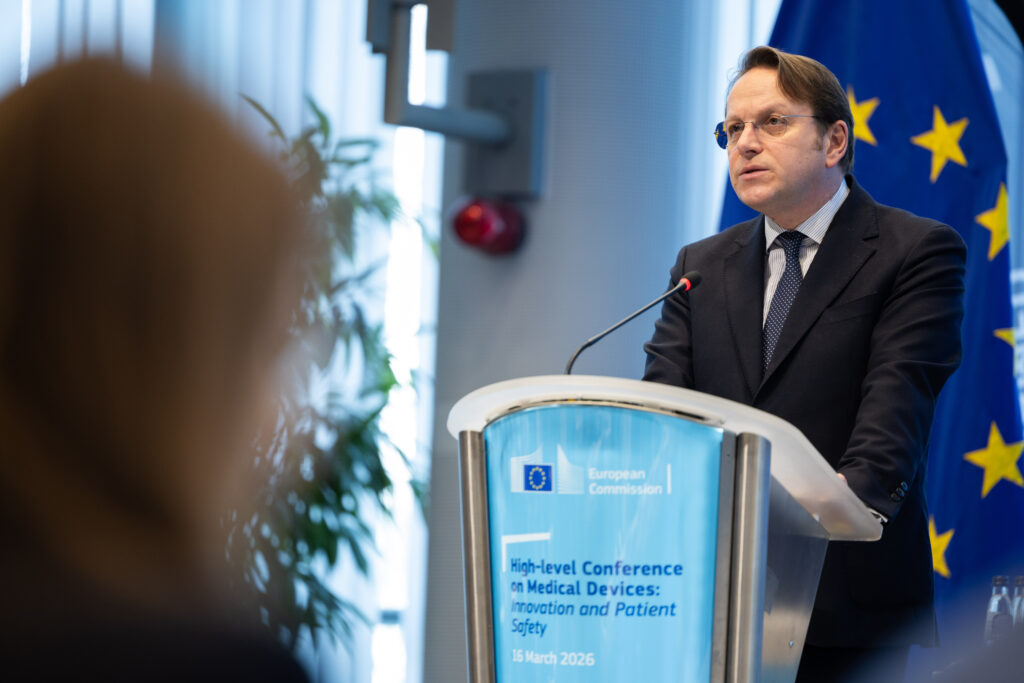
The plan was discussed at a high-level conference organised by the European Commission under the Cypriot Presidency of the Council on Monday. It forms part of the EU’s broader effort to address challenges linked to the Medical Devices Regulation (MDR) and the In Vitro Diagnostic Regulation (IVDR). “The medical device sector is a strategic asset for Europe,” Mr Várhelyi said. He stressed that innovation will receive “unprecedented support by a series of measures”.
Global competition
Breakthrough technologies will receive “preferential treatment” as part of a broader push to make the EU regulatory system faster and more predictable. Mr Várhelyi said the Commission aims to make certification more uniform and predictable. He added that the system should ultimately become “the fastest in the world”. The remarks signal a shift towards greater urgency in supporting high-impact innovation.
The push comes amid growing concern that Europe is struggling to retain and scale its own medical innovation. These concerns were reinforced by the recent acquisition of Belgium-based AI firm Icometrix by US group GE Healthcare.
Icometrix provides AI-powered brain imaging analysis for neurological disorders such as Alzheimer’s disease and multiple sclerosis. Its technology includes the first FDA-cleared solution to detect and quantify key side effects linked to new Alzheimer’s therapies.
This makes it a critical tool for treatment monitoring. The deal will likely accelerate global deployment. It also shows how European breakthrough innovations often scale under non-European ownership. The case underscores mounting concerns that Europe risks losing high-value medical innovation in an increasingly competitive global market.
Commission health chief Sandra Gallina echoed the sense of urgency. She warned that policymakers must avoid repeating past mistakes in the regulatory framework. “We cannot afford to fail twice,” she said.
Pilot programme first
EU officials confirmed that they will innitially test the breakthrough pathway through a pilot programme. Rainer Becker, director for medical products and innovation at the Commission’s health department (DG SANTE), said the pilot will allow regulators to gain practical experience before establishing a permanent framework. The exercise will help determine operational details and identify areas for improvement, Mr Becker said, describing the approach as a “trial and error” process.
Ms Gallina said the Commission is already preparing the pilot phase. She described the initiative as one of the Commission’s key short-term measures to improve the regulatory environment for innovation. “Among the various measures, something of which I’m extremely proud is the pilot for breakthrough technologies,” Gallina said. She added that the call for applications is expected to open next month.
More than 360 experts can be mobilized to provide scientific advice and support the assessment of innovative devices. — Alberto Gañan Jimenez, European Medicines Agency
The pilot builds on guidance adopted by the Medical Device Coordination Group (MDCG) in December 2025. The guidance outlines how a breakthrough device pathway could operate under EU law. It introduces the concept of “breakthrough devices” (BtX). These are highly innovative medical technologies expected to deliver significant clinical benefits for serious or life-threatening conditions.
New regulatory framework
To qualify, devices must demonstrate both a high degree of technological novelty and the potential to significantly improve patient outcomes compared with existing treatments. The framework allows manufacturers to request breakthrough designation early in development, in some cases years before market entry.
One of the most significant elements of the framework is the recommendation that notified bodies prioritise breakthrough devices during certification. Notified bodies are responsible for assessing device conformity. They are encouraged to prioritize breakthrough technologies in their workflows and engage in early dialogue with manufacturers.
Innovation will receive unprecedented support by a series of measures. — Olivér Várhelyi, EU Health Commissioner
Regulators hope this approach could help alleviate certification bottlenecks that have slowed innovation under MDR. The framework also foresees an expanded role for EU expert panels coordinated through the European Medicines Agency (EMA). Alberto Ganan Jimenez of EMA said that more than 360 experts can be mobilised to support the assessment of innovative devices.
Manufacturers developing breakthrough technologies can request early scientific advice from these panels, with opinions expected within around 60 days.
Targeted revision underway
The breakthrough pathway is being developed in parallel with the Commission’s targeted revision of the MDR and IVDR, which aims to address implementation problems identified since the regulations entered into force. Ms Gallina urged regulators to accelerate the work. “We need to move fast,” she said, to ensure patients benefit from innovative medical technologies.
The Commission has already presented its proposal, which is now entering the EU legislative process. “We expect the translated documents tomorrow. After we receive them, we intend to conduct the first reading,” said Neophytos Charalambides, Cyprus’ health minister. He added the Cypriot presidency would begin discussions on the file. It will then hand negotiations over to Ireland, which will continue work in the Council.
We cannot afford to fail twice. — Sandra Gallina, Director-General for Health and Food Safety
In the European Parliament, rapporteur Tomislav Sokol (EPP/HRV) said the health committee is preparing to begin work on the file. “Probably at least two to three months until the first draft report,” he said. This suggests that negotiations between EU institutions could begin before the summer.