Artificial intelligence is reshaping society, but who gets to set the rules? Amandeep Singh Gill, the UN’s Special Envoy for Technology, raised that question in a warning to lawmakers that getting the balance between control and freedom wrong could deepen inequality and threaten democracy.
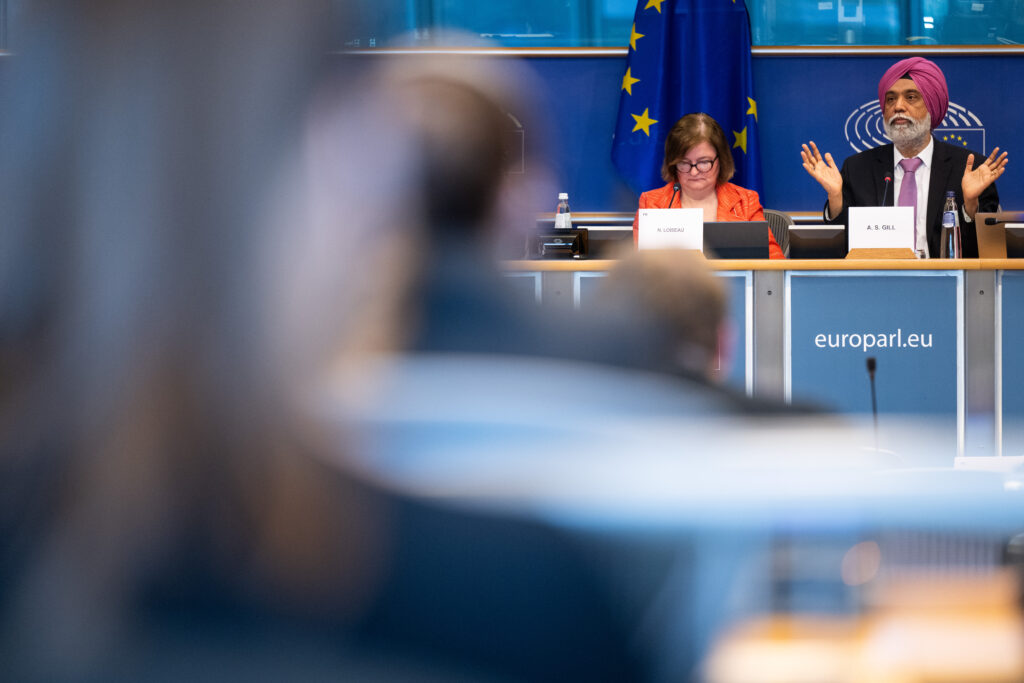
During a meeting of the European Parliament’s Democratic Shield Committee, Mr Gill reminded its members of the UN’s Global Digital Compact, adopted in 2024. Its goal is to ensure that AI opportunities are available across the globe—as opposed to concentration in a handful of regions—while preventing the risks from falling disproportionately on the majority of the world’s population.
Over 80 countries still lack the minimum requirements to participate in the AI era — data storage, skills, and computing power for training AI models, Mr Gill told the committee. The divide is not simply a North-South issue. Even within developed countries, he warned, the risk of a K-shaped society persists: one that favours high earners while pushing low-wage workers into increasing financial hardship.
The K-shaped economy in the age of AI
Gill’s concerns did not stop at economics. The way AI is reshaping the information ecosystem, he argued, poses an equally serious threat to democracy, human rights, and public trust.
Three areas concern him most: misinformation, disinformation, and hate speech — and the way they pollute the information ecosystem and threaten human rights. UN peacekeeping missions are particularly vulnerable. Misinformation has already cost lives, he said. “Our work on healthcare, vaccinations, and climate change is impacted.”
The real challenge, Mr Gill argued, is not just the creation of AI-generated false content but how it spreads and is consumed. The answers, he said, often lie not online but in the analogue world — in institutions, media literacy, and civic trust.
We hope that both will one day become international standards. — Lucilla Sioli, Director of the AI Office, European Commission
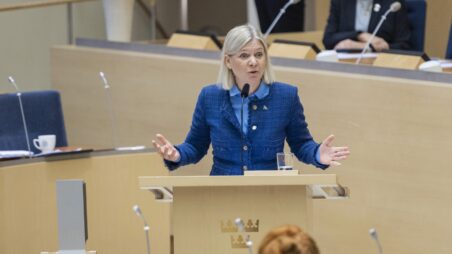
Lucilla Sioli, Director of the European Commission’s Artificial Intelligence Office, responded for the EU side. The Digital Omnibus is under discussion, she said, with trilogues beginning shortly. Two codes of conduct are in development: one on security frameworks, the other on watermarking and labelling deepfakes. “We hope that both will one day become international standards,” she added.
Strengthening journalism
Freedom of the press in Europe is often precarious. Mr Gill emphasised that the EU must uphold the Universal Declaration of Human Rights to protect freedom of expression and access to information.
The UN has drawn up a policy document on information integrity. Its five principles range from citizen empowerment and independent media to transparency and resilient information ecosystems. “If we don’t strengthen journalism and invest in public interest media, we won’t get out of this,” he told MEPs.