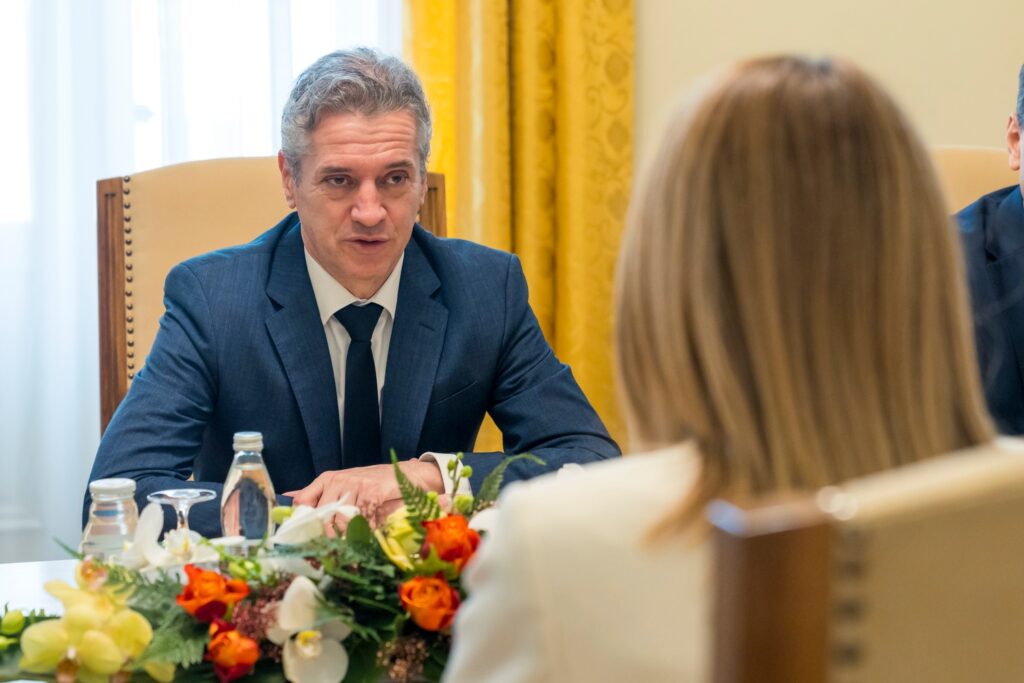
Pro-European Prime Minister Robert Golob’s Freedom Movement won Slovenia’s snap election by a sliver, only to face a fractious path to a governing majority. But the campaign’s defining moment had nothing to do with policy; it had to do with spies and foreign interference.
Mr Golob is staunchly pro-European and has not shied away from friction with Washington and Tel Aviv. Slovenia banned arms sales to Israel during the Gaza war, and Mr Golob publicly condemned the recent attack on Iran. It was against this charged geopolitical backdrop—and amid a rightward shift across the EU following the 2024 European elections—that Slovenians went to the polls.
In early March, videos began circulating in Slovenia, apparently showing four of Prime Minister Golob’s aides discussing illegal methods to win public contracts. All four denied the accusations. Slovenian intelligence confirmed the videos had been doctored.
Early intervention helped
Mr Golob called for an investigation into alleged interference by the Israeli intelligence firm Black Cube, and for a broader EU-level response to similar threats. He described the incident as a “clear hybrid threat to democratic processes and common values”. Janez Janša, the pro-Trump opposition leader, admitted meeting a Black Cube official but denied any involvement.
Days before the vote, Mr Golob wrote to Commission President Ursula von der Leyen and European Council President António Costa. The prime minister also asked the new European Centre for Democratic Resilience to examine the case. It became part of the “European Democracy Shield” initiative against foreign interference and disinformation. Slovenia identified the attempt early, he said. But without a coordinated EU response, the next target may not be so lucky.
The Liberals won 29 seats to the Conservatives’ 28 in the 90-seat parliament, leaving coalition-building as the central challenge ahead. “The election results confirm that Slovenia remains a deeply polarised society, with a fragmented political landscape and no clear governing majority,” MEP Matjaž Nemec (S&D/SVN) told EU Perspectives.
A clear hybrid threat to democratic processes and common values. — Robert Golob, Slovenian Prime Minister
The result notwithstanding, the campaign itself damaged all parties, including the winning socialists. It progressed in a highly polarised climate. Its final phase focused less on economic and social issues than on accusations of interference. “The campaign unfolded under unprecedented pressures, including geopolitical tensions and credible concerns about foreign interference, underscoring the need to safeguard our democratic processes,” Mr Nemec added.