Europe’s crisis response system is up for its biggest overhaul in years—but MEPs cannot agree on how far to go. At a joint committee meeting on 24 March, lawmakers clashed over a proposed €10.7 billion budget, the expanding role of the military in civil protection, and how much authority Brussels should hold when disasters strike. The debate has laid bare deeper fault lines over the future of EU crisis governance.
What began as a technical upgrade to the EU’s disaster-response framework has become a broader political question. How much power should sit in Brussels? How much should be spent? And how far should crisis policy reflect Europe’s new security reality?
At a joint meeting of the European Parliament’s environment and public health committees (ENVI-SANT), MEPs broadly agreed on the diagnosis: Europe is not prepared enough for the crises ahead.
From disasters to geopolitics
The Commission’s proposal would overhaul the Union Civil Protection Mechanism (UCPM), transforming it from a coordination tool for natural disasters into a broader system covering prevention, preparedness, and response across sectors. This includes health and hybrid threats.
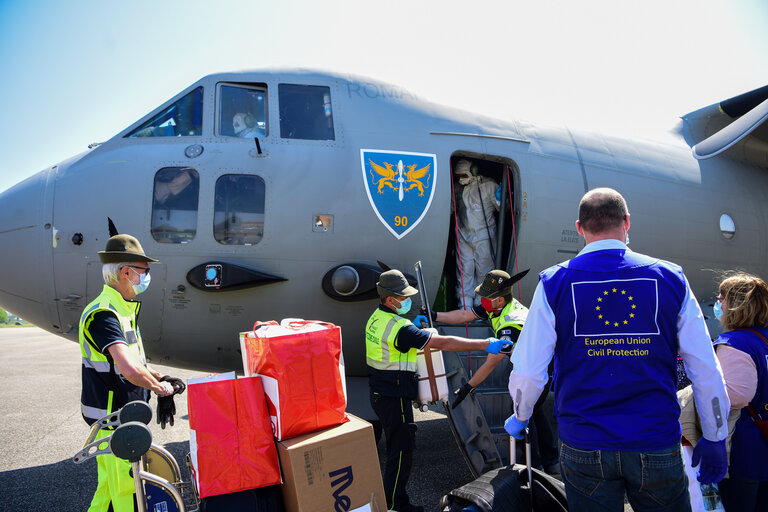
Originally designed to facilitate cooperation between member states in emergencies such as wildfires, floods, and earthquakes, the mechanism has evolved significantly since then. Its most notable addition is rescEU, a shared European reserve of emergency capacities.. But recent crises, notably COVID-19 and the war in Ukraine, have exposed structural gaps in preparedness, cross-sector coordination, and health response.
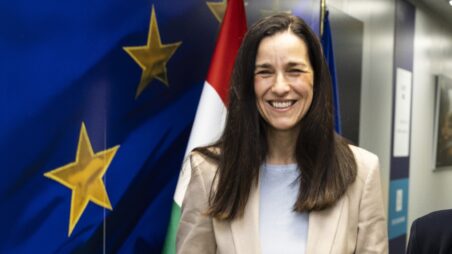
That broader crisis landscape shaped the tone of the parliamentary debate. Co-rapporteur Leire Pajín (S&D/ESP) is one of the MEPs leading the Parliament’s work on the file. She argued that the mechanism must cover “the entire cycle” of risk—from anticipation to recovery—and build a stronger “culture of preparedness” across society. Her co-rapporteur Aurlijus Veryga (ECR/LTU) framed the debate more explicitly in geopolitical terms.
Having in mind the rapidly changing geopolitical and safety environment, it is very important to use this opportunity for elaboration of civil-military cooperation in this mechanism. —Aurlijus Veryga (ECR/LTU)
Mr Veryga was more explicit. “Having in mind the rapidly changing geopolitical and safety environment, it is very important to use this opportunity for elaboration of civil-military cooperation in this mechanism,” he said.
He added that “the civilian and military sectors can and must complement each other in both preparedness and response.” Ms Pajín agreed on the importance of civil-military cooperation—but stressed “the necessity of preserving the civil nature of this protection mechanism.” That tension is emerging as a key fault line: how to adapt to a more security-driven environment without militarising what has always been a civilian system.
Not enough billions
Money is emerging as another major battleground. The Commission’s proposed budget for the 2028–2034 period marks a sharp increase compared to the current programme—but Mr Veryga argued that even this is not enough.
“The indicative total budget for the UCPM and Health Emergency Preparedness and Response (HEPR) is €10.7 billion. It is not ambitious enough, taking into account the changing geopolitical situation,” he said, also calling for stronger guarantees that all parts of the mechanism would be financed.
Ms Pajín and Mr Veryga are both pushing a more structured spending model: 40 per cent to civil protection and rescEU preparedness, 40 per cent to health emergency preparedness and response, and 20 per cent to flexibility and coordination.
MEP Laurent Castillo (PfE/FRA) warned against tightening the budget too much. “I do not think we should boost the budget as much as the rapporteurs are proposing. We do not know the final amount that will be allocated. And if we were to increase it in such a way, I think that would take away any flexibility that we would need.” The Commission echoed the concern, warning that pre-allocation of funds could make spending “less effective than intended and needed.”
New hub, old concerns
Another flashpoint is the proposed Crisis Coordination Hub, intended to improve risk monitoring and cross-sector coordination. It would build on existing structures, especially the Emergency Response Coordination Centre (ERCC). The hub aims to codify lessons learned from COVID-19 and the war in Ukraine. But several MEPs questioned whether it would really simplify anything.
MEP Pascal Arimont (EPP/BEL) said the hub must be more clearly defined. It must not become “just another agency that gathers information” or create “additional bureaucracy for the member states.” Mr Veryga acknowledged the sensitivity, noting the need for clarity on how the new hub would integrate with the existing ERCC. Other speakers broadly supported the reform but warned against duplication and administrative burden.
Who is in charge when crisis hits?
Beneath the technical arguments lies a more fundamental question: how far should EU-level coordination go? The proposal strengthens Brussels’ role in cross-border crisis coordination. It merges civil protection and health emergency preparedness into a single framework. Some MEPs argued this reflects reality. MEP Sirpa Pietikäinen (EPP/FIN) said COVID had shown that on critical medicines, “member states alone can’t act and there needs to be the resources and there needs to be the power.”
The EU needs to be an effective facilitator, a coordinator, provide operational support but it should not take over the competences of the member states. —Laurent Castillo (PfE/FRA)
Others were more cautious. Mr Castillo insisted that “the EU needs to be an effective facilitator, a coordinator, provide operational support but it should not take over the competences of the member states.” Civil protection and health remain areas of primarily national competence—and the proposal has already triggered subsidiarity objections in some capitals.
Next steps
MEPs will now table amendments ahead of a 9 April deadline, with a joint committee vote expected in September and a plenary vote scheduled for 1 October.
The real fight is over what “better prepared” actually means. More money, more EU coordination, and a stronger link between civil and military crisis planning—or a more cautious upgrade that keeps member states in control and the mechanism firmly civilian.
Europe’s next major crisis may answer that question before lawmakers do. And when it does, the gaps left by today’s divisions will be impossible to ignore.