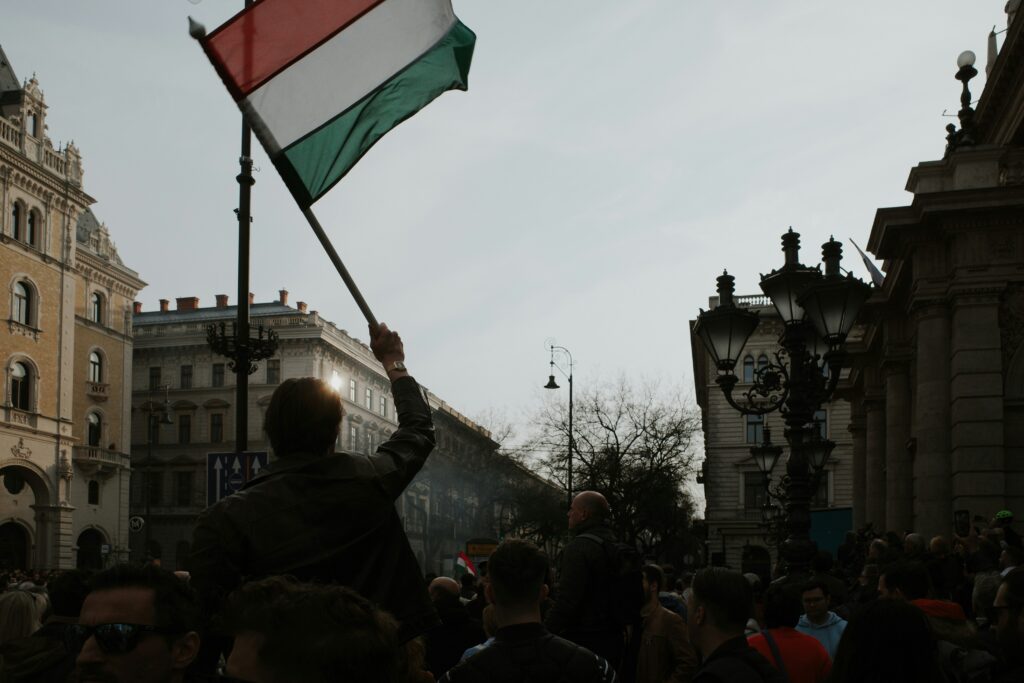
A groom is dragged from the altar straight to the battlefield, where he dies — one of many AI-generated videos flooding Hungarian feeds ahead of Sunday’s election. Both the ruling party and the opposition are using synthetic content to stoke fear and manipulate voters at scale. EU rules are supposed to stop this, but enforcement is lagging far behind.
“AI is everywhere in this campaign,” says Zsófia Fülöp, a journalist at Lakmusz and contributor to the European Digital Media Observatory. Fact-checkers have documented a string of AI-generated videos and deepfakes ahead of Sunday’s vote — and millions of Hungarians have seen them.
Fear, fiction, and the ballot box
Fidesz ran at least four to six AI-generated videos, including a deepfake of European Commission President Ursula von der Leyen calling Péter Magyar to coordinate funding for Ukraine. The opposition was not clean either: the Democratic Coalition produced multiple AI clips targeting dual citizens who vote in Hungarian elections while living abroad. Both sides used synthetic content not to deceive, but to inflame.
“These videos are always really emotional stories,” says Fülöp. The clips are typically labelled as AI-generated, yet their purpose is not concealment. Researchers describe this as the construction of a ‘parallel reality’ — where repeated messaging across platforms normalises fear-driven narratives over time.
The scale is striking. Hungary ranks among the top EU deepfake hotspots across 87 elections monitored since 2023. Fact-checkers tracked around ten cases by March alone — and videos on Orbán’s channels regularly exceeded one million views each.
Bots, boomers, and TikTok
The EU’s AI Act aims to improve transparency through watermarking of synthetic content — but experts warn that technical solutions alone are not enough. “I think it helps, but not as a single act,” says Fülöp, emphasising media literacy instead, particularly for older generations. Training sessions ahead of the elections revealed strong demand for basic tools to identify manipulated content.
Younger audiences are generally more sceptical of AI-generated content. But on TikTok, even they are not immune — researchers found comment sections flooded with identical messages repeated hundreds or thousands of times, not to persuade but to overwhelm. “It’s too many interactions to be true,” Fülöp notes.
Under the Digital Services Act, very large platforms are required to assess and mitigate systemic risks to civic discourse. Yet the scale and persistence of coordinated inauthentic behaviour during the Hungarian campaign suggest these obligations are not being fully met.
Platform rules under pressure
Political ads are banned under EU rules — yet they continue to circulate. Fülöp points to one example where messaging was disguised as a cartoon: a pro-government group published an animated fairy tale about mischievous characters causing trouble along a river, sharing the same name as the opposition Tisza party. “It was kind of obvious that they were talking about the opposition party,” she says.
I don’t think that the online space is healthier or better
—Zsófia Fülöp, European Digital Media Observatory
“We see advertisements on Facebook and Instagram,” Fülöp says — some ran for days before being removed. By the time platforms intervene, hundreds of thousands of users have already seen them. “I don’t think that the online space is healthier or better,” she adds.
Brussels pushes back
At the EU level, officials are increasingly vocal about the role of platforms in political campaigns. A European Commission spokesperson declined to comment on whether remarks by JD Vance amounted to foreign interference. Instead, the Commission pointed to the platforms themselves. “Who is silencing political voices? Online platforms. Who is manipulating algorithms? Again, online platforms. Who is boosting the visibility of the preferred choice? Online platforms,” the spokesperson said.
While the Digital Services Act is designed to address these risks, enforcement remains a challenge. “In Europe, elections will not be the choice of Big Tech and algorithms,” the spokesperson added.
No end in sight
In Hungary’s election campaign, deepfakes are about reinforcing divisions and amplifying emotions at scale. “I don’t even want to look at social media anymore — it’s just too much,” Fülöp recalls hearing from users overwhelmed by the volume of content.
As Hungarians head to the polls on April 12, the question is no longer whether AI shapes elections. It is how much.