Algorithms are rapidly becoming the invisible managers of millions of European workers, shaping tasks, performance and even hiring decisions. AI spreads across workplaces, fuelling rising psychosocial risks. EU lawmakers warn that protections for employees are lagging behind.
Across Europe, digital systems are no longer just tools — they are increasingly making decisions. Around 26 per cent of workers are already managed, at least in part, by algorithms that assign tasks, track performance and can even influence who gets hired or promoted. In many workplaces, these systems operate in the background, quietly shaping how work is organised and evaluated.
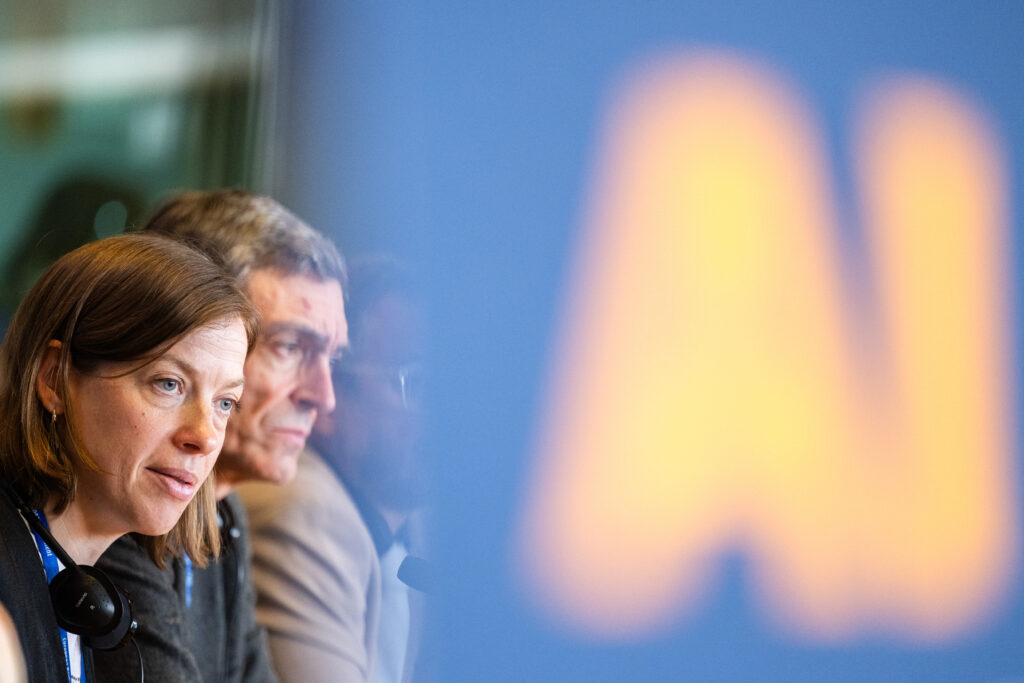
As these systems become more widespread, their impact is increasingly felt by workers themselves. Experts point to a growing link between workplace technologies and rising psychosocial risks, including stress, burnout and a loss of autonomy. The issue also came up in a recent European Parliament debate on the future of workplace regulation.
The influence of AI is not restricted to job loss, but concerns the radical change of how millions of people are working every day — Marinos Moushouttas, Minister of Labour and Social Insurance of Cyprus
According to research presented by William Cockburn, executive director of the European Agency for Safety and Health at Work, nearly half of workers report high time pressure. Around one in three experience stress, anxiety or depression linked to their job. “Where digital technologies are present, work intensity and long hours are more likely to be reported,” he said.
AI-driven management—based on constant monitoring, automated targets and limited human oversight—can further intensify these pressures if left unchecked. Trade unions warn that this model is already increasing stress and fatigue. Particularly in sectors such as logistics, where algorithms play a central role in organising work.
AI reshaping workplace rules
The discussion under the Committee on Employment and Social Affairs aimed to shape input for the upcoming Quality Jobs Act. Marinos Moushouttas, Minister of Labour representing the Cyprus Presidency of the Council, stressed that digitalisation is transforming work. “The influence of AI is not restricted to job loss, but concerns the radical change of how millions of people are working every day,” he said. The minister pointed to growing concerns over psychological pressure, loss of control and data privacy in increasingly automated workplaces.
MEP Andrzej Buła (EPP/ESP), rapporteur on digitalisation and AI in the workplace, argued that “AI and algorithmic management are not just tools, but they shape conditions of employment”. He warned that without a broader legal framework, workers could face increased pressure, uncertainty and reduced control over their work.
Where the omnibus touches provisions concerning fundamental rights, we must ensure protections are not removed. — MEP Michael McNamara (Renew/IRE)
The debate comes as member states begin transposing the Platform Work Directive. This introduces new rights on data protection and algorithmic transparency, including limits on the processing of certain personal data and requirements for human oversight of automated decisions.
However, lawmakers acknowledged that the directive applies only to platform workers. Parliament has already called for these protections to be extended across the labour market through new legislation on algorithmic management.
Human in the centre
MEPs argued that this shift requires urgent regulatory clarity. Marc Angel, chair of the Platform Work Directive monitoring group, warned that these systems “must be transparent, explainable and subject to human oversight”. He also referred to ongoing efforts to extend safeguards beyond platform workers.
At the same time, concerns were raised about the AI Act and Digital Omnibuses. MEP Michael McNamara (Renew/IRE) co-rapporteur on the AI Act omnibus in the European Parliament, cautioned that changes must not weaken safeguards. “Where the omnibus touches provisions concerning fundamental rights, we must ensure protections are not removed,” he said, warning that reduced oversight could make it harder for workers to challenge automated decisions.
The European Commission is preparing its proposed Quality Jobs Act, expected later this year. The Act will address both algorithmic management and psychosocial risks in a single framework. Despite differing views on the need for new legislation, there was broad agreement that the digital transition must remain human-centred.