The EU’s green agenda is moving into a higher gear. It is no longer simply about saving the planet but is increasingly tied to Europe’s security, economic strength and ability to cope with growing global rivalry, as EU foreign ministers agreed on Tuesday.
Climate diplomacy and energy policy have been increasingly discussed in the EU as part of the same strategic picture. The conclusions from the Tuesday Foreign Affairs Council summit, approved by the bloc’s chief diplomats, highlights this shift, linking the climate agenda to security, defence and foreign policy.
The green transition—the shift away from fossil fuels towards cleaner energy sources—is now explicitly described as a key tool of Europe’s economic stability and geopolitical strength.
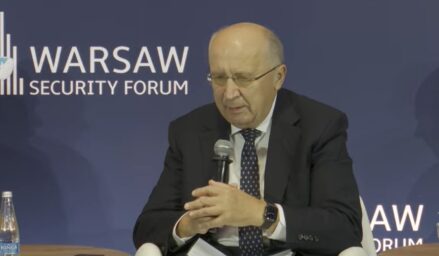
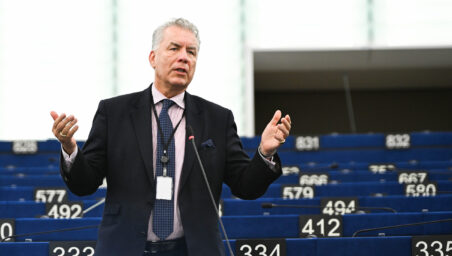
The wars in the Middle East and Ukraine show how important it is to diversify supplies and reduce dependencies on fossil fuels. — Kaja Kallas, High Representative for Foreign Affairs and Security Policy
This shift reflects a combination of pressures: dependence on imported fossil fuels, the lessons of the energy crisis following Russia’s 2022 invasion of Ukraine, current instability around the Strait of Hormuz, the strain on a rules-based international order, and mounting competition over the technologies expected to define the future the global economy.
“The wars in the Middle East and Ukraine show how important it is to diversify supplies and reduce dependencies on fossil fuels,” said Kaja Kallas, the EU’s foreign policy chief.
Energy bills under control
The EU is open about a its structural weakness: its heavy dependence on imported oil and gas, especially from Russia. The energy crisis from four years ago exposed how quickly energy can become a geopolitical weapon in the hands of hostile actors. And how sharply that translates into higher costs for households and businesses, with serious consequences for the wider economy. Ensuring secure fossil fuel supplies remains a short-term necessity.
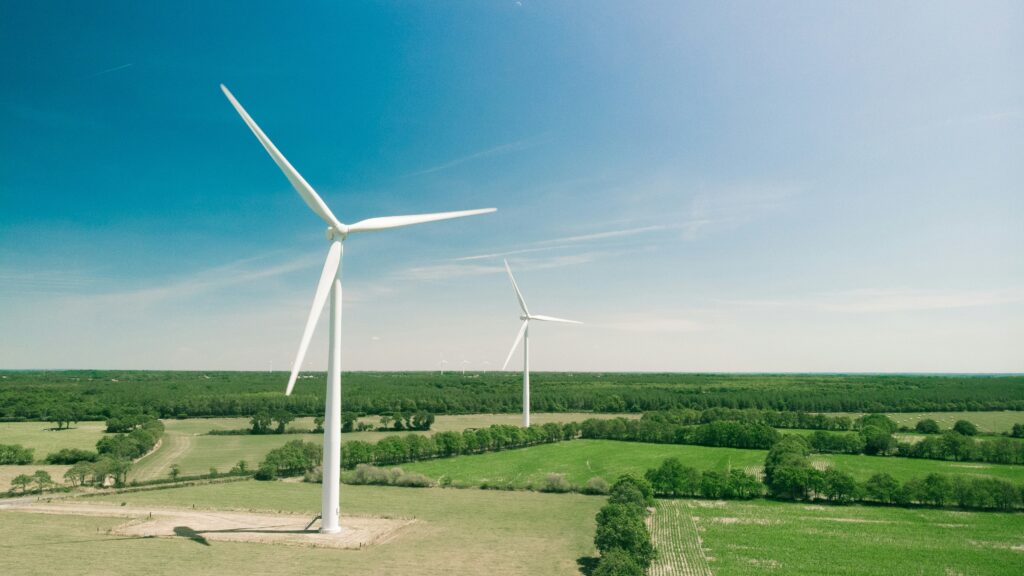
From Brussels’ perspective, however, a long-term solution is what matters most. Energy is described as a strategic vulnerability that can be exploited to put pressure on Europe. The goal is therefore to gradually reduce dependence on fossil fuels and shift towards domestically controlled, cleaner energy sources such as solar panels or wind turbines — not for the sake of climate reasons, but to reduce exposure to coercion.
In this context, the Council doesn’t turn a blind eye to nuclear energy. For countries relying on it, the EU stresses transparency, diversification of nuclear fuel supplies, as well as high environmental and safety standards.
A notable shift is how the EU now talks about the green transition itself. It is no longer just an environmental project, but also an industrial and technological race.
Europe aims to strengthen its domestic production and development of clean technologies — from renewables and energy storage to hydrogen systems. It is also seeking to promote European technologies globally, in response to growing competition from the United States and China.
‘Detox’ from critical dependencies
Another major focus is reducing reliance on critical raw materials and fragile supply chains. The EU argues that certain inputs are so strategically important that shortages could undermine entire sectors of the economy. The list of such materials is regularly updated.
The Council therefore calls for accelerated implementation of key initiatives under the Critical Raw Materials Act, the RESourceEU Action Plan and the Global Gateway strategy. The goal is not isolation from global markets, but greater control and flexibility. It should ensure that Europe is not dependent on any single supplier or region.
In practice, this points towards more support for domestic production, tighter scrutiny of foreign investment in strategic sectors, and broader diversification of partners.
Security multiplier
The document also stresses that fighting the climate change is no longer merely a matter of protecting the planet itself. Its impacts are seen as a factor that can escalate conflicts and intensify instability worldwide — through water and food shortages, rising sea levels and the resulting migration from vulnerable regions. These dynamics, in turn, can feed into wider security risks affecting Europe itself.
Therefore, the EU emphasises the need to support resilience and adaptation in vulnearble countries, particularly in its immediate neighbourhood.
Climate diplomacy
The EU aims to remain a leading actor in global climate policy. It continues to support international frameworks such as the Paris Agreement and seeks to encourage other countries to adopt stronger emissions reduction targets.
Europe remains the world’s largest provider of climate finance — funding green projects and adaptation efforts across developing regions. The approach increasingly blends climate policy with diplomacy: not only addressing emissions, but also strengthening global partnerships and stability.
Taken together, the direction is clear. EU climate and energy policy is becoming more deeply intertwined with areas that, at first glance, sit far outside the environmental sphere — from trade and industrial policy to foreign affairs and security. At the same time, the reverse is also true: geopolitical tensions and security concerns are increasingly shaping how Europe designs its climate and energy strategy.