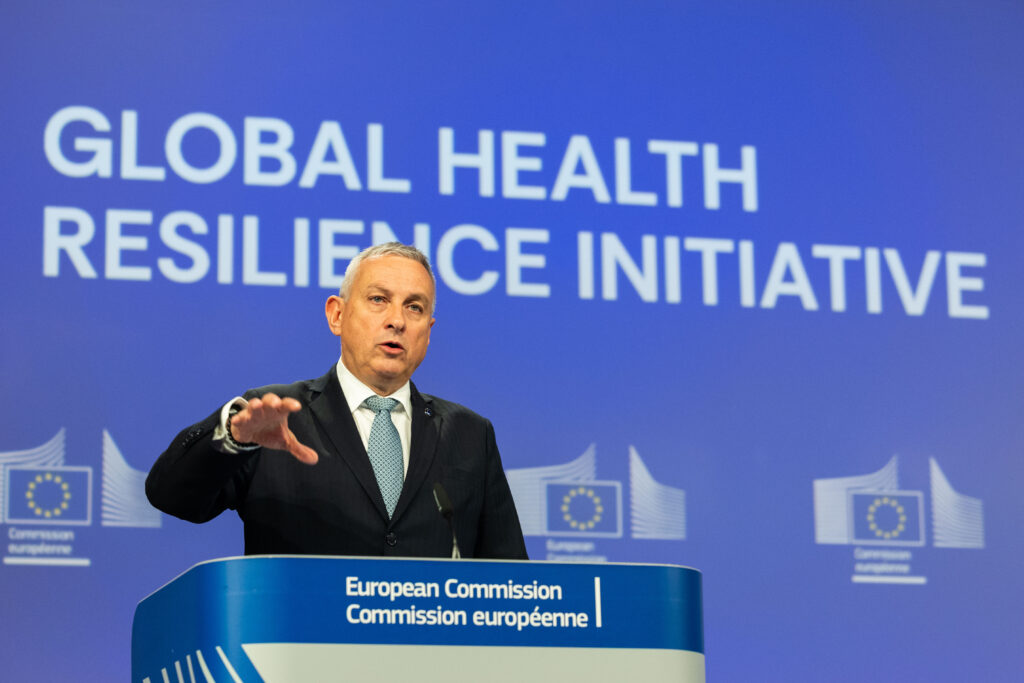
The next disease outbreak could reach Europe before anyone has a name for it. Washington’s withdrawal from the World Health Organization has pushed the global health system into one of its deepest crises in decades, and Brussels is moving in. The European Commission’s new global health strategy stakes Europe’s claim as the anchor of an order being rebuilt from scratch.
The move comes days before the 79th World Health Assembly in Geneva. Governments will gather under the shadow of the United States’ withdrawal from the World Health Organization. It is a decision that left a $600 million funding gap and forced WHO to cut its 2026-2027 budget by 20%.
Other pillars of the global health system are also under growing pressure. UNICEF is restructuring operations and relocating staff to lower-cost duty stations. Gavi, the Vaccine Alliance, and the Global Fund face mounting strain on replenishment funding.
At the same time, countries are increasingly shifting toward bilateral health partnerships that bypass traditional multilateral frameworks. For Brussels, the turmoil is also creating an opening.
The global health vacuum
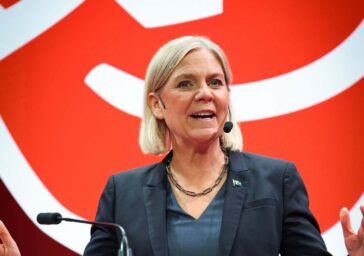
“Global health is not immune to the fierce competition, coercive power politics, and information manipulation that influence international relations,” said Kaja Kallas. “While some pull back from multilateral organisations that protect global health, the EU is stepping up with more support.” Ms Kallas pointed to the recent Hantavirus outbreak affecting citizens of multiple nationalities as evidence that “we need more international cooperation, not less.”
“We bring a unique model to the table and a commitment to strengthen global health resilience,” Commissioner for International Partnerships Jozef Síkela said as the Commission unveiled its new Global Health Resilience Initiative. The strategy was first announced by Commission President Ursula von der Leyen during last year’s State of the Union speech. It is designed to push Europe deeper into areas once dominated by traditional multilateral organisations and US-led global health diplomacy.
Health is no longer the preserve of doctors, but is even weaponised for geopolitical purposes.
— Jozef Síkela, Commissioner for International Partnerships, European Commission
At its core is a recognition that health is no longer just development policy. “Health is no longer the preserve of doctors, but is even weaponised for geopolitical purposes,” Commissioner Síkela said. That shift is increasingly reshaping how Brussels thinks about pharmaceutical manufacturing, vaccine production, epidemic surveillance, and access to critical medicines.
Health becomes strategic
The Commission argues that future health crises will be driven not only by pandemics. Climate change, biodiversity loss, antimicrobial resistance, food insecurity, and geopolitical instability are also key drivers.
“The reality is that the frequency and intensity of disease outbreaks are increasing,” Commissioner Síkela said. “Health threats do not respect borders. A health crisis anywhere is a risk everywhere.”
At the heart of the initiative lies a message that became central during the COVID-19 pandemic. No one is protected until everyone is. The strategy reflects a broader transformation underway in Europe’s approach to health policy. Health is increasingly being treated as economic security, industrial resilience, strategic autonomy, and geopolitical infrastructure.
That thinking already underpins initiatives such as the Critical Medicines Act, the proposed Biotech Act, and the European Health Data Space. The new initiative extends that logic globally. “Dependency is really dangerous,” Síkela said. “No country should rely on a handful of suppliers.”
Europe pushes manufacturing partnerships
A major part of the strategy focuses on supply chains and pharmaceutical manufacturing. The Commission wants to reduce vulnerabilities exposed during COVID-19 and diversify production of vaccines, antibiotics, active pharmaceutical ingredients, and other critical health products.
“Europe gains from stronger supply chains,” Síkela said. He argued that partnerships with EU companies can simultaneously strengthen Europe’s resilience and expand manufacturing capacity in partner countries.
The strategy places particular emphasis on Africa, where many countries remain heavily dependent on imported medicines and vaccines. Brussels is expanding investment through MAV+, the Team Europe initiative on manufacturing and access to vaccines, medicines and health technologies in Africa. Since 2021, the programme has mobilised around €2bn in investments across countries including South Africa, Senegal, Ghana, Nigeria, Rwanda, and Egypt.
The Commission argues that maintaining a strong pharmaceutical industrial base inside Europe is also becoming central to EU competitiveness and strategic autonomy. At the same time, Brussels wants to deepen international cooperation on clinical trials, therapeutics, and medical countermeasures through partnerships with regulators, research organisations, and industry.
Vaccines, therapeutics and ‘Disease X’
Another major focus is preparedness for future outbreaks. The Commission plans to strengthen global surveillance systems and laboratory networks together with the WHO and regional partners. The European Centre for Disease Prevention and Control will deepen cooperation with national and regional disease control centres. The EU also plans to support stronger surveillance infrastructure in low- and middle-income countries.
Brussels additionally wants to play a larger role in development of therapeutics, vaccines, and diagnostics. The initiative includes plans for an EU Therapeutics Hub. It also supports the creation of a new Global Therapeutics Development Coalition aimed at strengthening development of broad-spectrum treatments.
On vaccines, the EU is backing efforts to develop safe and effective vaccines within 100 days of a future pandemic declaration. This also includes so-called “Disease X” scenarios, unknown pathogens capable of triggering future global crises. The Commission also plans to establish an EU Diagnostics Hub to accelerate development and scale-up of testing technologies during future outbreaks.
Alongside this, Brussels wants to develop a global health and resilience tracker together with the WHO, the Organisation for Economic Co-operation and Development, and the World Bank. The goal is to improve transparency and coordination of pandemic preparedness financing.
Fighting disinformation
The strategy also reflects growing concern inside Brussels over health misinformation and foreign information manipulation. “We have seen that there is a higher risk of disinformation during health crisis,” Síkela said. The Commission argues that future preparedness will depend not only on medical infrastructure, but also on public trust in science and access to reliable information.
While some pull back from multilateral organisations that protect global health, the EU is stepping up with more support.
— Kaja Kallas, High Representative for Foreign Affairs and Security Policy, European Commission
Brussels says it will strengthen access to scientific databases, genome repositories, and biodata systems that support research, artificial intelligence tools, and development of medicines and medical technologies. The Commission is also developing guidance for member states on responding to misinformation linked to medical countermeasures and future health emergencies.
Europe’s global health moment?
The EU says it committed around €6bn in official development assistance for global health between 2021 and 2025, while the EU and member states together remain among the largest contributors to the WHO. The initiative also reflects a broader geopolitical calculation.
As traditional multilateral structures weaken and new powers such as China, India, and the United Arab Emirates expand their role in global health financing and manufacturing, Brussels increasingly sees health as another arena where Europe can project influence. The question now is whether Europe can translate its regulatory strength, industrial base, and financial weight into genuine geopolitical leadership, at a moment when the global health order itself is being rewritten.